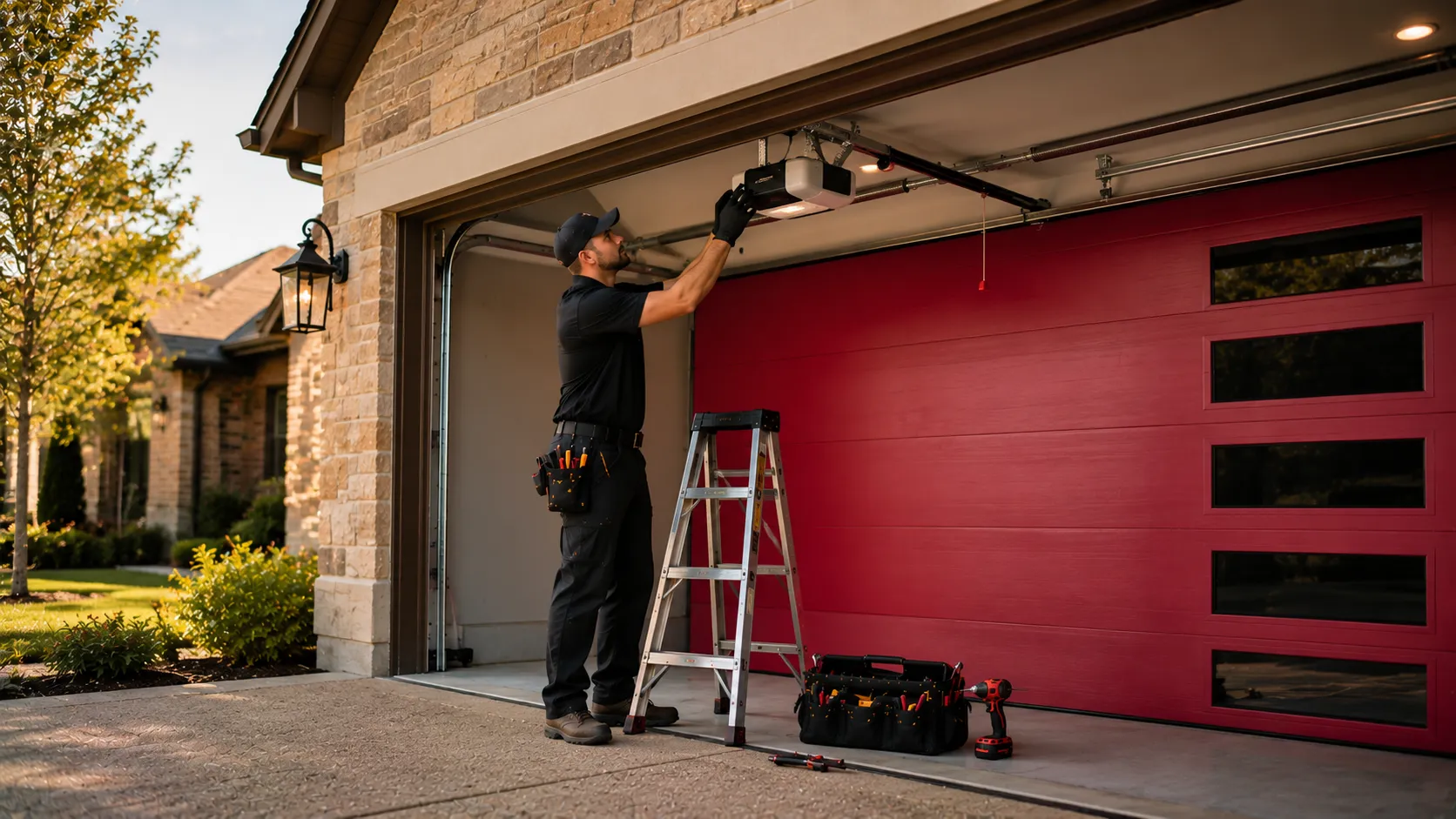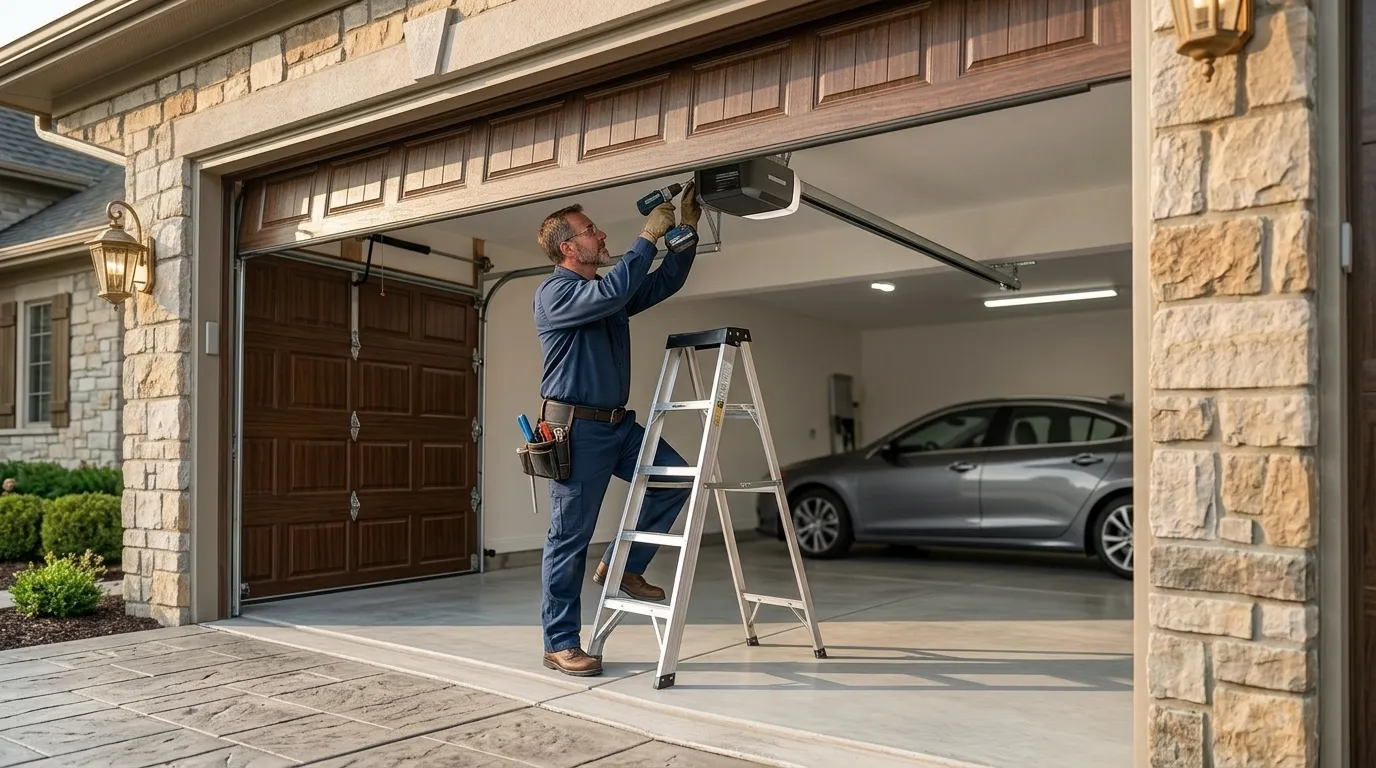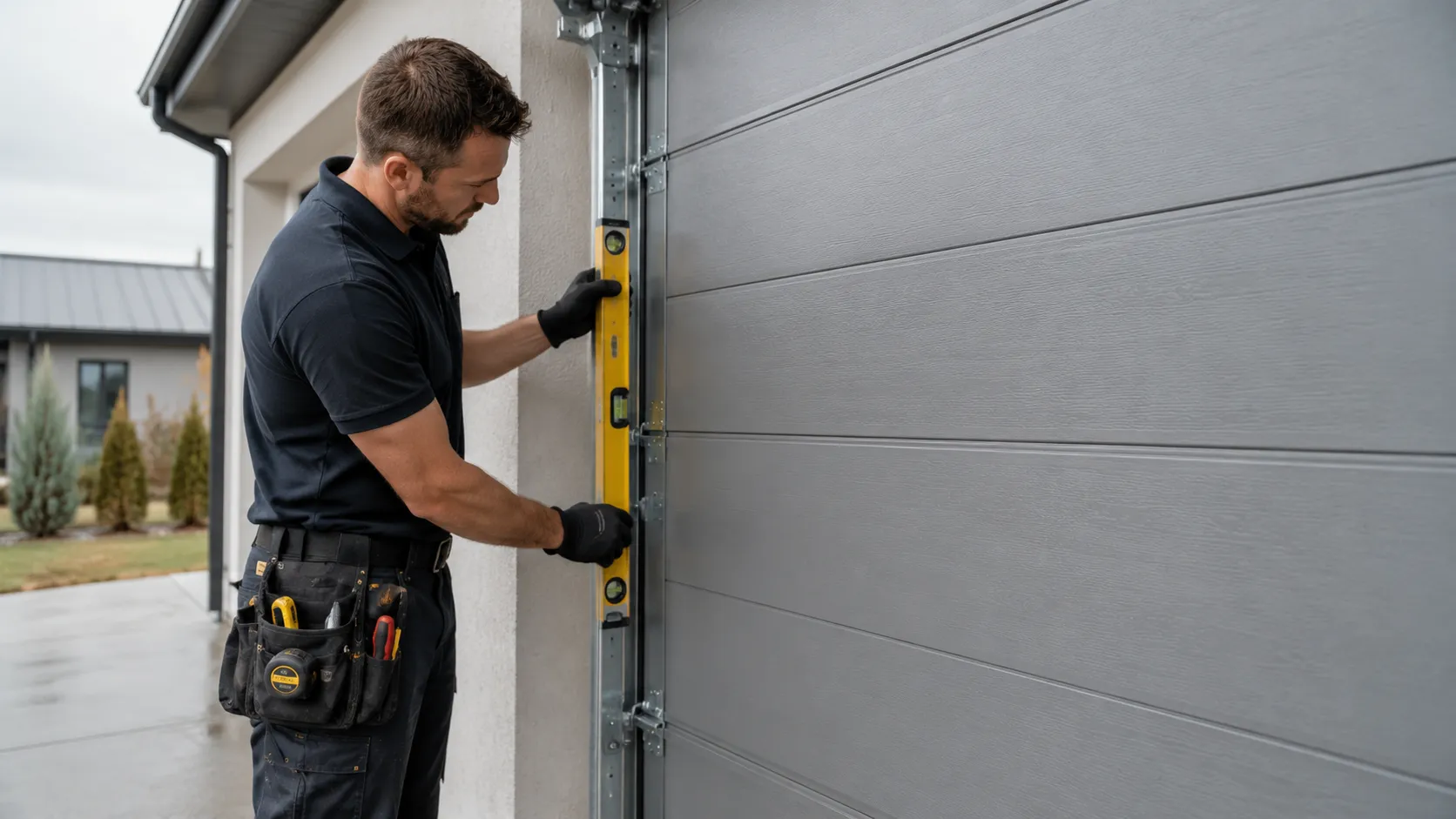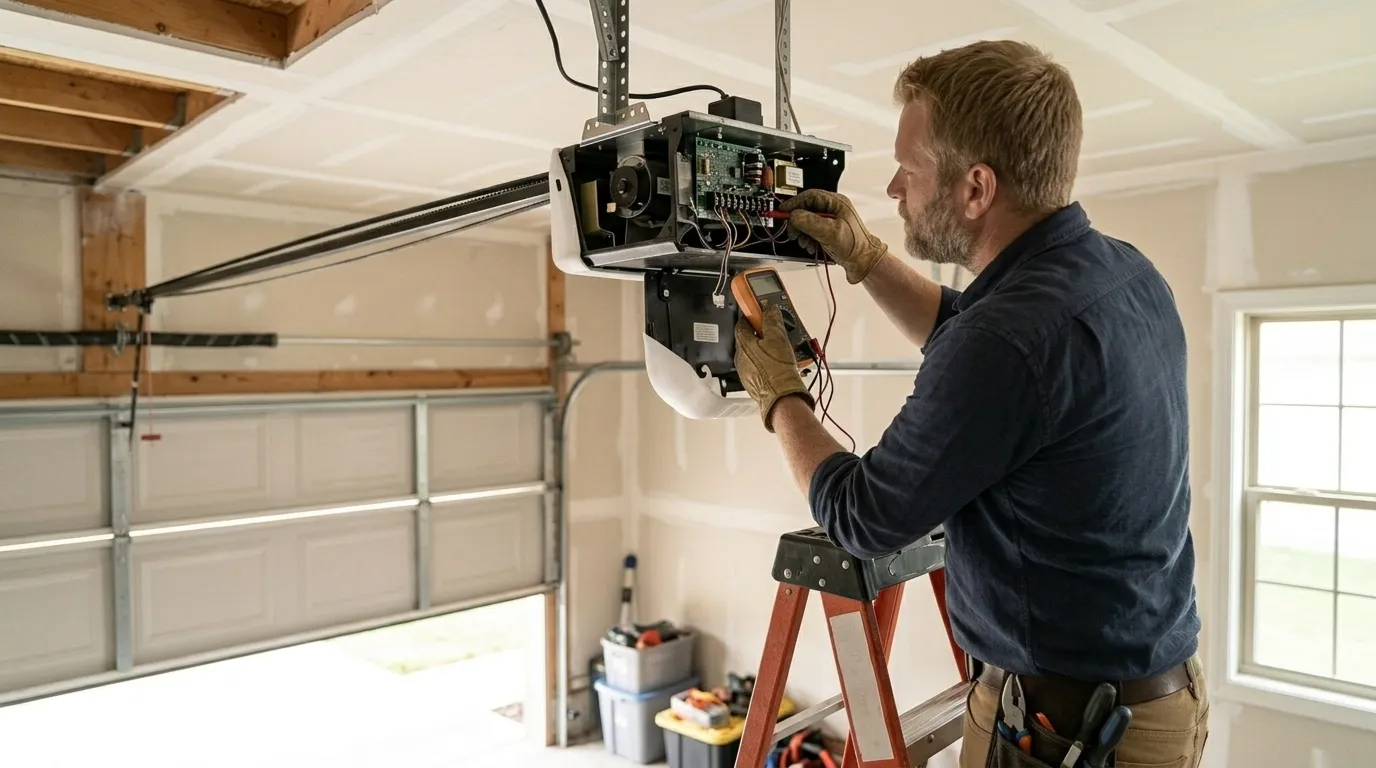
What You Pay
We don't post a flat number for emergency calls because a snapped cable and a dead opener board aren't the same job, and quoting one price for both would mean padding the cheap ones to cover the expensive ones. What we can tell you: the tech who shows up diagnoses on site before touching anything, and the price you're quoted for the repair is the price you pay - no add-ons discovered halfway through.
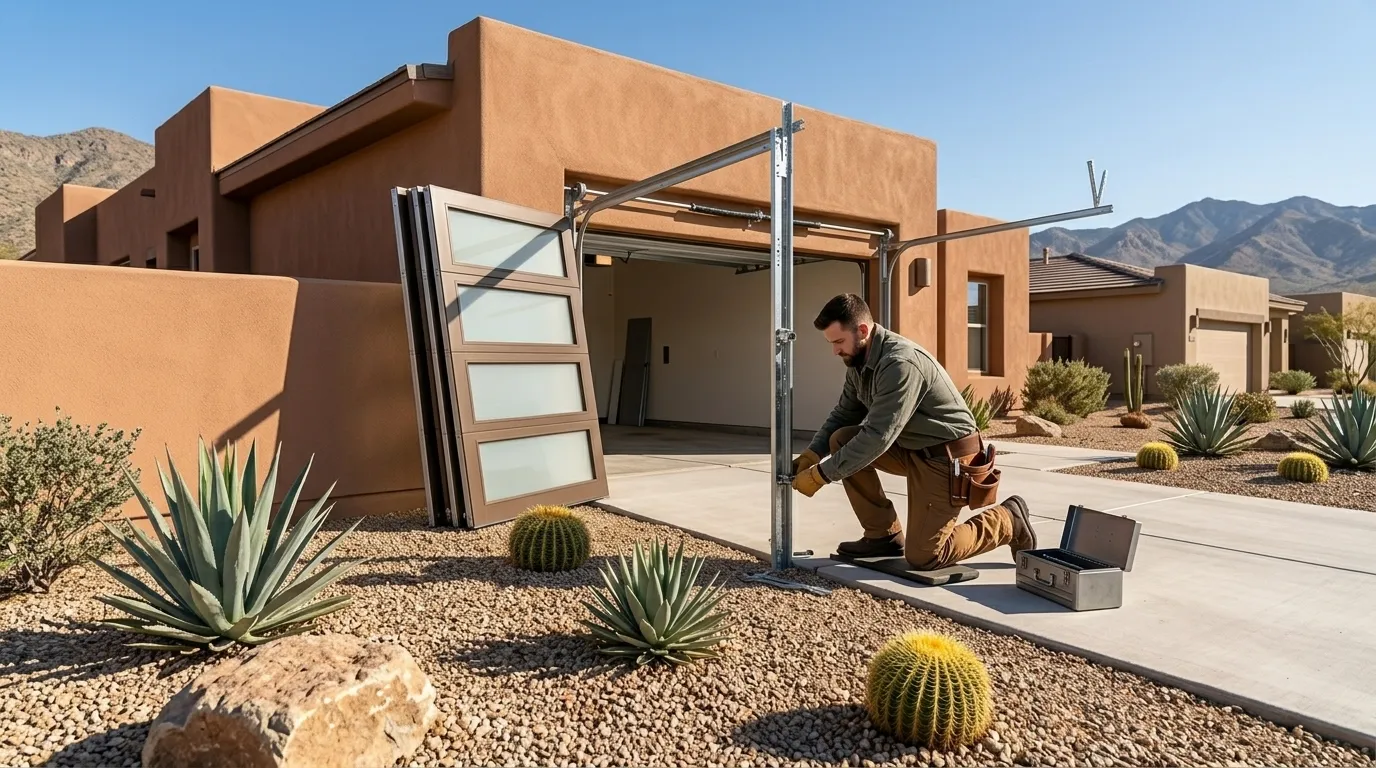
What drives the number up or down is usually the same three things. Whether the part is one we carry on the truck (see Stocked Parts) or has to be ordered. Whether it's a single-point failure - one spring, one sensor - or a cascade, where a broken cable let the door drop and bent the track on the way down. And whether the opener itself is original to the house or a replacement, since parts for openers installed in the 80s and 90s often aren't stocked anywhere anymore, ours included.
One honest limit: if your opener is old enough that the control board is discontinued, we'll tell you straight that a new opener costs less than chasing a part nobody makes, rather than billing you for a search that won't end well.
Why This Fails Locally
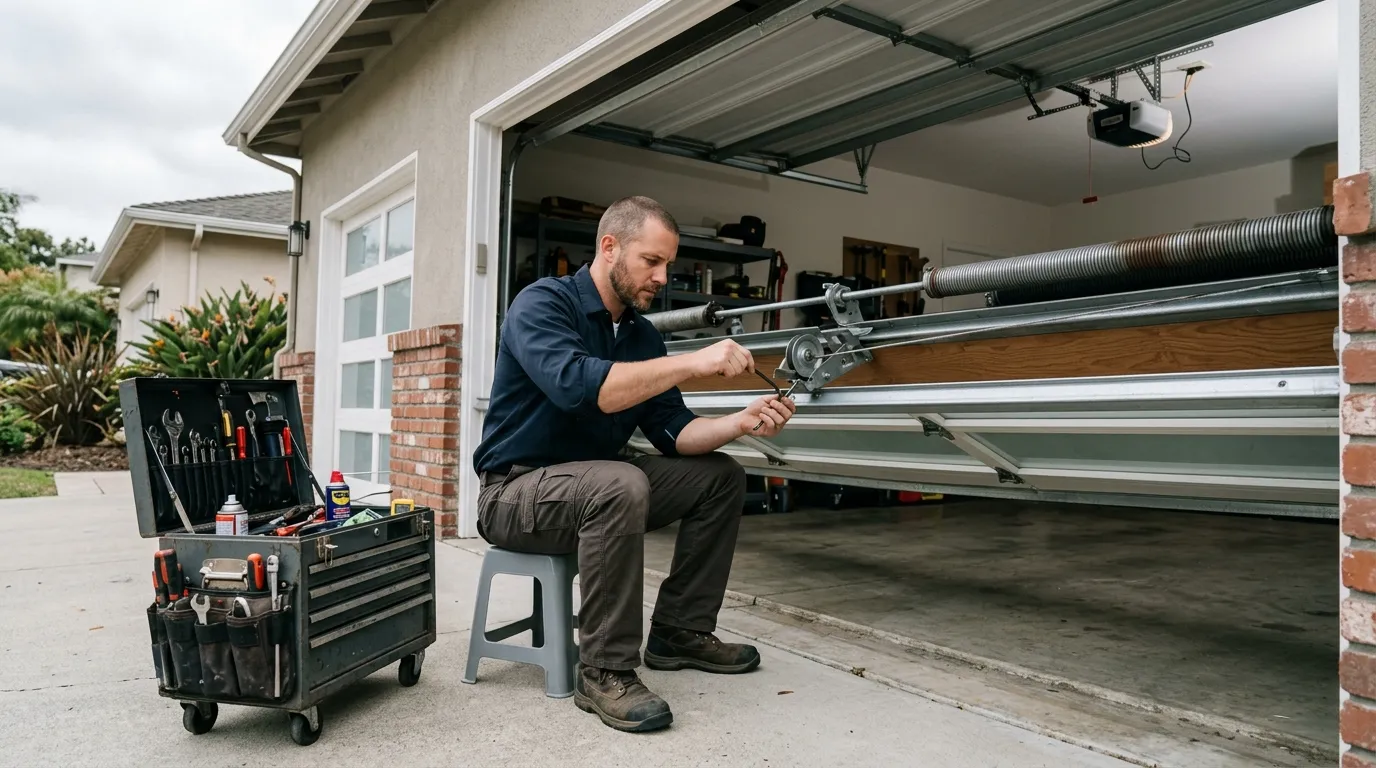
Housing across this stretch of the coast went up mostly between 1938 and 2015, with the median sitting at 1982, and most of the ten named communities in the service area are dominated by 1980s and 90s builds. That matters because torsion springs from that era were rated for a service life that's long since expired on a huge share of these doors - they were installed once, at construction, and never touched again until they let go, usually without warning.
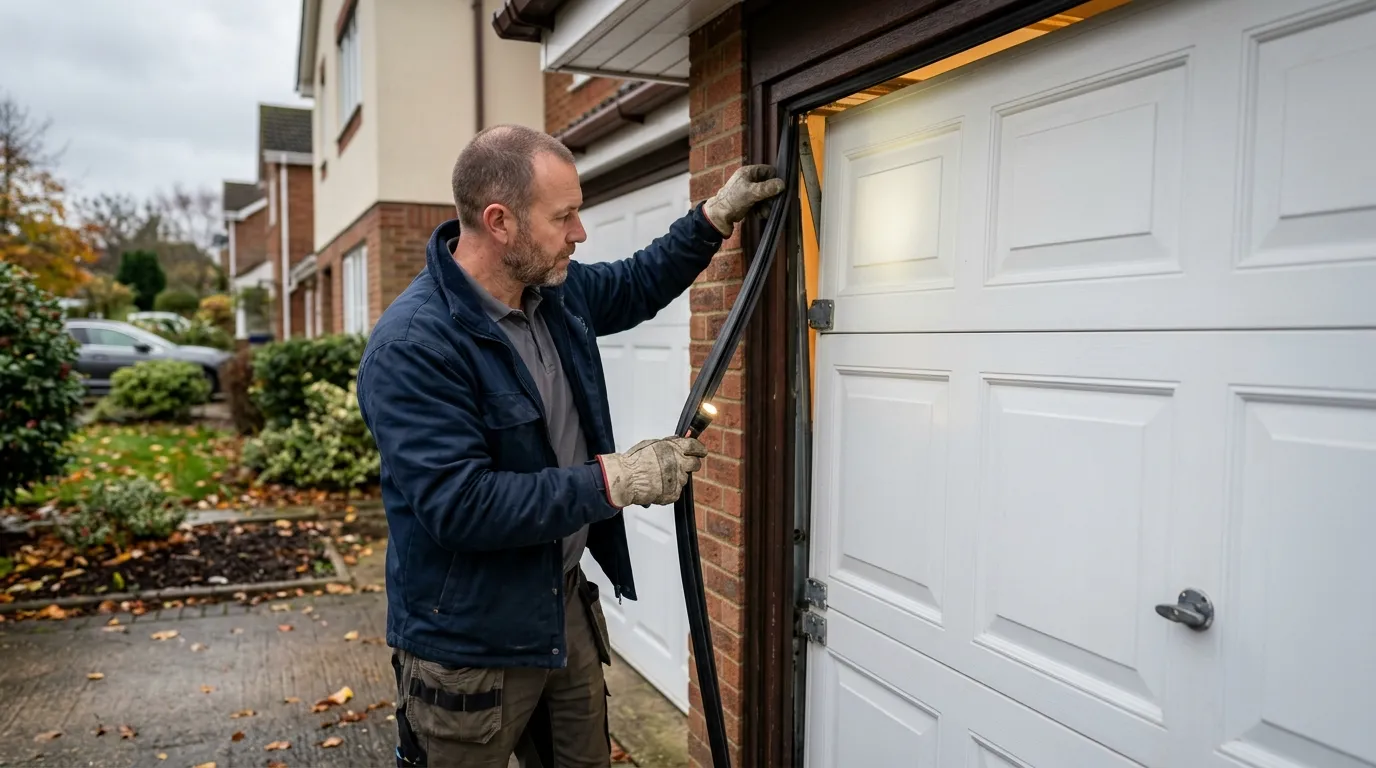
The climate here is mild temperate, not desert and not mountain, so we're not seeing frozen tracks or ice-cracked panels the way inland towns further from the coast might. What we see instead is corrosion. Marine air off the coast works on galvanized spring coating and steel cable strand faster than dry inland air does, and it does it quietly - a spring can look fine right up until the day it isn't. Rubber weatherstrip and roller bushings age the same way, brittle from UV and salt rather than cold.
So the emergency call pattern here skews toward sudden spring failure and corroded cable snap on doors installed 25 to 40 years ago, on houses that have otherwise held up fine. The door hardware is the part nobody thought about.
What You Are Seeing
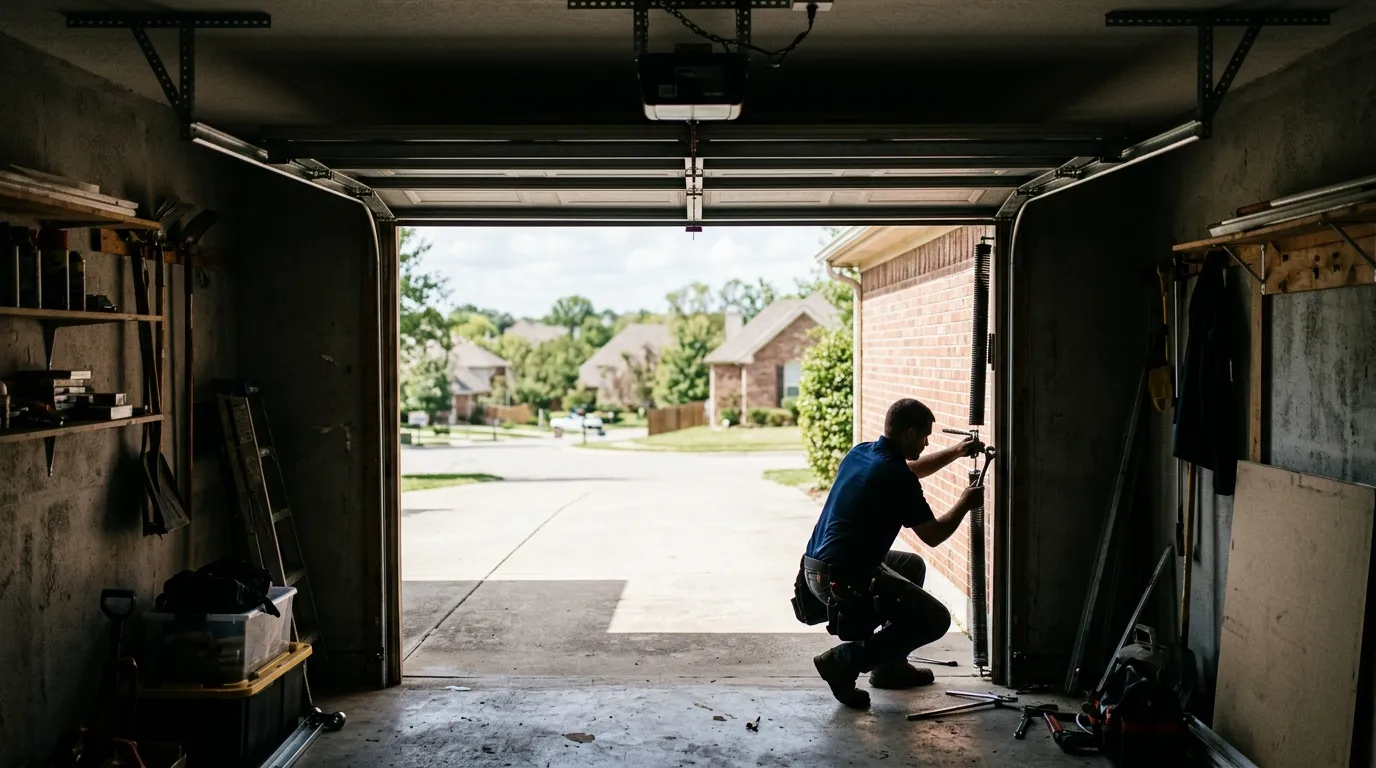
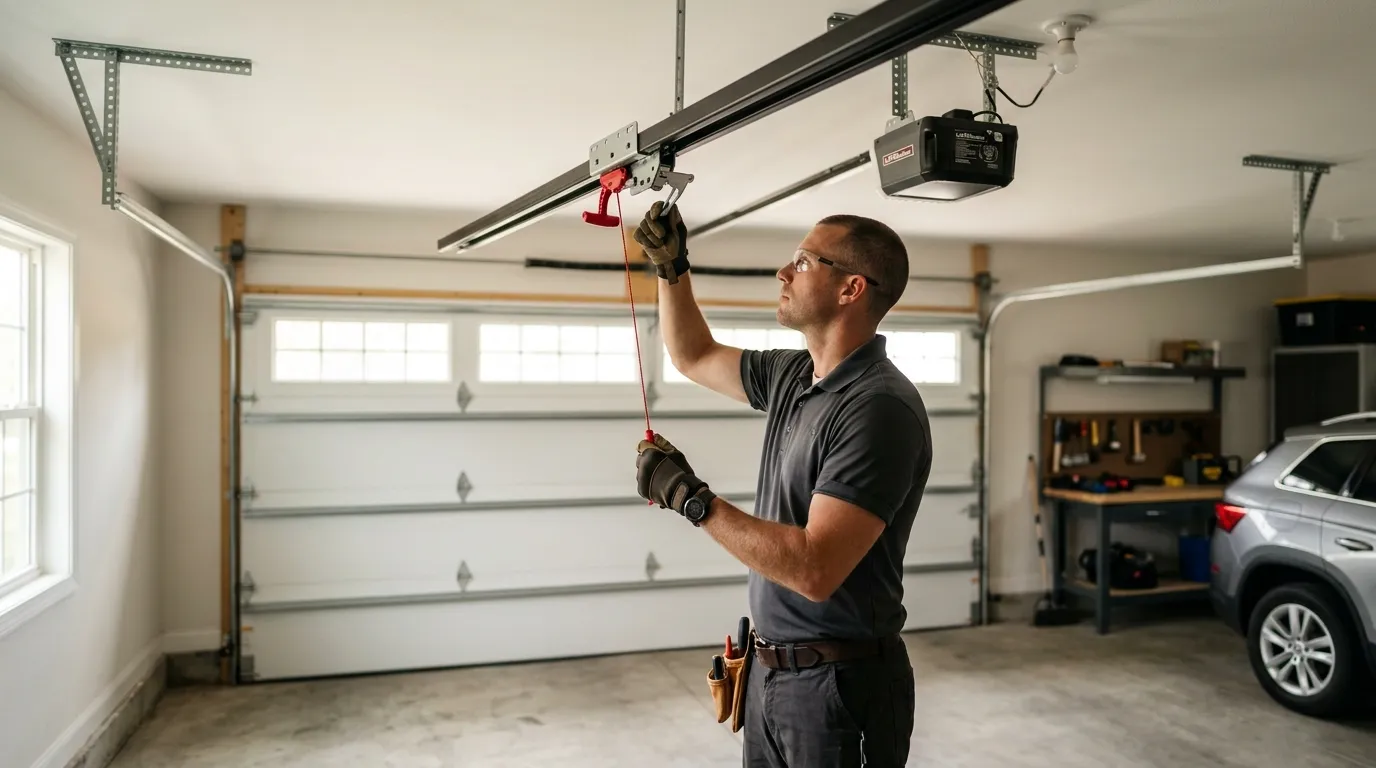
If the door won't move and you hear a bang before it happened, that's almost always a torsion spring letting go - the door was under tension and now it isn't, so it's dead weight the opener can't lift. Don't force the opener; that's how you burn out the motor on top of the spring.
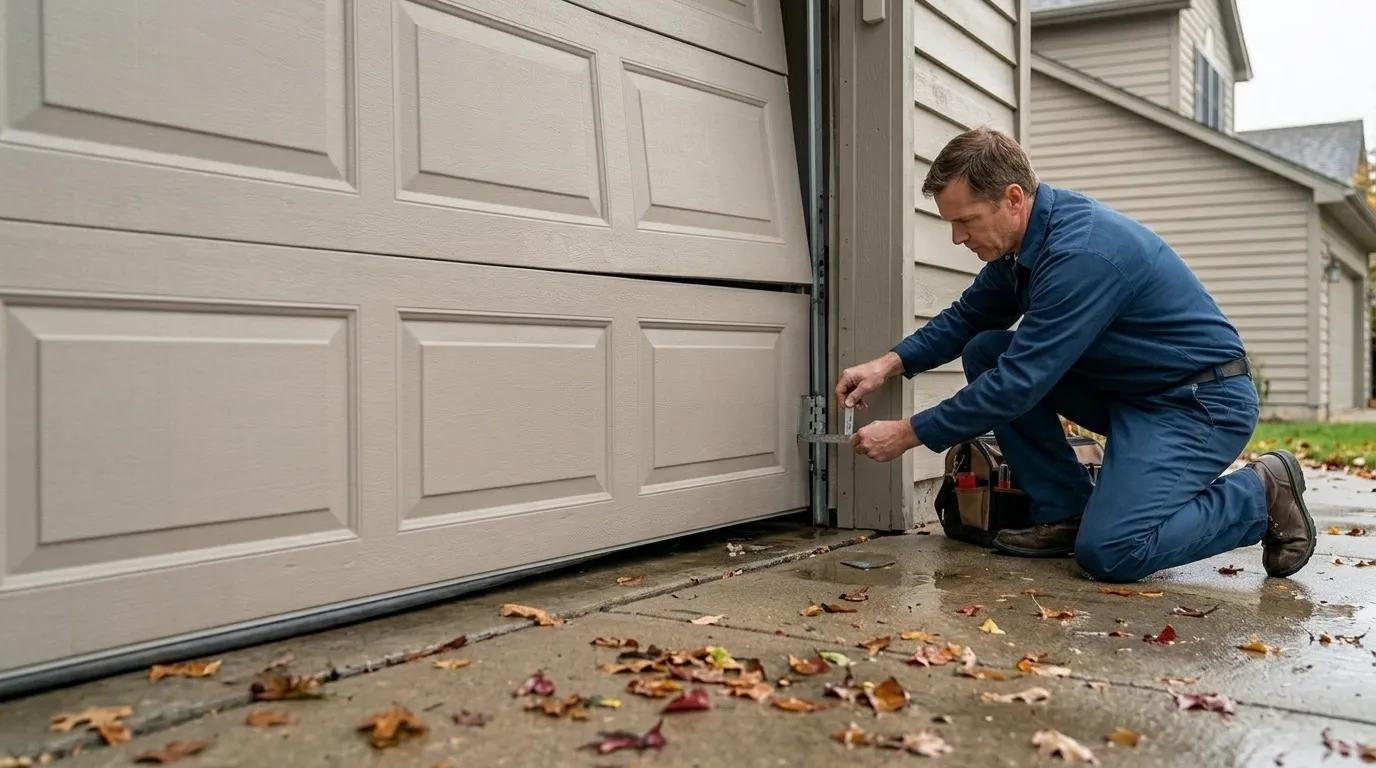
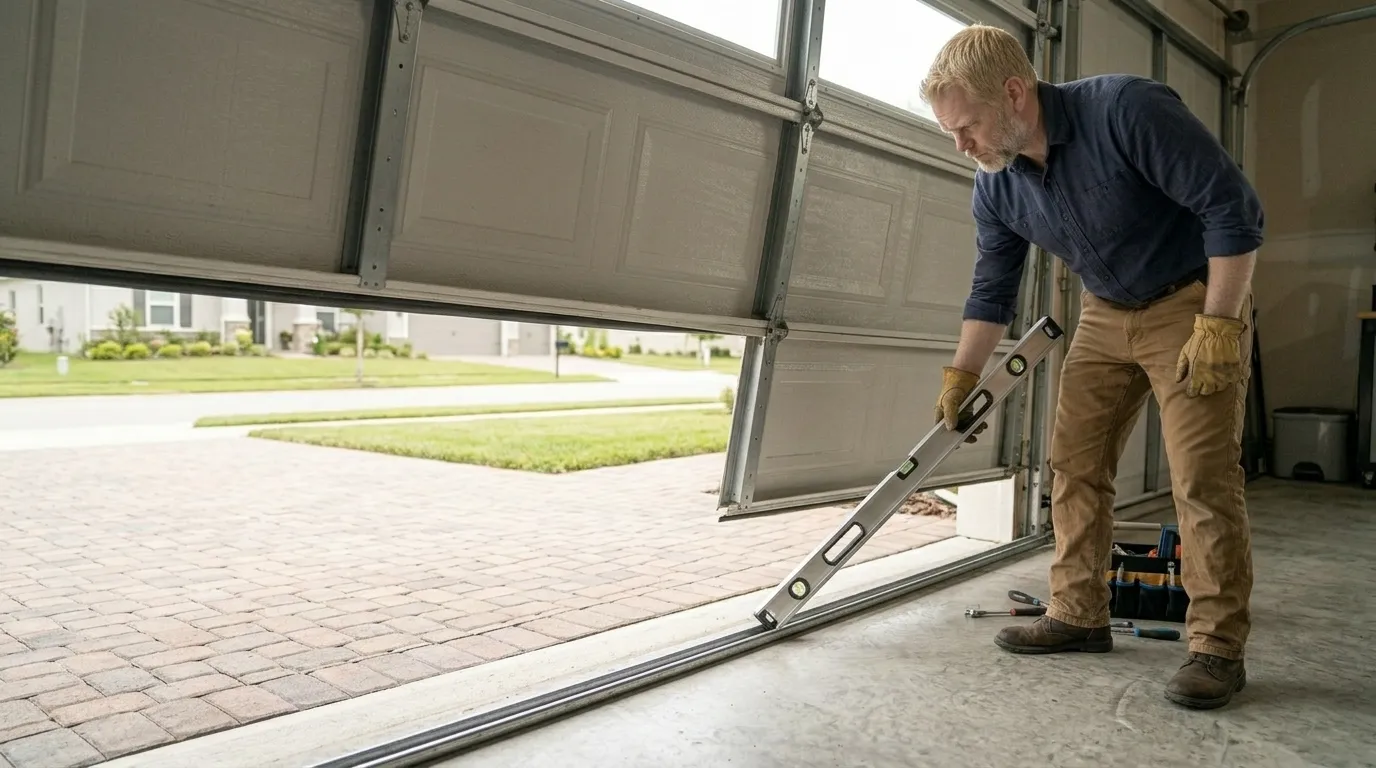
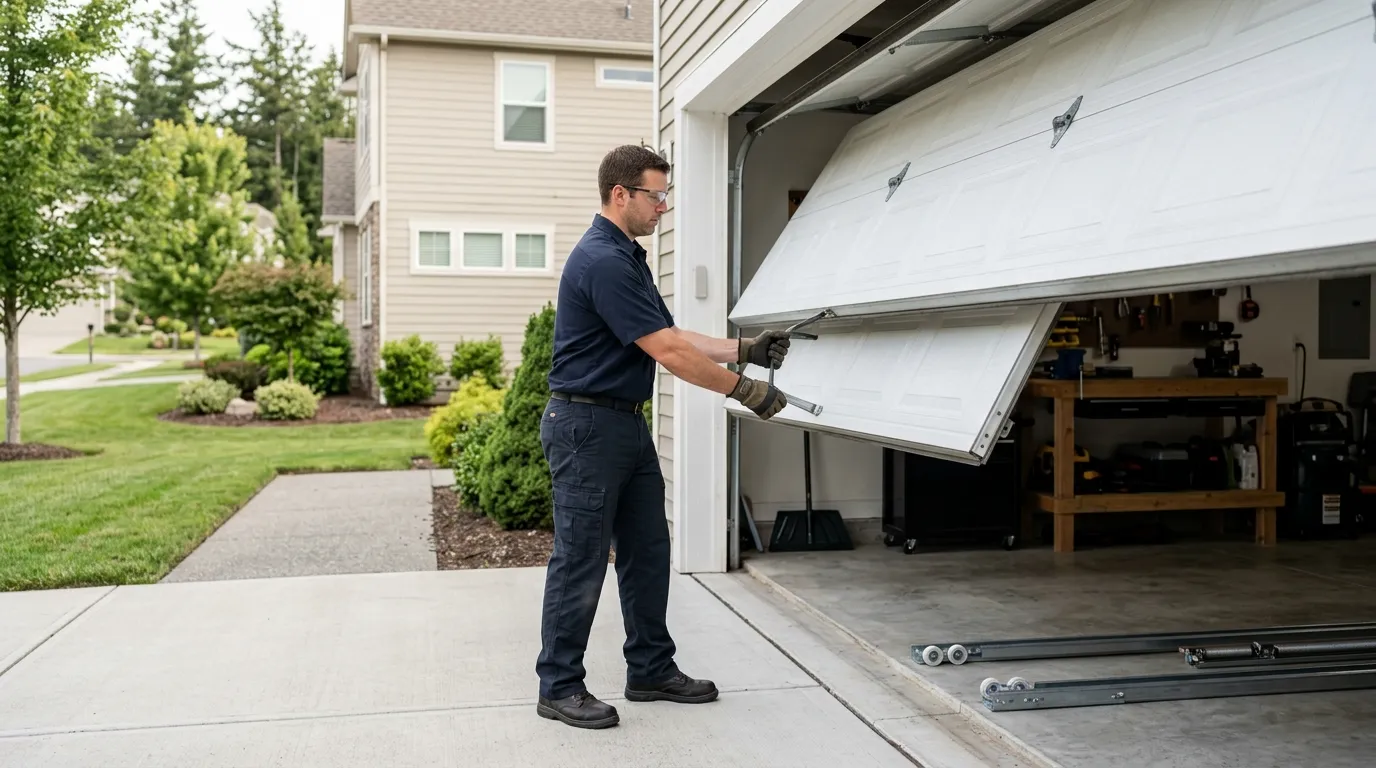
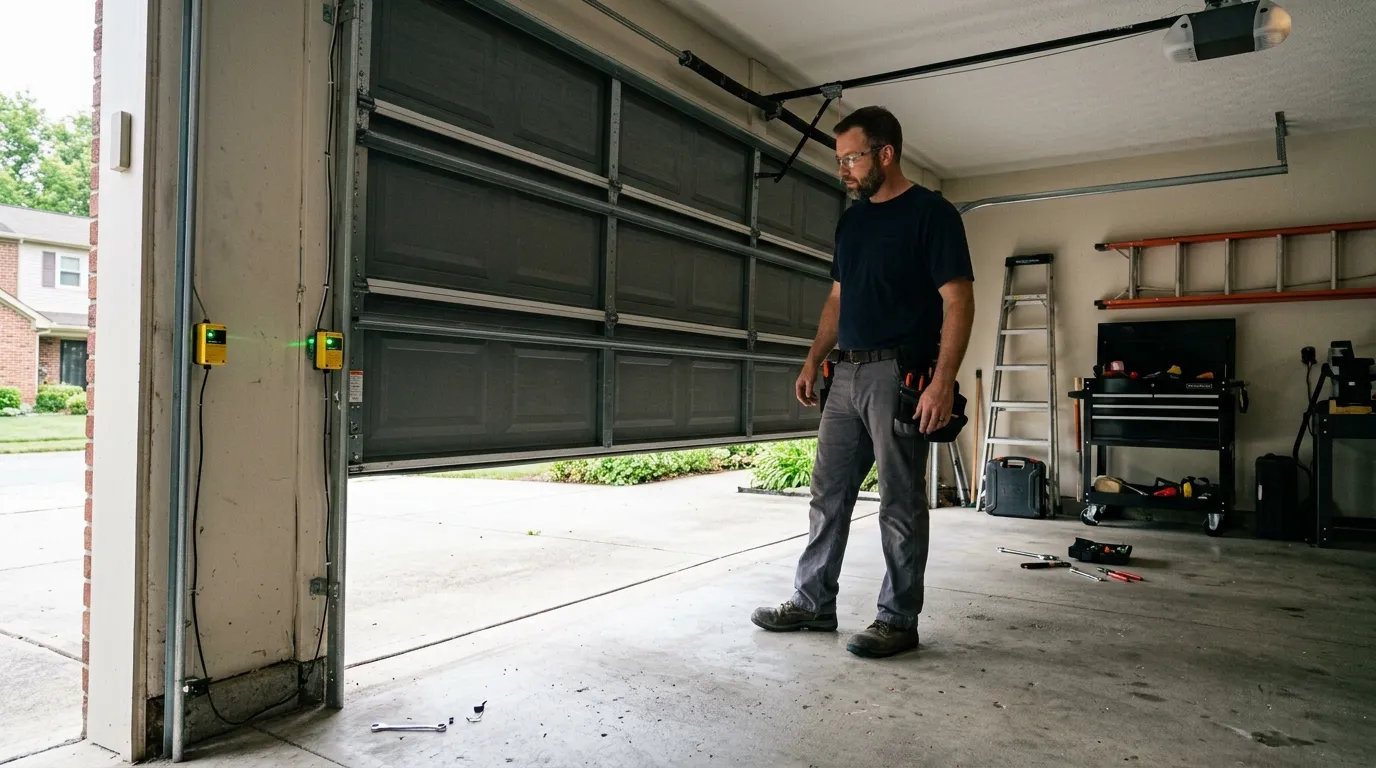
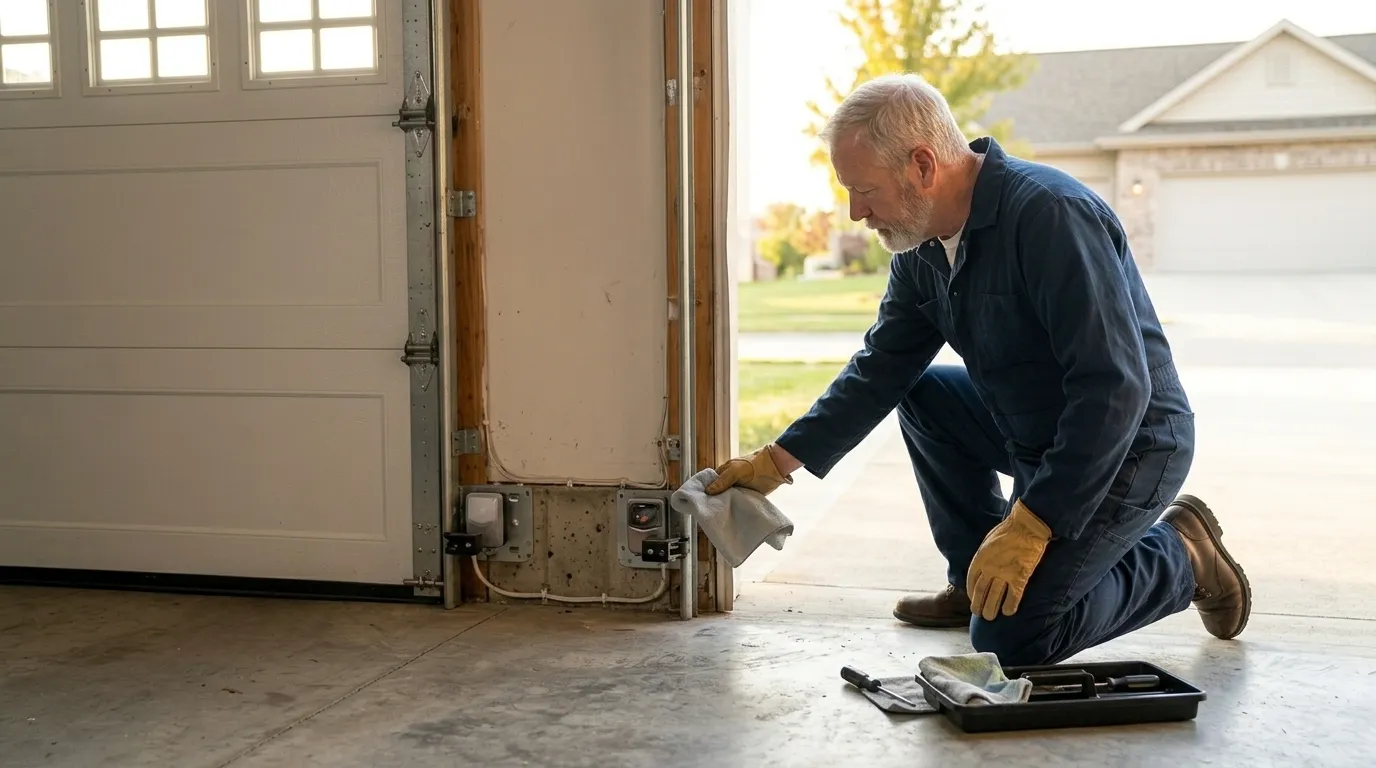
If the door drops fast partway down or one side hangs lower than the other, look at the cable on the low side - a frayed or snapped lift cable on a coastal-air house often shows rust threads before it goes, but not always. A door that reverses right after the sensors clear, or won't close at all, points to the photo-eye sensors near the floor - salt haze and spider webs on the lenses cause more false reversals here than actual electrical faults.
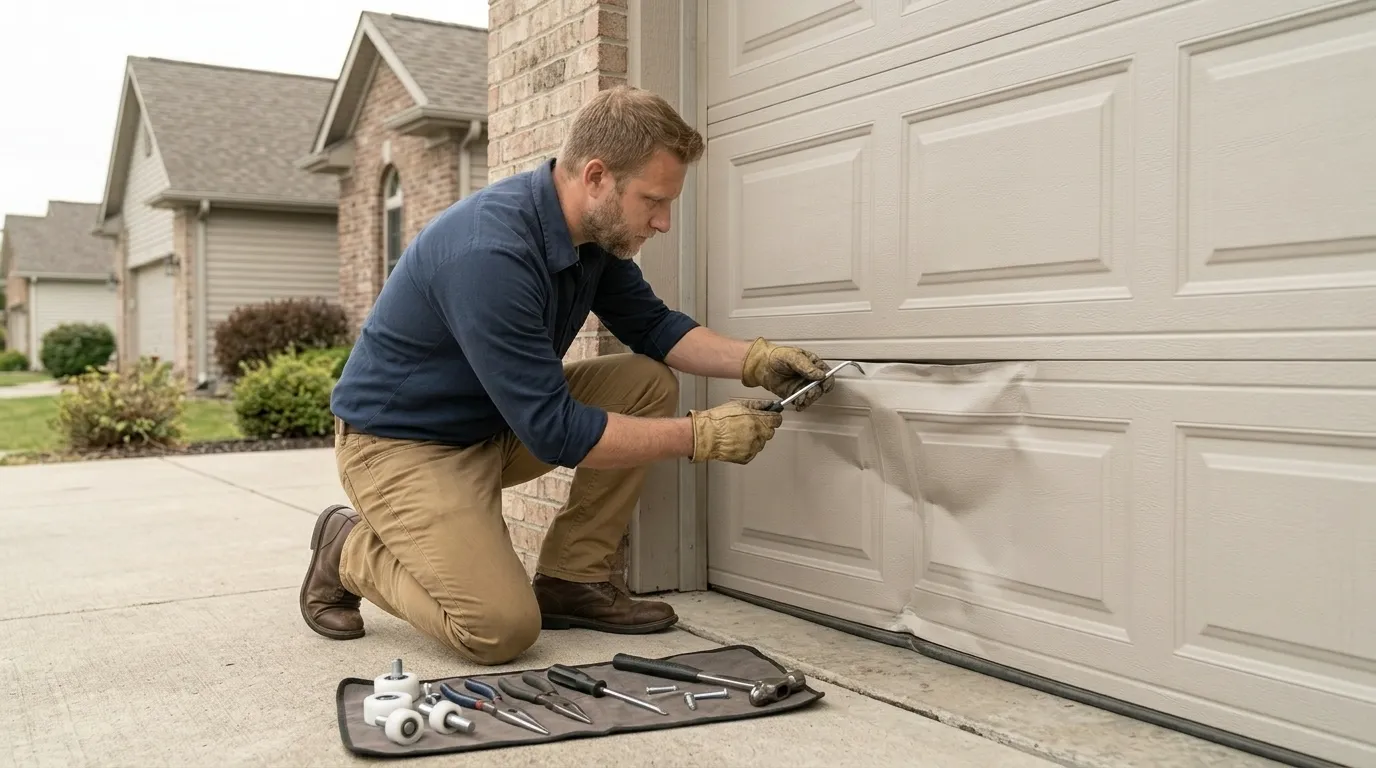
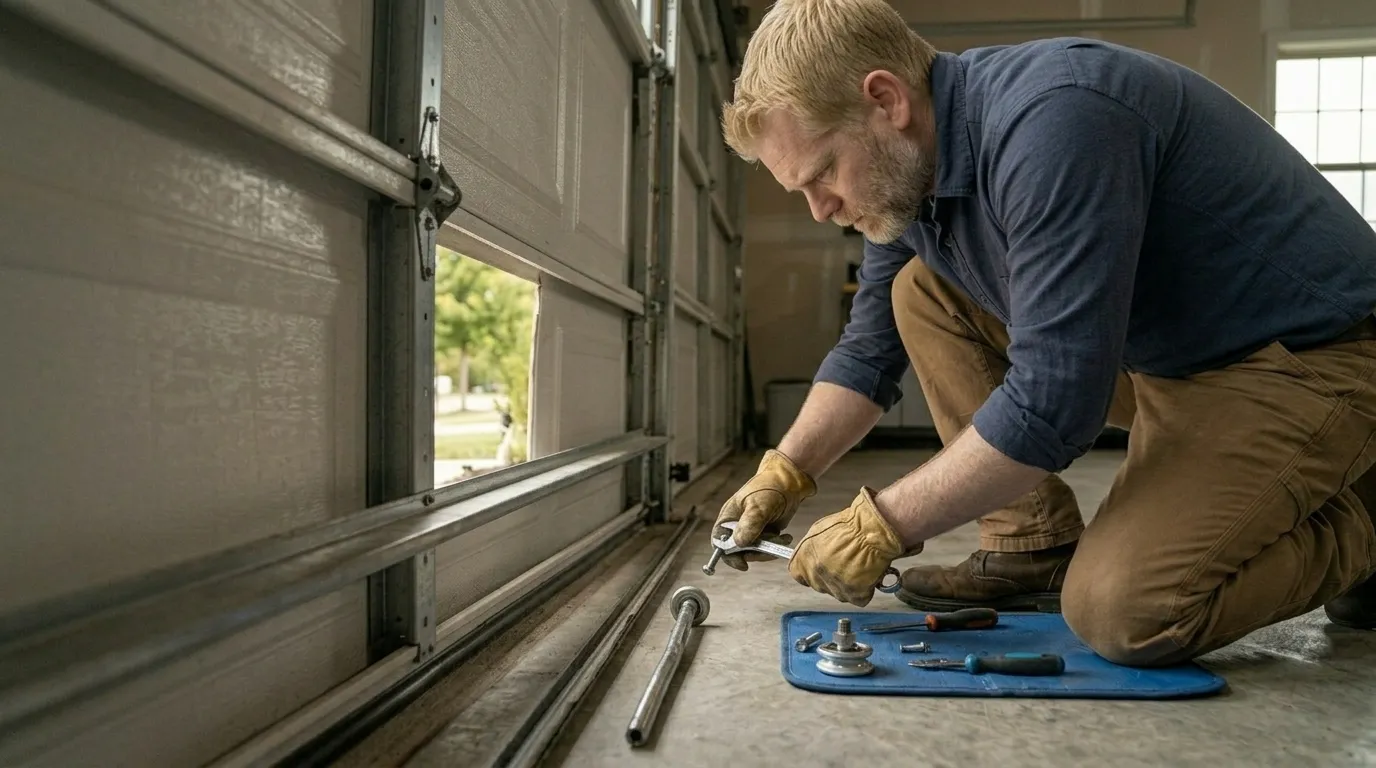
A grinding or scraping sound low on the track usually means a roller has worn through its bushing, common on doors from the 80s/90s stock that make up most of this area, since original rollers weren't built for a 40-year run. None of these are a reason to keep opening and closing the door to test it - each cycle on a compromised spring or cable adds risk.