What You Pay
We don't post a flat number here because a torsion spring job isn't one job. A single spring on a standard double door is a different repair than a matched pair on a heavy insulated door, and the price moves with the spring's wire size, the door's weight, and whether the drums or cables need attention while the door is already open.
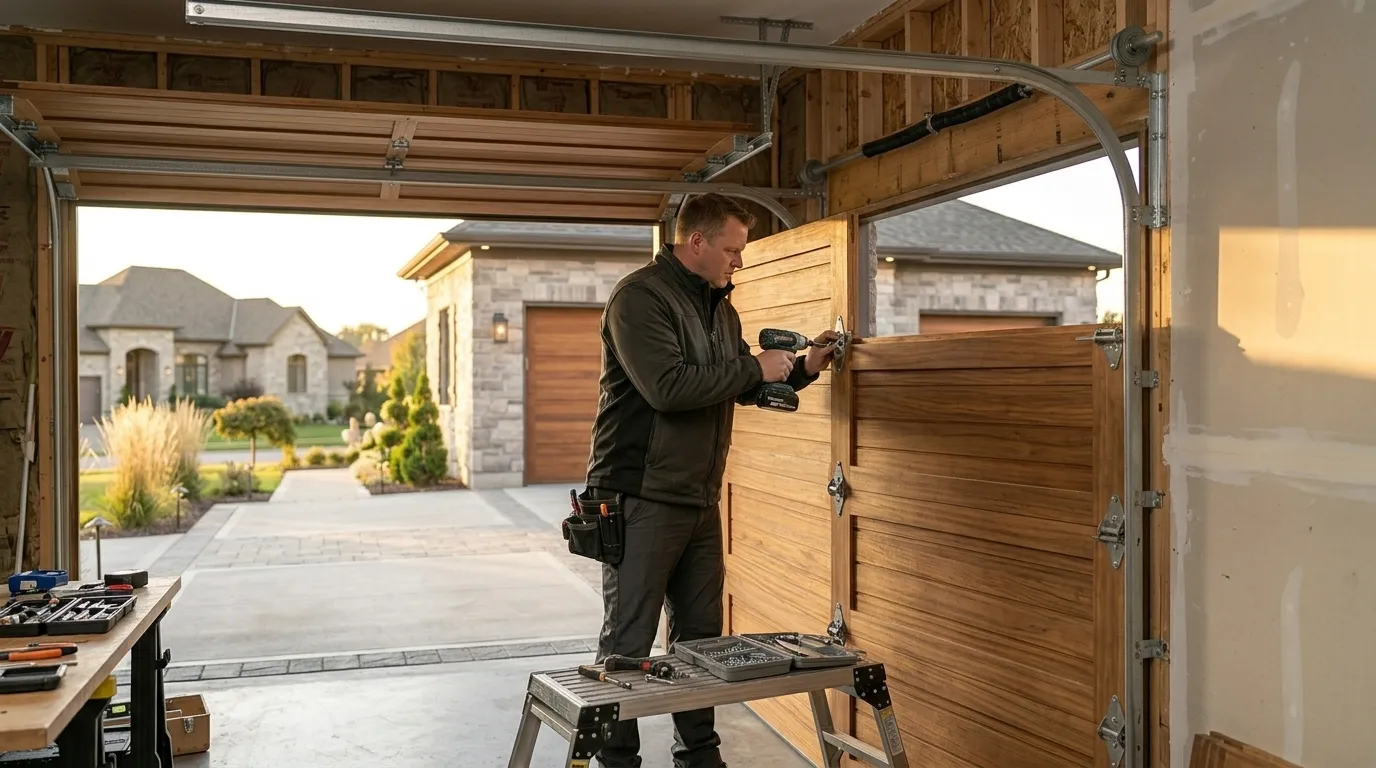
What we can tell you is what actually drives the number in this service area: spring gauge (thicker wire for heavier doors costs more), whether you need one spring or two, and whether the cables, rollers, or bottom bracket show wear that's cheaper to fix now than on a second visit. Doors going back to the earlier end of the local housing stock - homes built in the 1938 to 1982 range - often carry the older, undersized torsion springs that nobody rates for today's heavier insulated panels, and swapping to a correctly sized spring can shift the estimate up front but save a callback later.
We give the number after we look at the door, not before, because guessing over the phone means either lowballing you or padding the quote to cover what we haven't seen. If a shop quotes a fixed spring price sight unseen, ask what gauge spring they're planning to install.
Why This Fails Locally
Torsion springs wear out on a cycle count, not a calendar, so the age of the house matters less than how the door's been used - but the age of the house tells you what spring is on it. Dana Point's housing stock runs 1938 to 2015 with a median build year of 1982, and a lot of the stock across the service area's ten named neighborhoods dates to the 1980s and 90s. Doors from that era were built lighter, with thinner-gauge torsion springs sized for single-layer panels, not the insulated steel or wood-composite doors many owners have swapped in since without upgrading the spring underneath.
The mild temperate climate here doesn't put the same thermal stress on steel that you'd see in a place with hard freezes or triple-digit summers, so rust-through and expansion cracking aren't the main culprits. What does the damage instead is salt-carrying coastal air working into the spring coil and cable strands over years, plus the sheer cycle count on a door that opens and closes several times a day in a household with cars and gear coming and going. A spring rated for a lighter original door, corroding slowly at the coil ends, under a heavier replacement panel - that combination is what actually snaps.
What You Are Seeing
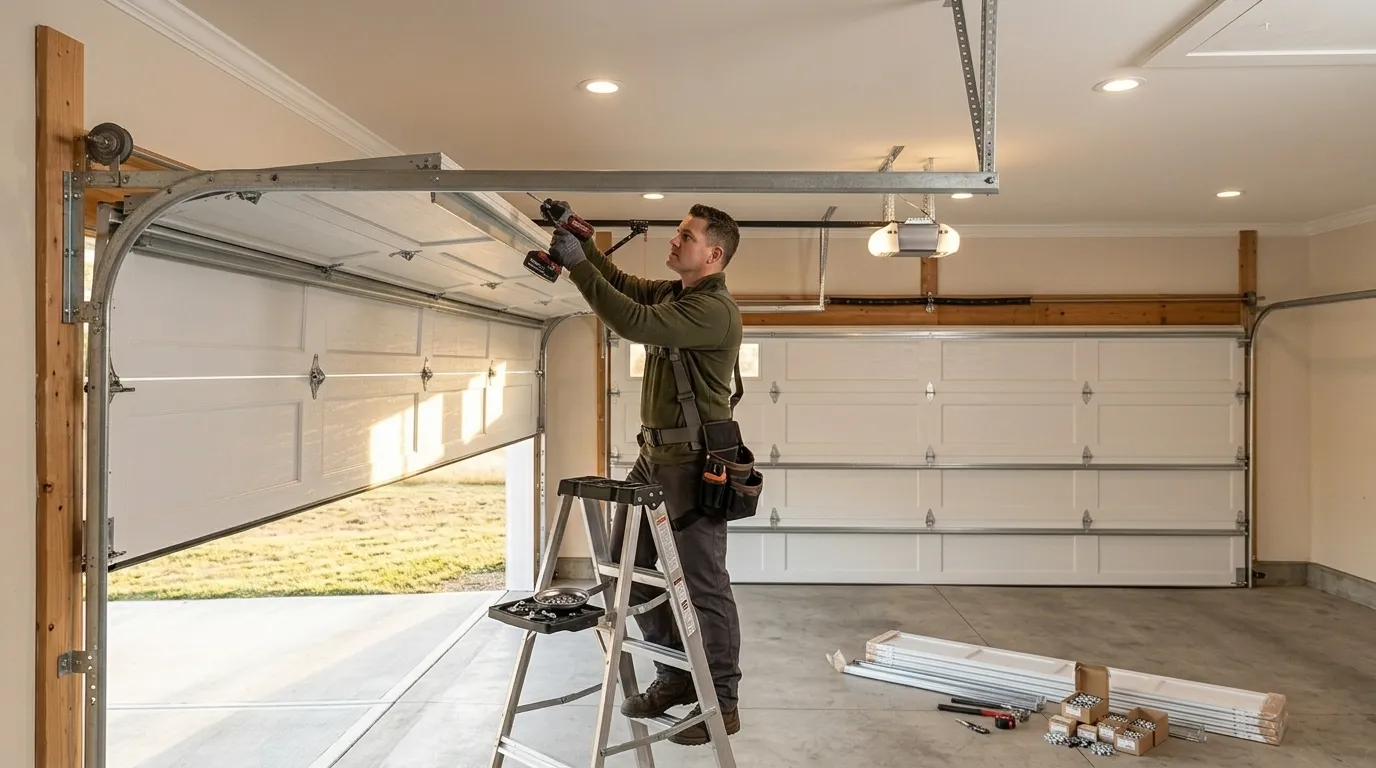
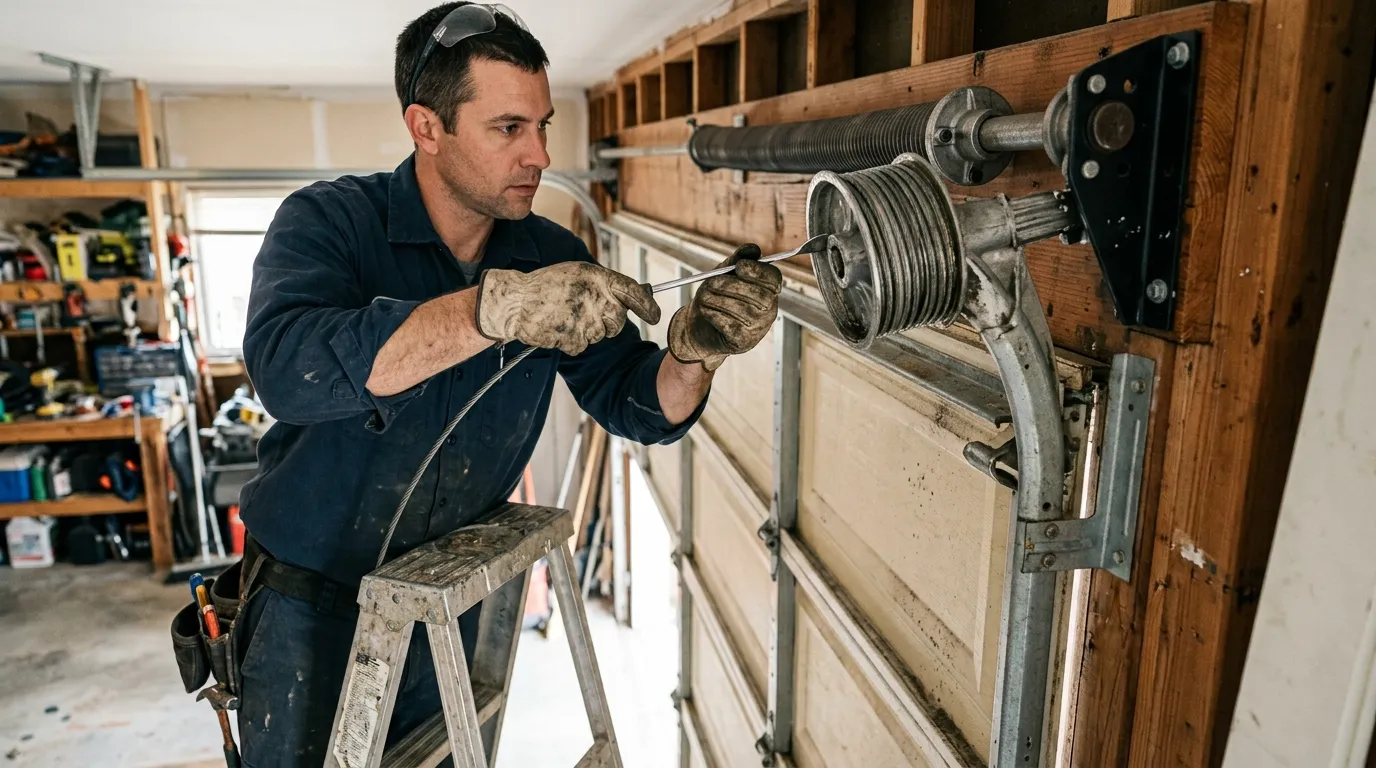
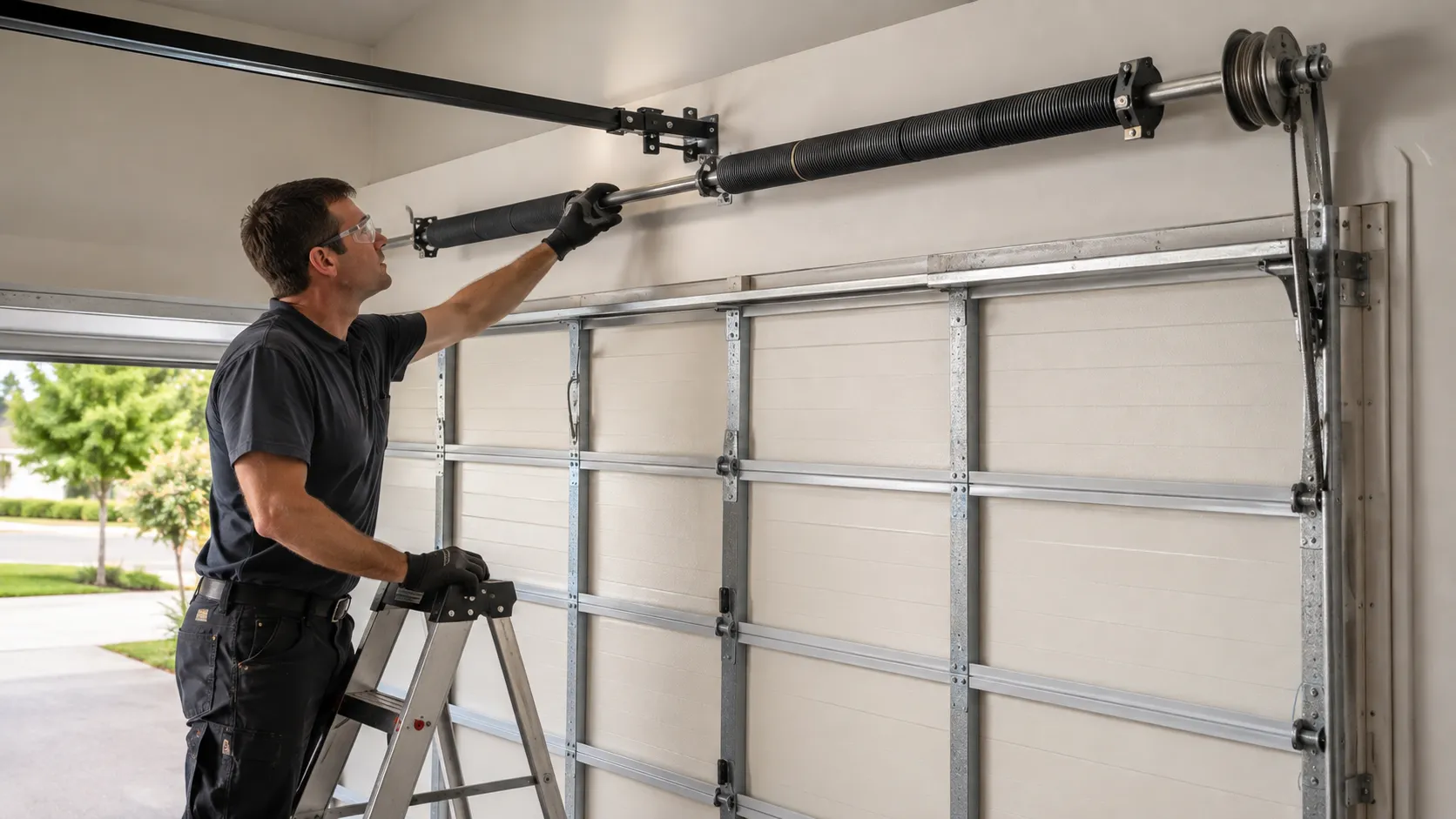
A door that won't stay up on its own, or one that slams down instead of easing shut, is almost always a spring that's lost tension or already broken. If you see a visible gap in the coil when you look up at the spring bar above the door, or hear a bang from the garage followed by a door that suddenly feels twice as heavy to lift by hand, that's a snapped torsion spring, not a track or opener problem.
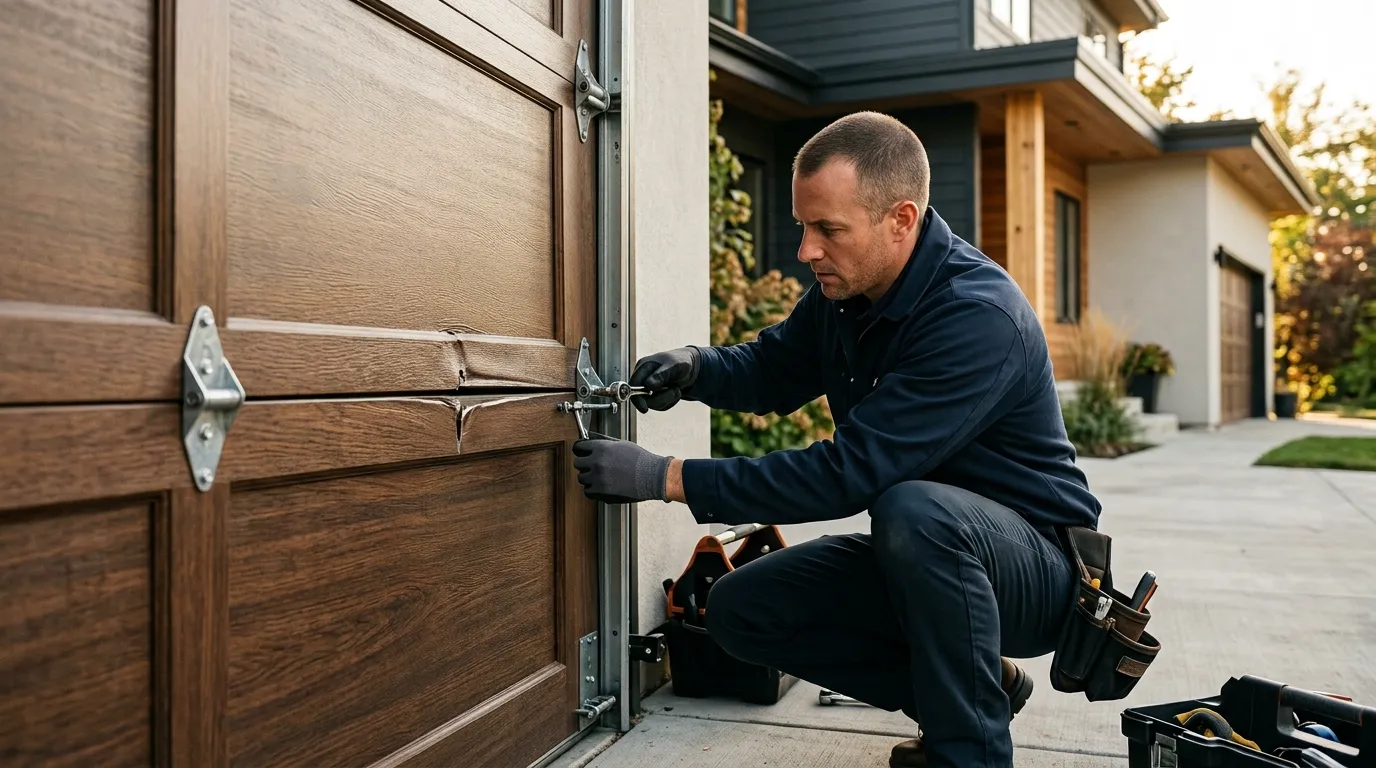
A door that lifts unevenly, dropping harder on one side, points to one spring going while its pair holds - torsion springs work in sets and one weak spring throws off the whole balance. Cables that look frayed or kinked near the bottom bracket often show up on the same call, since a spring that's been failing slowly puts extra load on the cable before it lets go completely.
Don't try to open a door manually once a spring has failed. A wound torsion spring holds real force, and a door with a broken spring can drop fast and heavy if the opener's release is pulled.