What You Pay
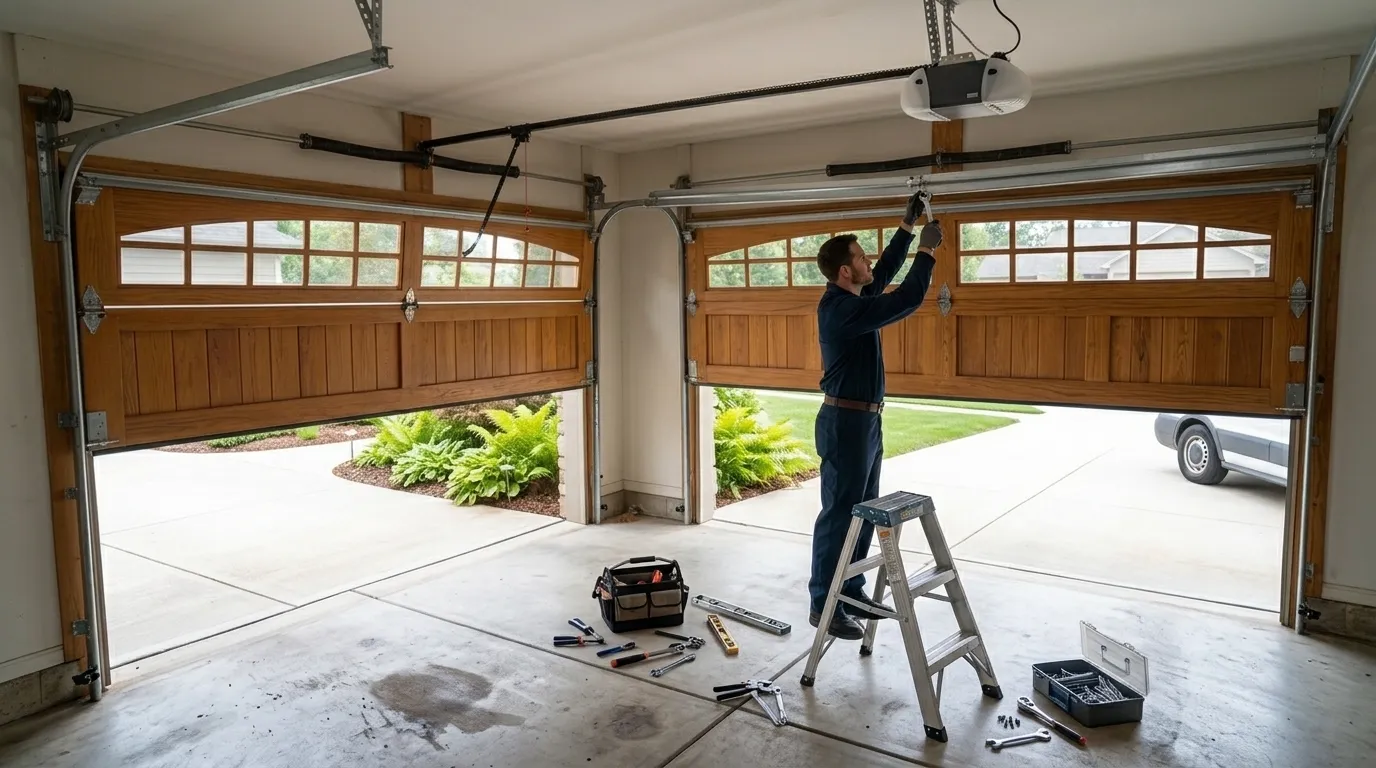
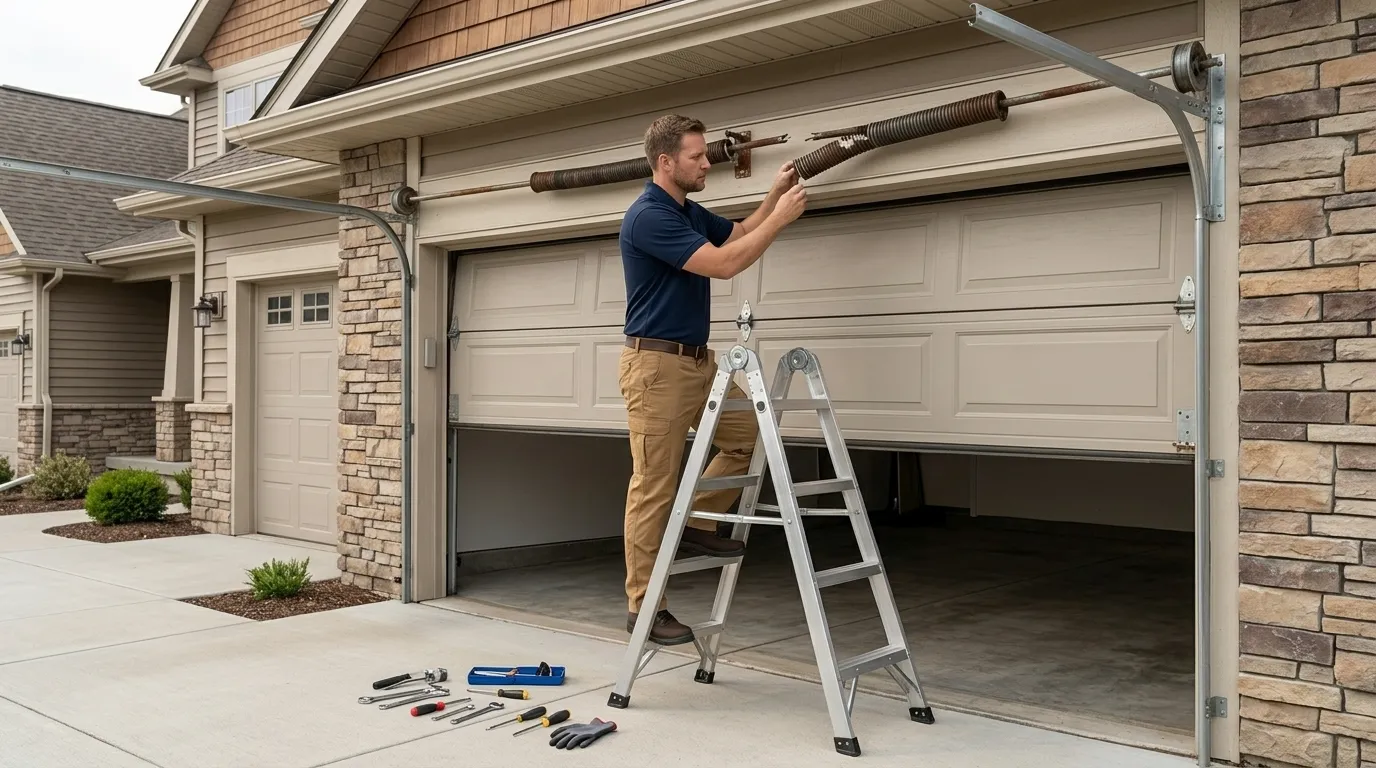
We don't quote a flat number here because what a maintenance visit runs depends on what's on the door - a torsion spring setup from a 1980s build is a different job than a newer extension-spring system on a house built after 2000. What we can tell you is what drives the cost: how many springs, whether the opener is original or replaced, and whether rollers and cables have been serviced before or are seized from years of neglect.
Across the service area, housing runs from 1938 up through 2015, with the median build year around 1982. That spread matters because a maintenance call on an older torsion setup often turns up worn bearing plates or a cable that's frayed past the point of just lubricating it - which changes the visit from a tune-up to a parts swap. We tell you that difference before we start, not after.
The honest limitation: if your door hasn't been touched in ten-plus years, a single maintenance visit isn't going to undo that. We can get it running quiet and safe again, but we're not going to pretend a tune-up replaces parts that are actually at end of life. Sometimes the right call after we look at it is to talk about a spring or opener swap instead of another year of patching it.
Why This Fails Locally
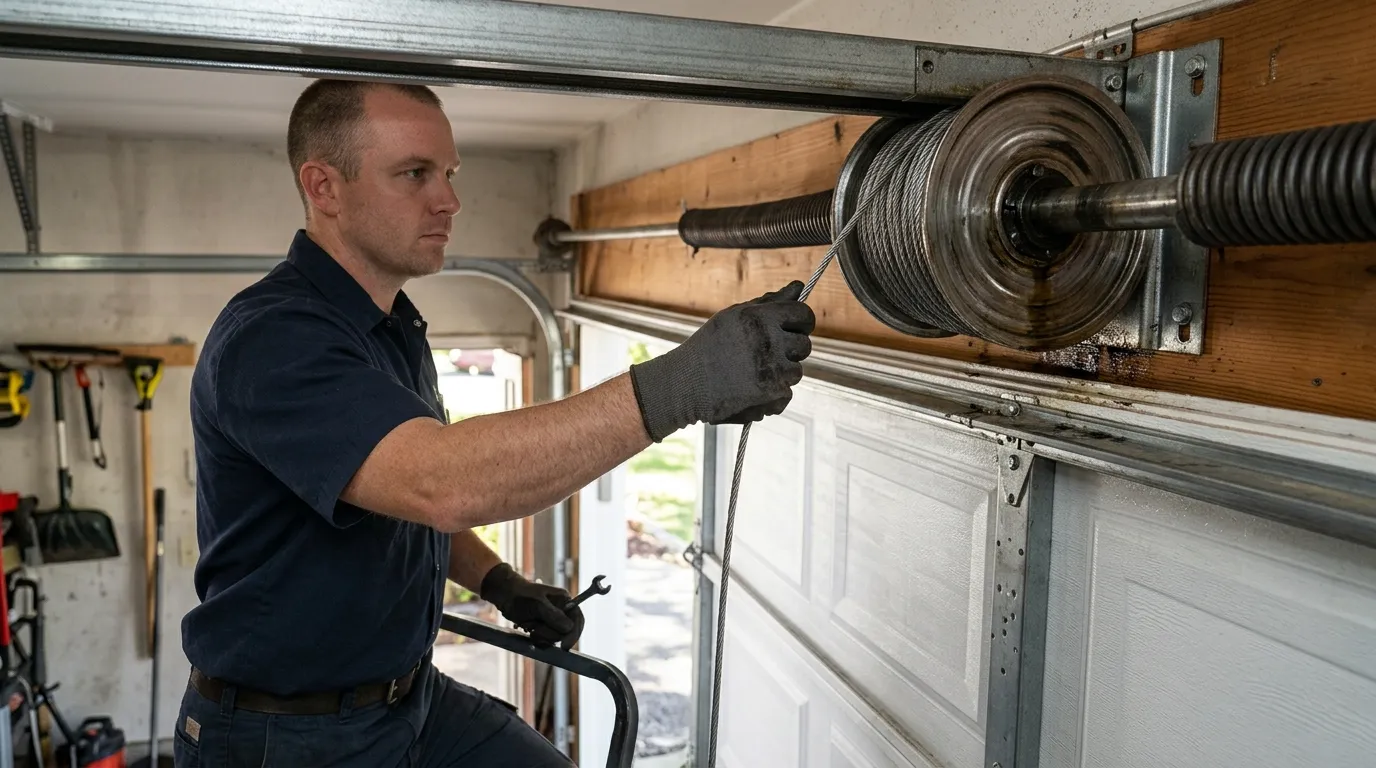
Most of the housing stock we work on across this area was built in the 1980s and 90s, spread across ten named neighborhoods with a median build year of 1982. That generation of garage doors was built with hardware that assumed regular lubrication and adjustment - torsion springs, steel rollers, cable drums - none of it maintenance-free the way newer polymer-roller setups try to be.
The climate here is mild temperate, which sounds like it should be easy on hardware, and mostly it is - no freeze-thaw cycling, no snow load. But mild and dry doesn't mean maintenance-free. Salt air off the coast and steady exposure without the seasonal extremes that force homeowners inland to think about their garage door twice a year means doors here just get ignored longer. A spring that would announce itself with a loud bang in a colder climate just slowly loses tension here, and by the time it fails, it fails without warning.
So the common failure mode isn't storm damage or ice-jammed tracks. It's a decades-old torsion spring or a dry cable drum that's been running quietly worse for years because nothing forced anyone to look at it.
What You Are Seeing
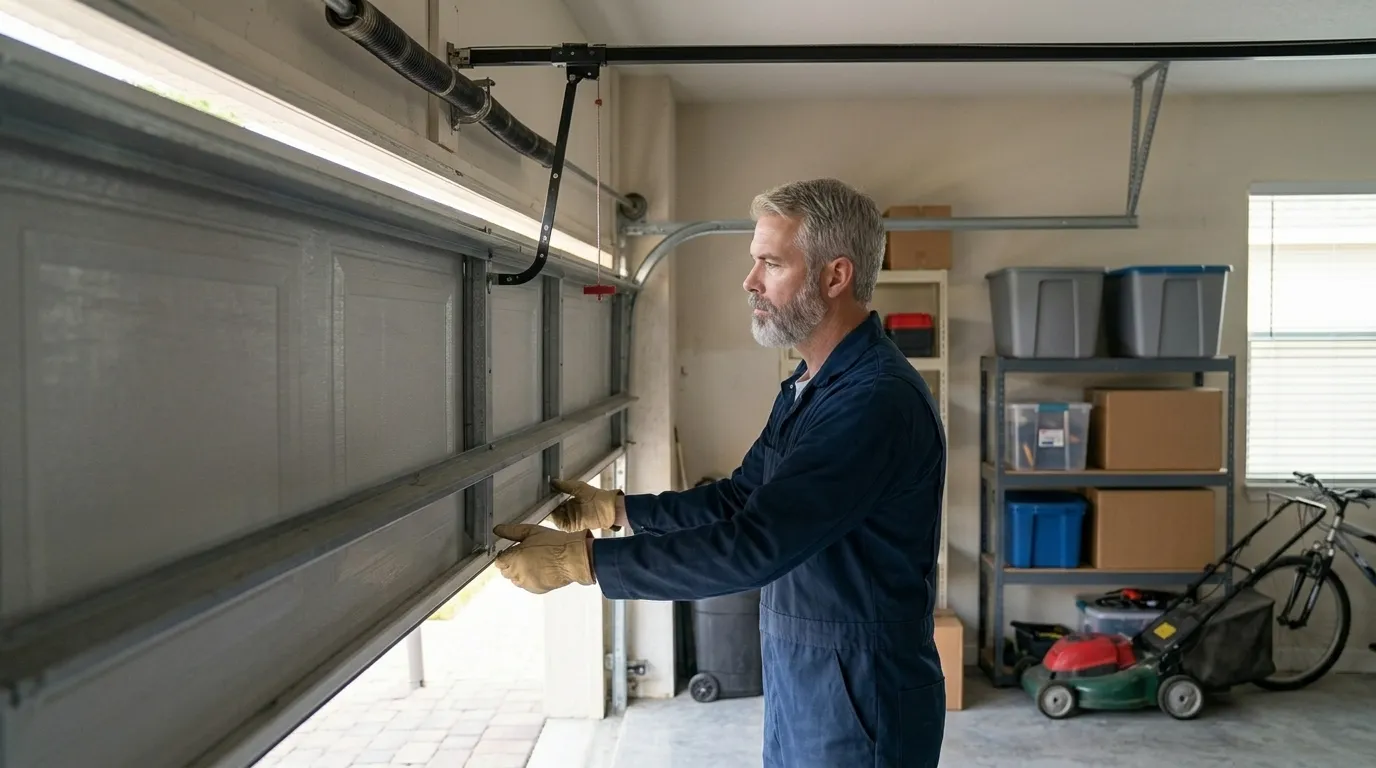
If your door is noisy on the way up, catching partway, or the opener strains and reverses before it closes, that's usually a spring losing tension - the most common call we get from houses built in that 1980s-90s window that makes up most of the area's stock. A door that drifts open a few inches on its own, or feels heavier than it used to when you lift it manually, is the same story: spring fatigue, not an opener problem.
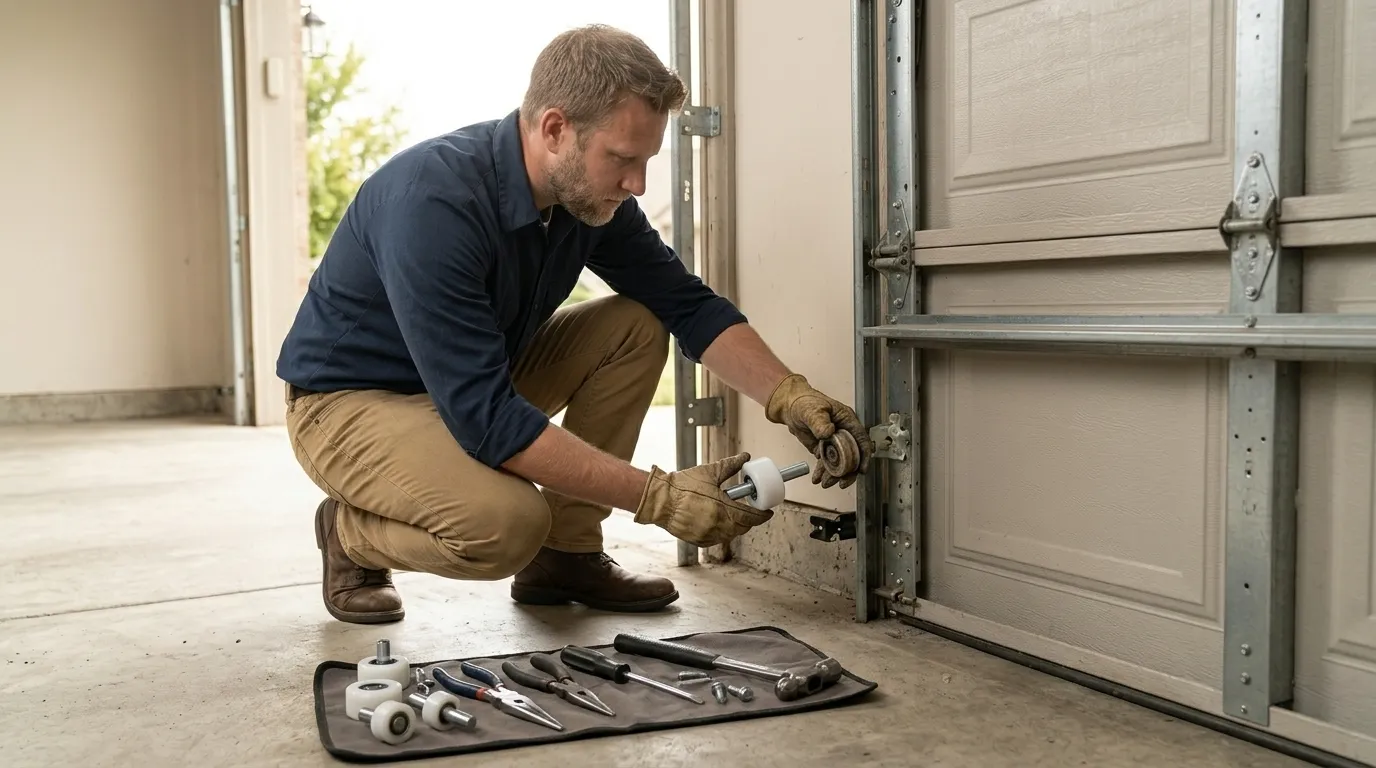
A door that shudders or jerks partway through the cycle, especially near one side, points to a roller or cable issue rather than the spring. That's more common on doors that have gone a long stretch without lubrication, which happens easily here since the mild temperate climate doesn't force the kind of seasonal check that colder regions get by default.
If you're hearing a grinding or scraping sound low on the track, that's usually a roller at the end of its life, not the track itself - a $20 part causing a symptom that sounds a lot worse than it is.