What You Pay
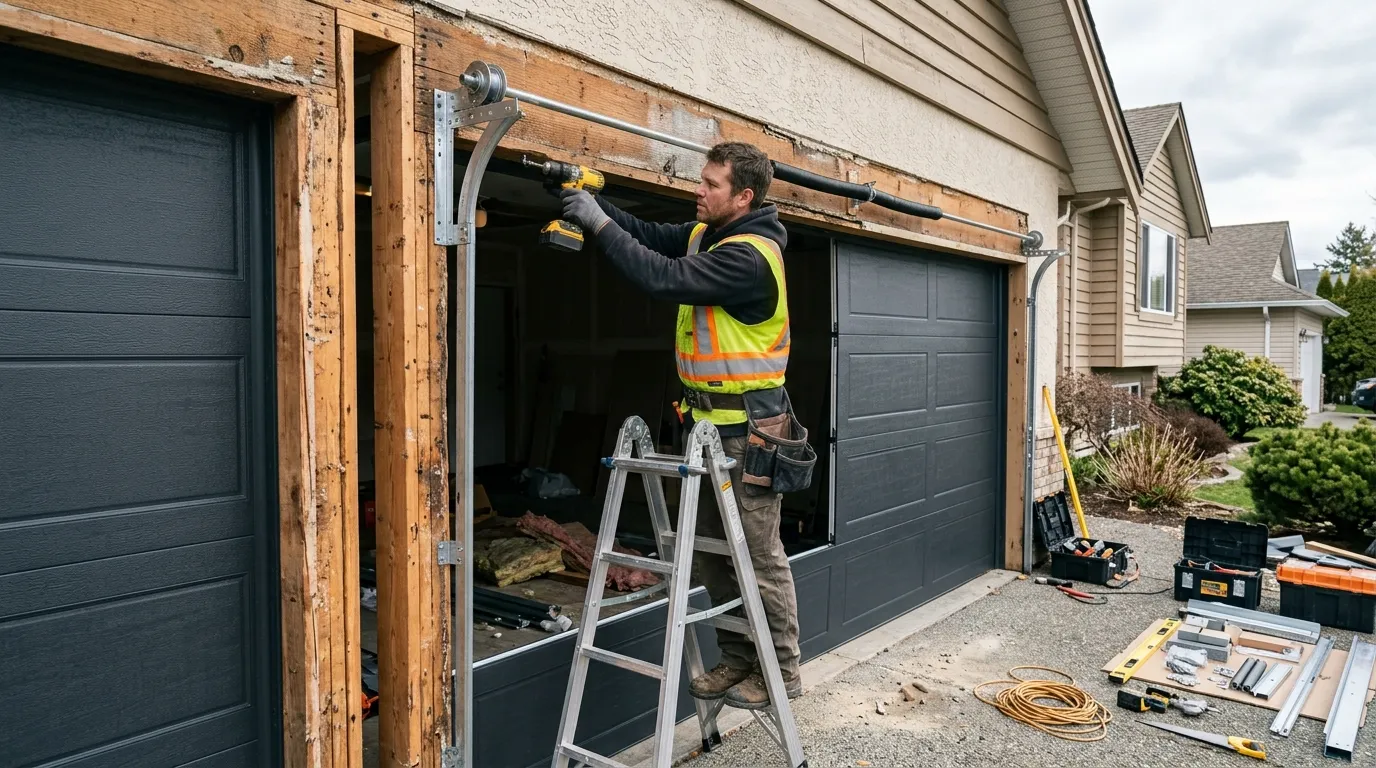
There's no flat number for an off-track door, and we're not going to invent one. The real range depends on whether this is a bent track that needs straightening or replacing, whether a roller sheared off and took a bracket with it, and whether the cable that guides the door came off the drum at the same time. A single bent section on one side is a smaller job than a door that's dropped off both tracks and is now wedged crooked in the opening.
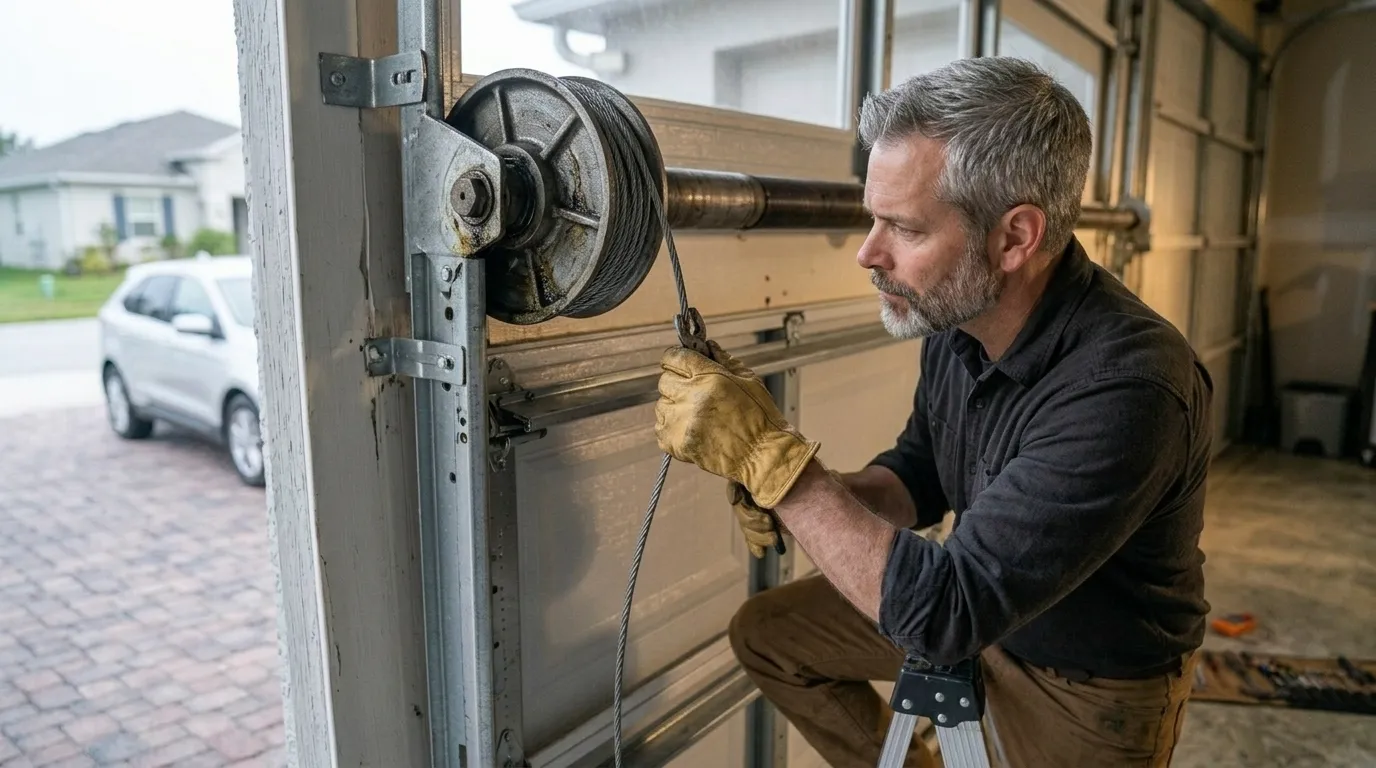
What we can tell you: the labor is usually the bigger share of the bill, not the part. A roller or a bracket costs little on its own. What costs time is getting the door back on its rollers safely without it dropping on someone, checking the track alignment top to bottom, and making sure the spring tension didn't shift when the door came off - because if it did, you've got a second problem stacked on the first. If you want an actual number, we'll give you one after we look at the door, not before.
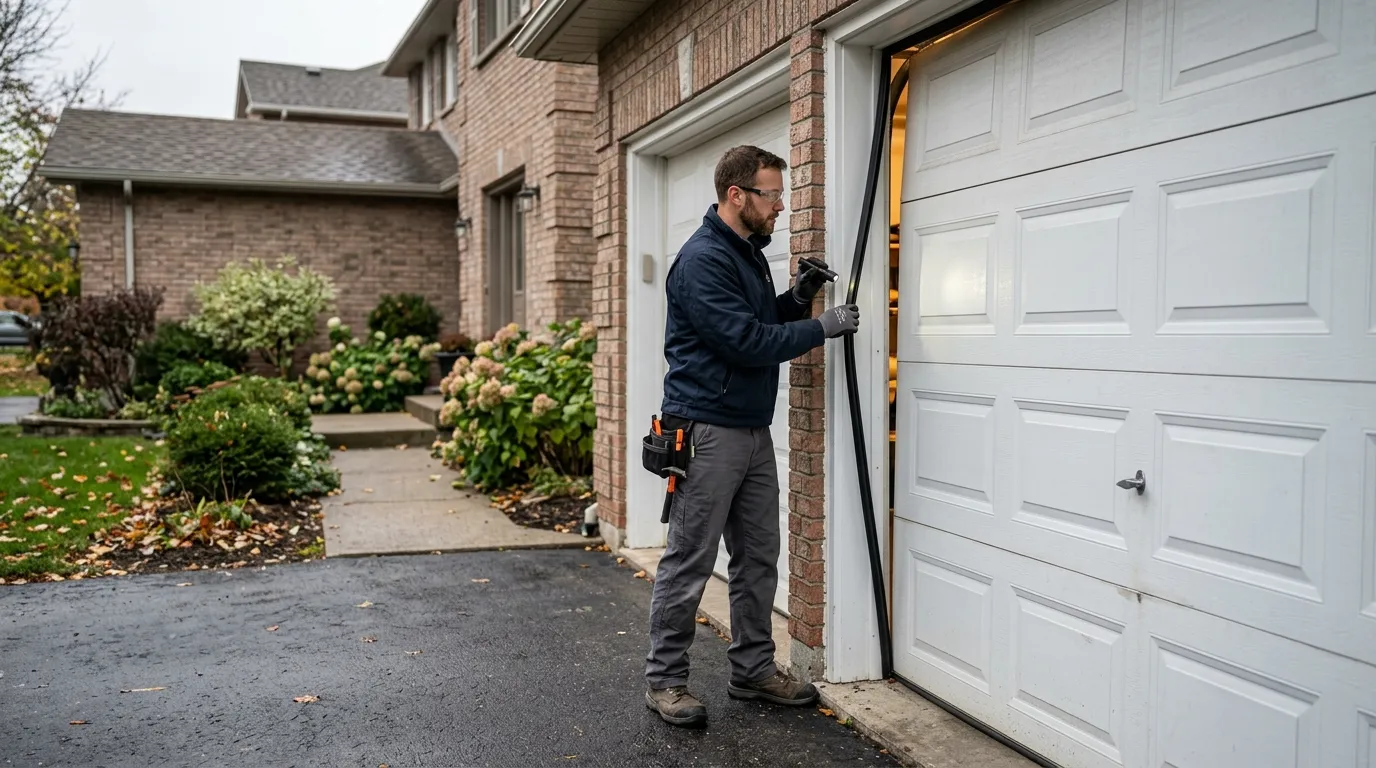
One honest limitation: if the track is more than mildly bent, we replace the section rather than trying to hammer it straight. A straightened track that looks fine can fail again in a few months, and that's a callback nobody wants.
Why This Fails Locally
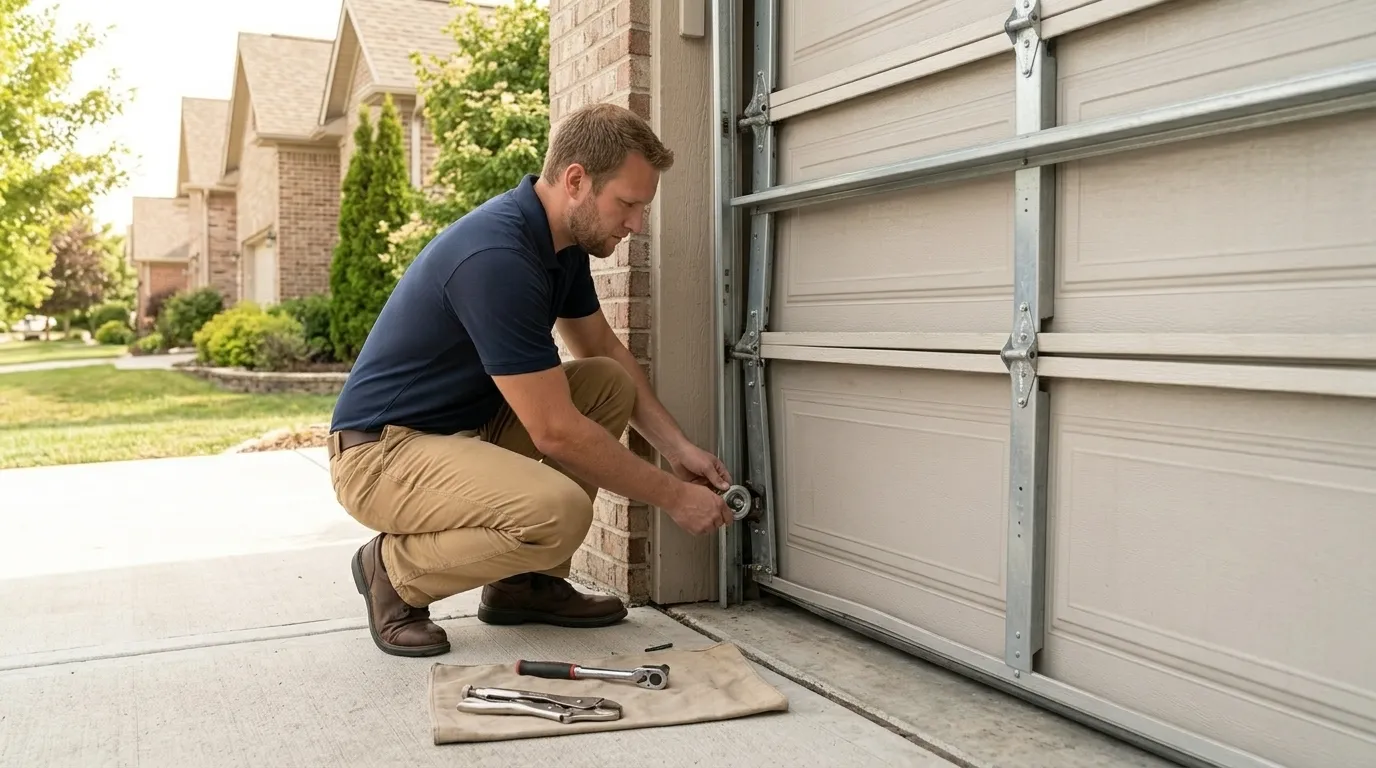
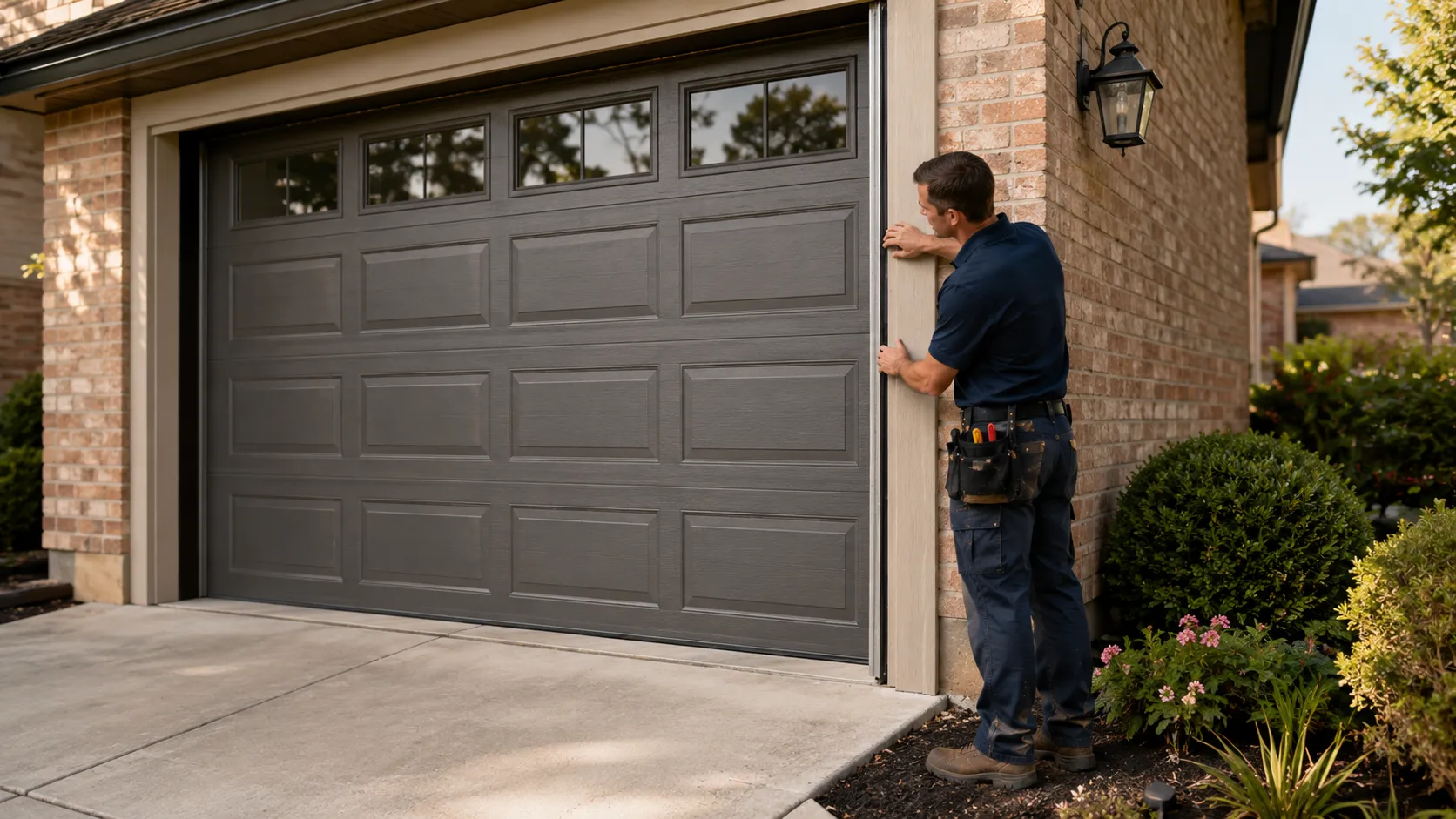
Housing across this service area was built between 1938 and 2015, with the median landing around 1982 and most of it - across ten named communities - going up through the 1980s and 90s. That build era is exactly when steel tracks with stamped sheet-metal brackets became the standard install. Those brackets were fine hardware for their time, but forty-odd years of daily opens and closes works the lag screws loose in the jamb, and a track that's lost even a little of its fastening will let the rollers walk out of the channel under load.
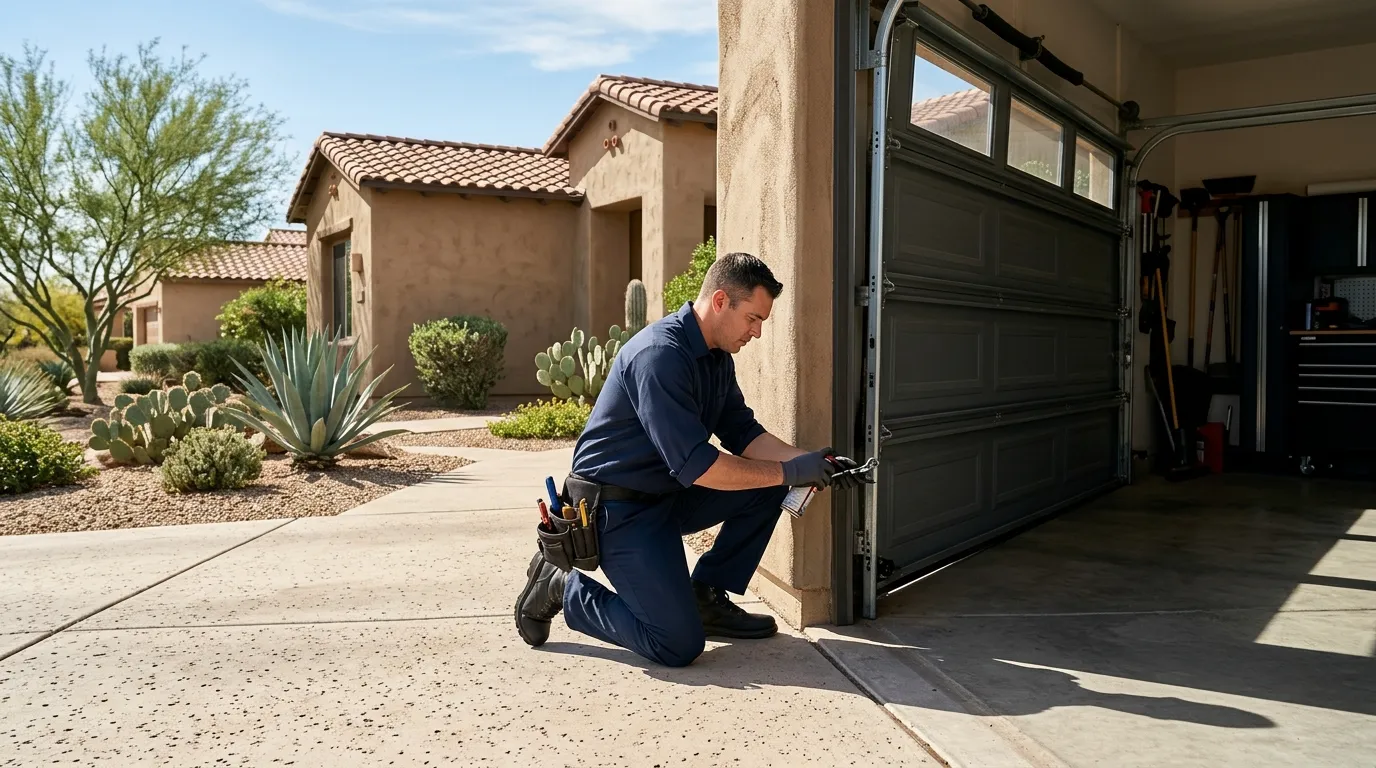
Dana Point sits in a mild temperate climate band, so this isn't a freeze-thaw problem the way it would be somewhere with hard winters - the metal isn't contracting and expanding enough to crack a weld or snap a bracket from cold. What we see instead is slow mechanical wear: rollers that have worn oval instead of round, brackets that have backed out a quarter inch at a time, and tracks that were never quite plumb to begin with finally giving up.
A door built in the 80s or 90s is also more likely to be running on the original torsion hardware, which means a track failure often shows up alongside a spring or cable that's due anyway. We look at the whole system, not just the part that jumped the rail.
What You Are Seeing
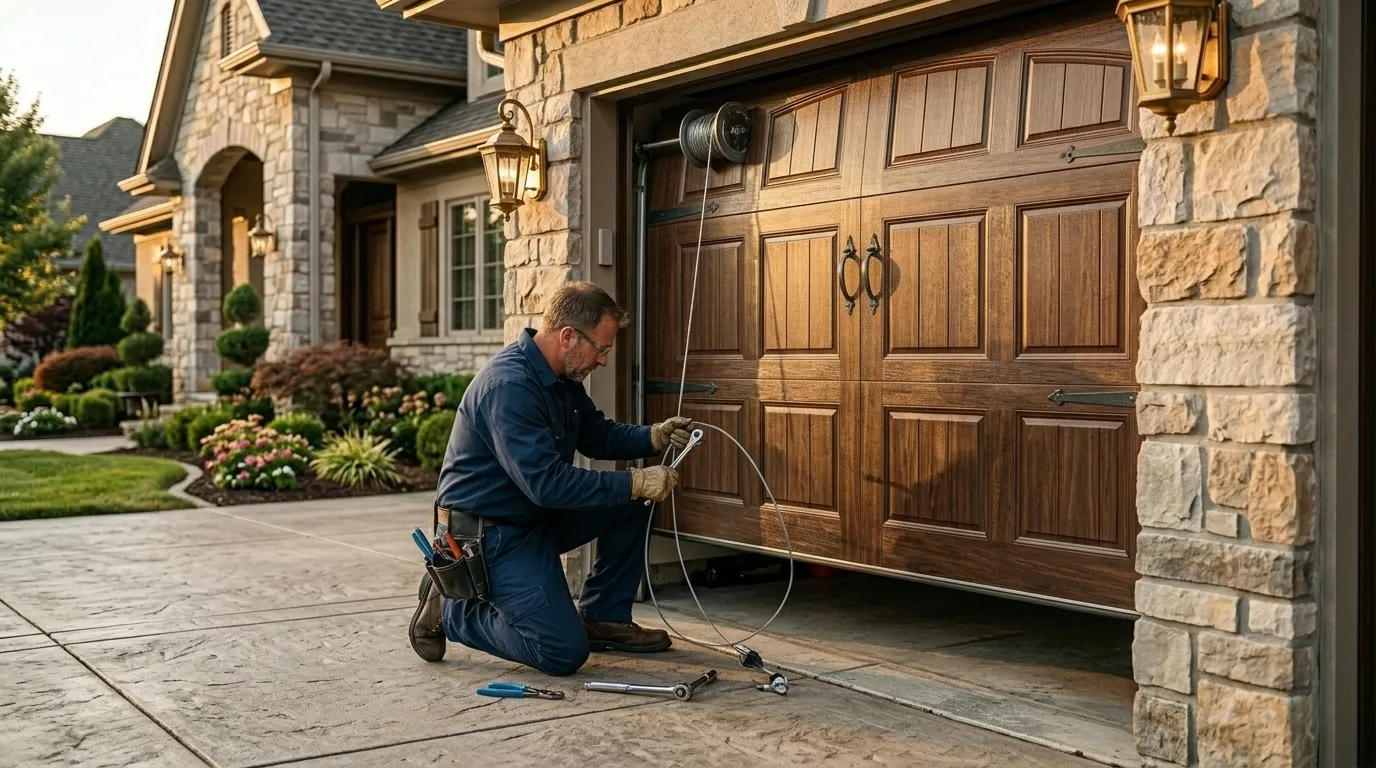
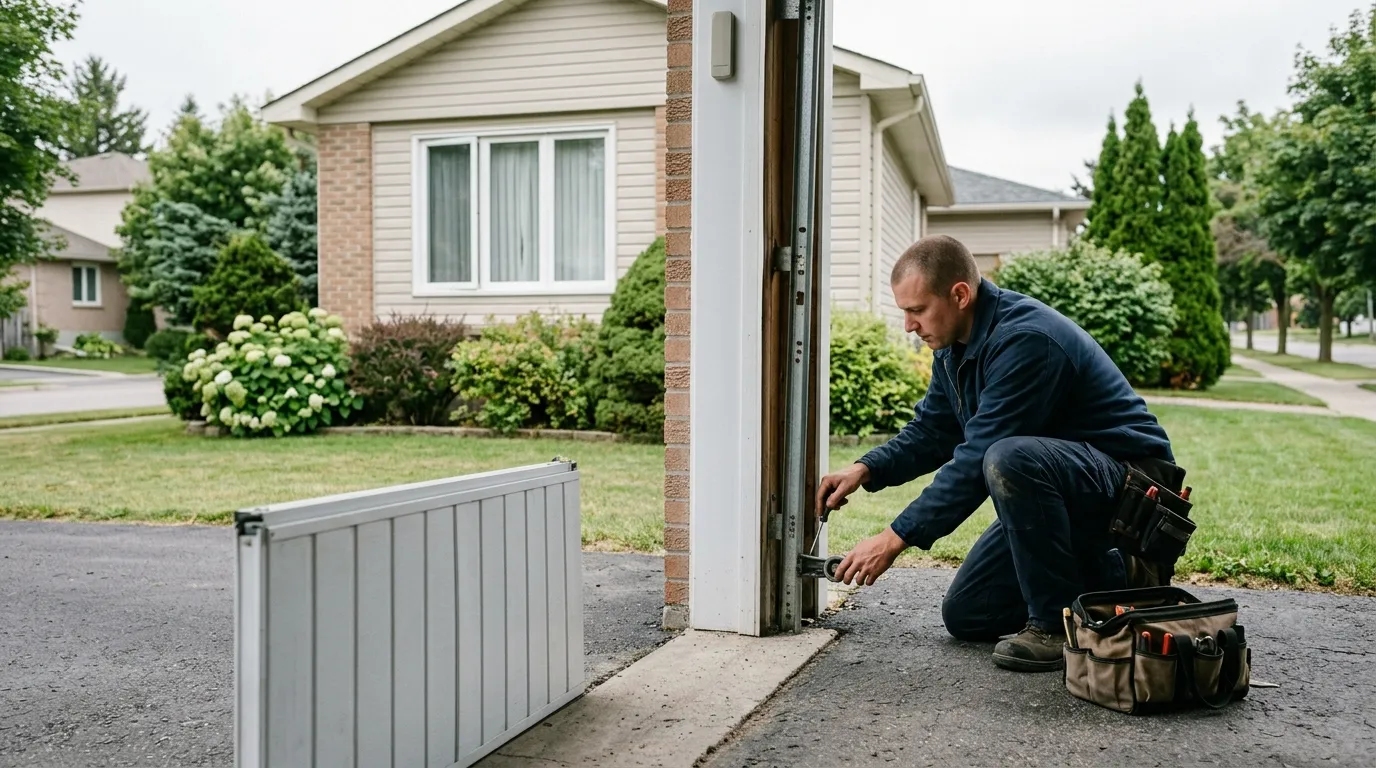
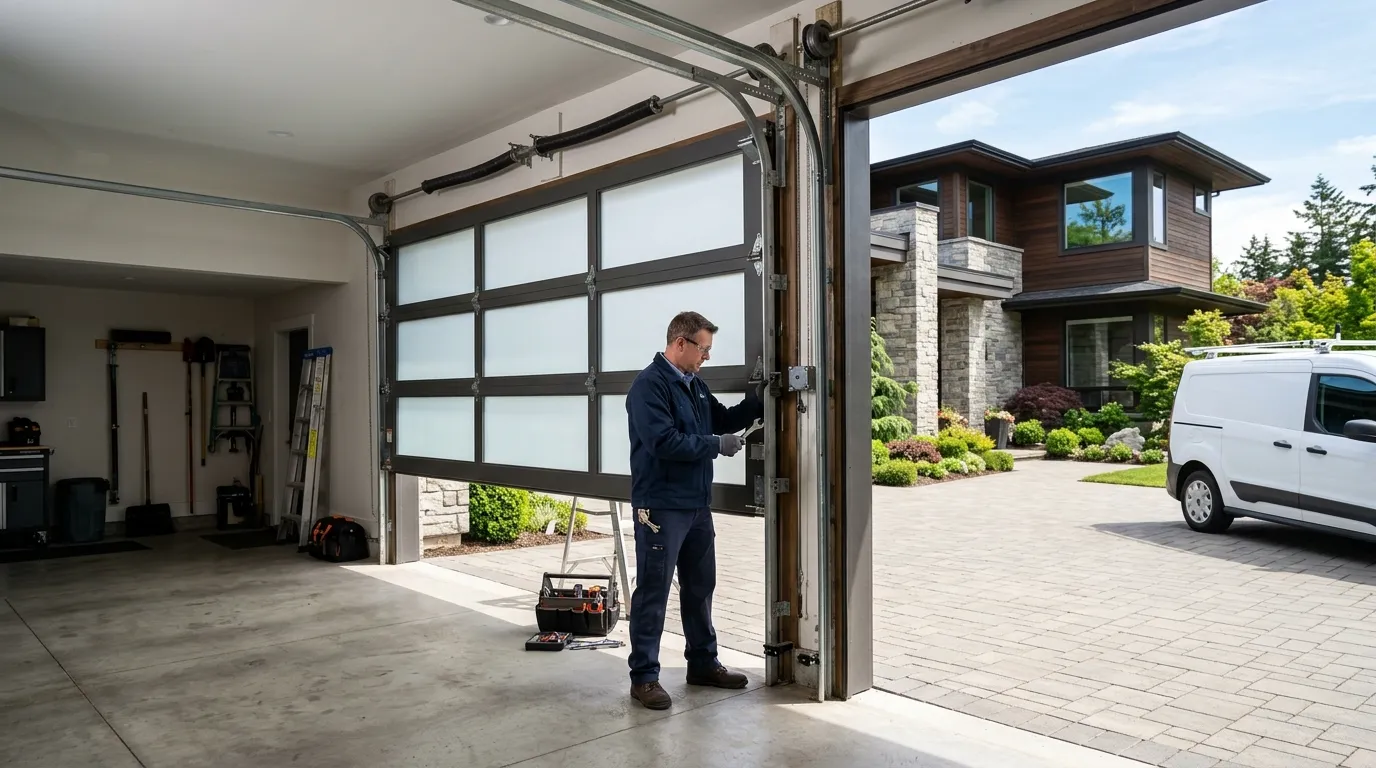
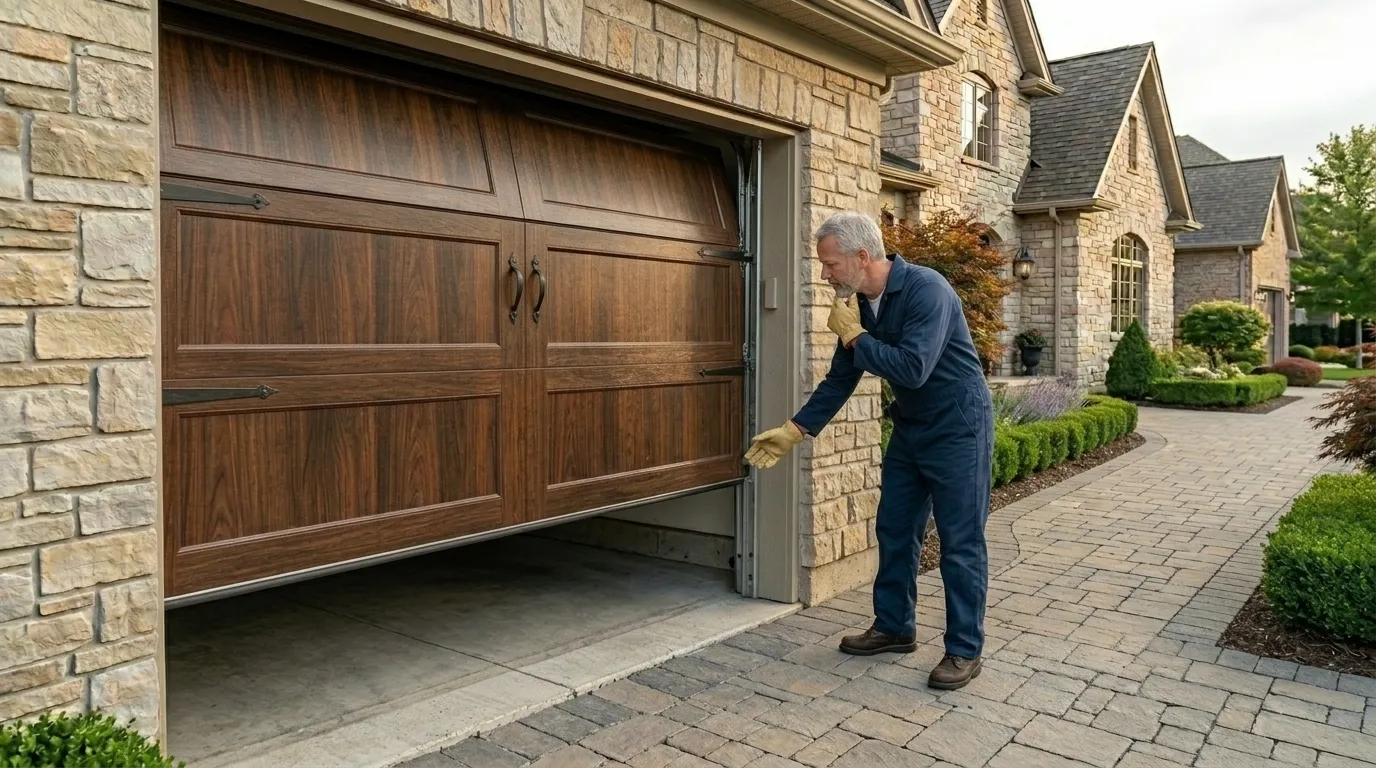
If the door is sitting crooked in the opening, hanging lower on one side, or you can see daylight between the roller and the track channel, it's off track - or close to it. A door that stutters partway up and then won't budge is often a roller that's jumped the rail and jammed against a bracket. A door that came all the way down and now won't move at all, sitting at an angle, usually means a cable let go along with the track.
Don't keep hitting the opener button. Every cycle you force pushes the door further out of alignment and can bend the track section further, or worse, pull a second bracket loose. If the door is a double, off-track on one side puts extra torque on the opposite track and roller run, so a problem that started on one side can spread to the whole door within a day or two of continued use.
If you can see the disconnect release cord hanging from the trolley, pull it to take the opener out of the equation, but don't try to force the door up or down by hand past the point where it's binding. A door stuck on a bent track can drop suddenly once it clears the obstruction, and that's not a moment you want to be standing under it.