What You Pay
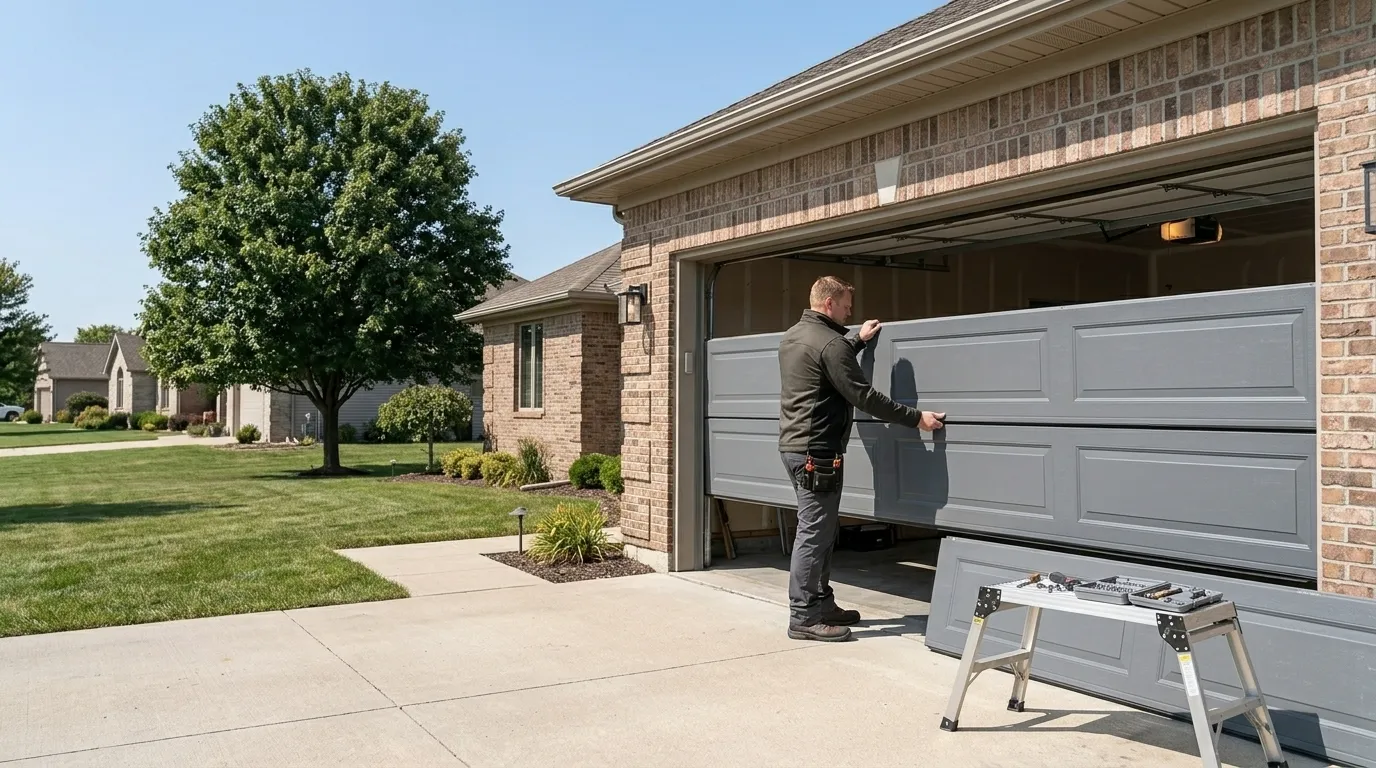
We're not going to throw a number at you that doesn't hold up once we're standing in your driveway. Roller replacement pricing depends on whether you've got nylon rollers or the older steel kind, whether the whole set needs swapping or just the two or three that seized up, and whether the track took damage from a roller that jumped it. What we can tell you is what drives the cost up or down: full-set jobs cost more than spot repairs, and doors with bent track from a failed roller take longer than a straight roller swap. Ask us for a number over the phone once you can tell us what you're hearing and seeing - most homeowners can describe enough for us to give a real range before we show up.
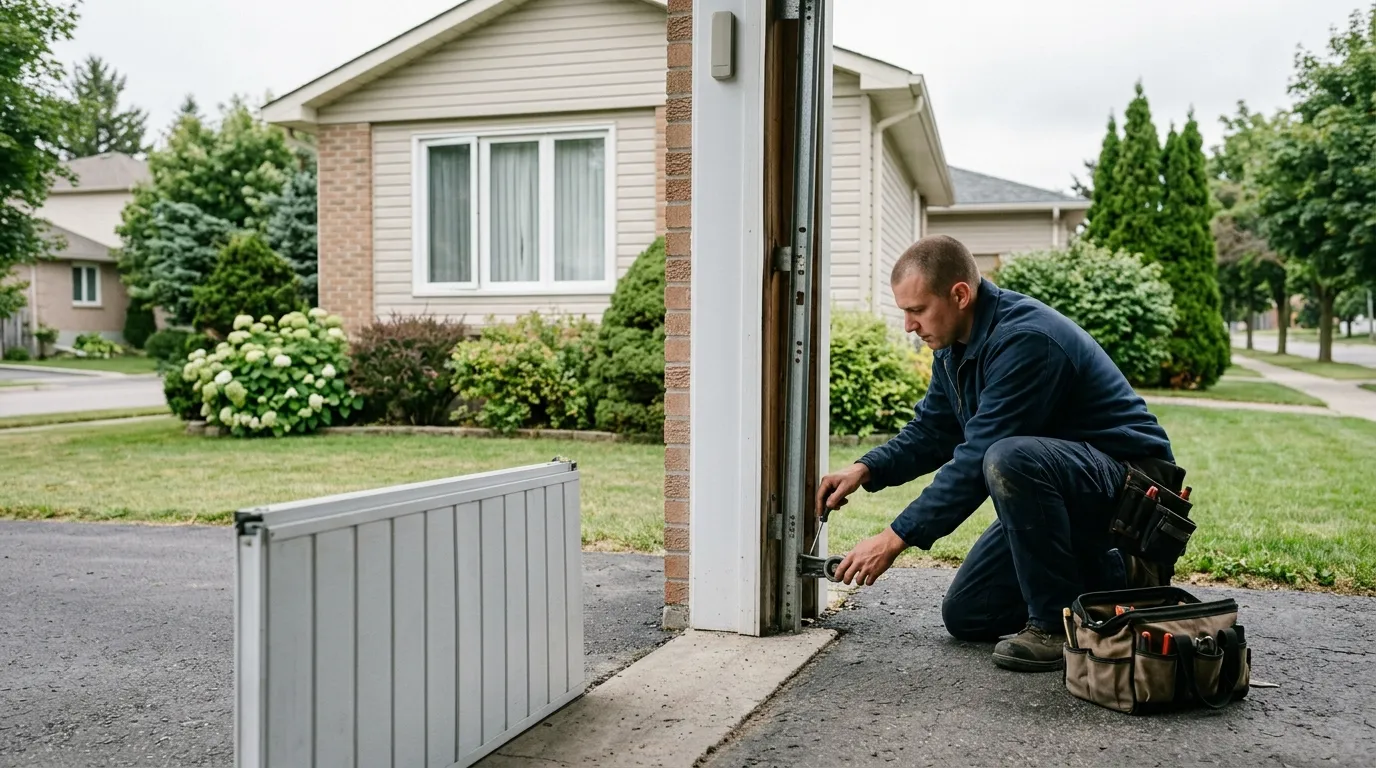
One honest limitation: if your track is bent badly enough, roller replacement alone won't fix the door. We'll tell you that on the phone, not after we've already charged you for rollers that can't do their job on warped track.
Why This Fails Locally
Dana Point's housing runs from 1938 up through 2015, but the bulk of what we work on dates to the 1980s and 90s builds spread across the ten or so named areas that make up this service area. Doors from that era were mostly built with steel rollers on steel track, and steel-on-steel wears down through friction and pitting - no rubber or nylon buffer to absorb the grind. Thirty-plus years of opening and closing adds up fast on original hardware nobody's touched.
Our climate band is mild temperate, so we don't get the freeze-thaw cycling that cracks nylon rollers in colder parts of the country. But mild doesn't mean dry - marine air near the coast still gets into steel bearings and races, and corrosion on old steel rollers looks different from the wear you'd see inland. What we see here is less about extreme weather and more about age: original 1980s and 90s rollers that have simply outlasted their bearings, on doors nobody's had serviced since they were installed.
What You Are Seeing
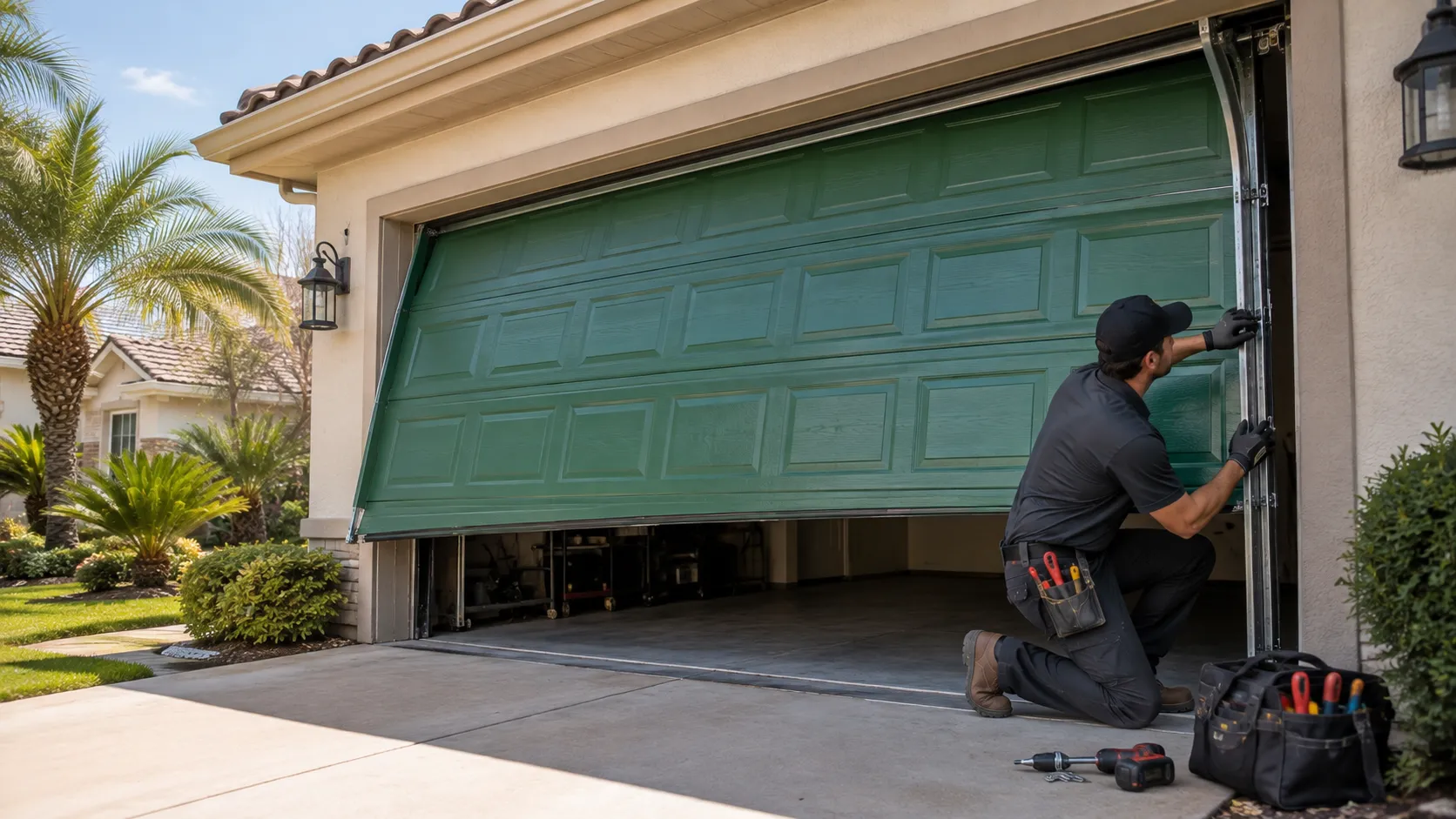
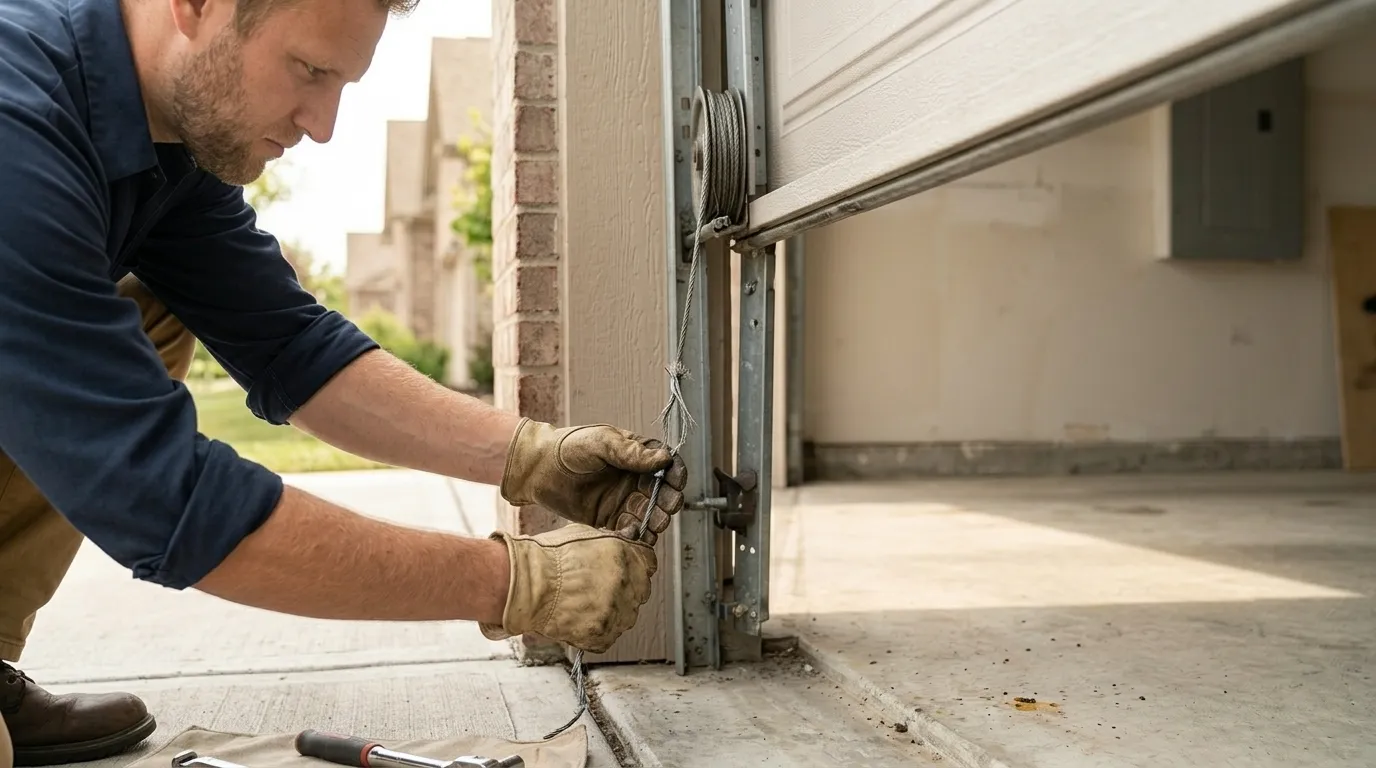
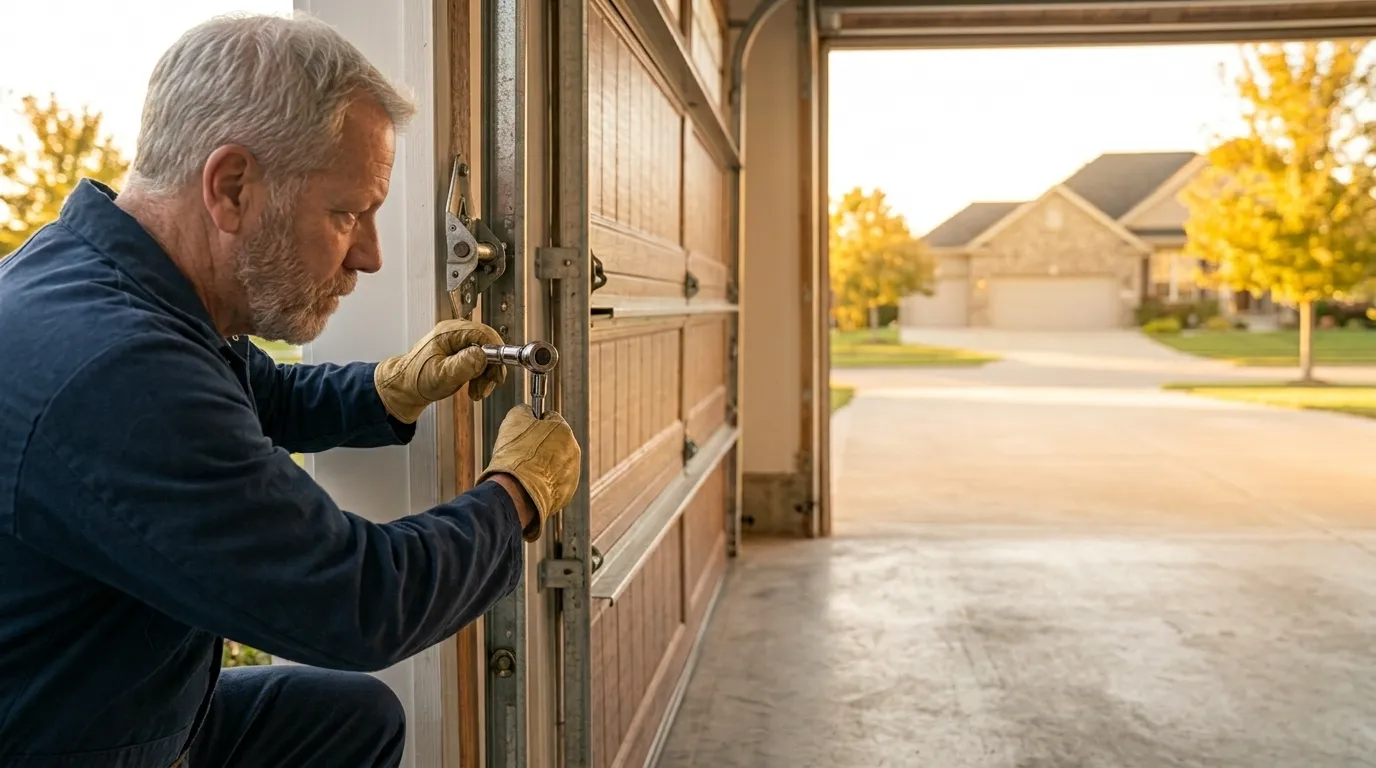
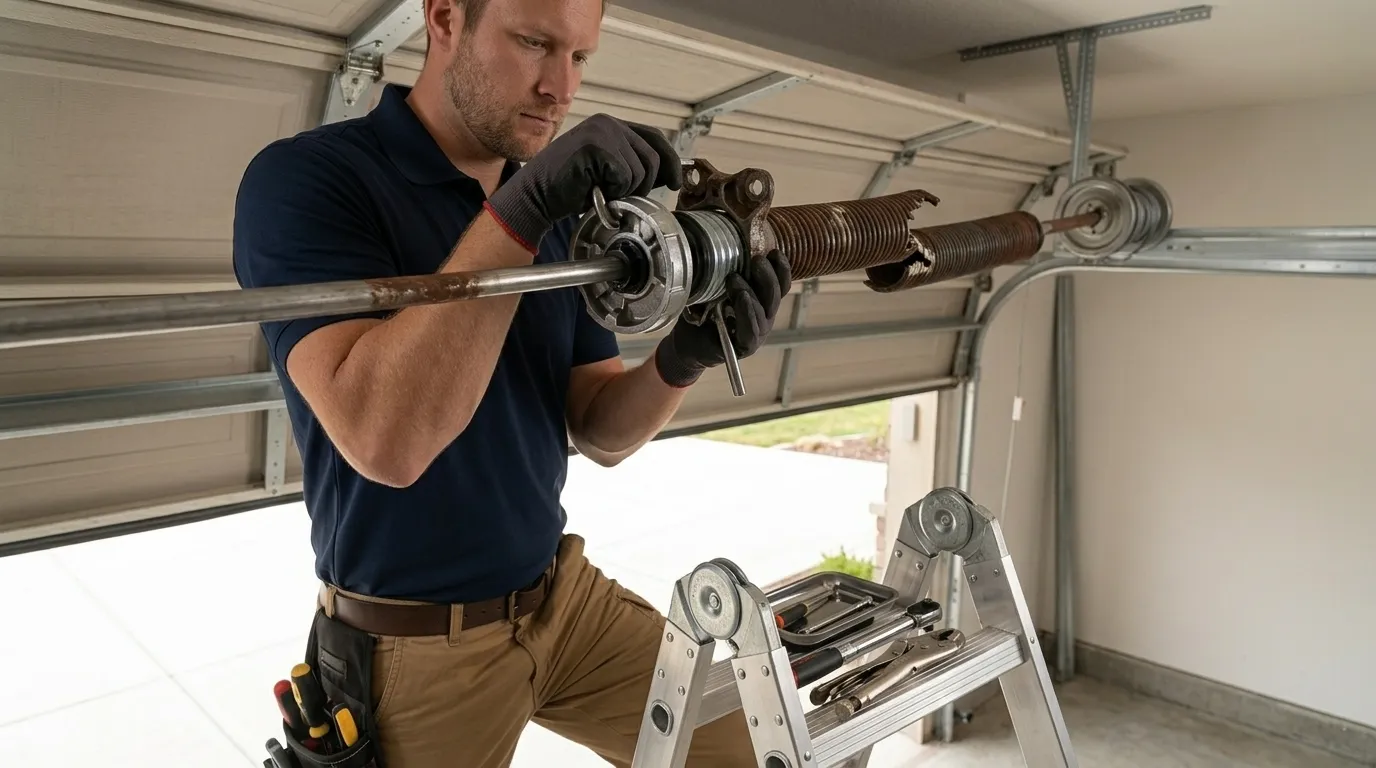
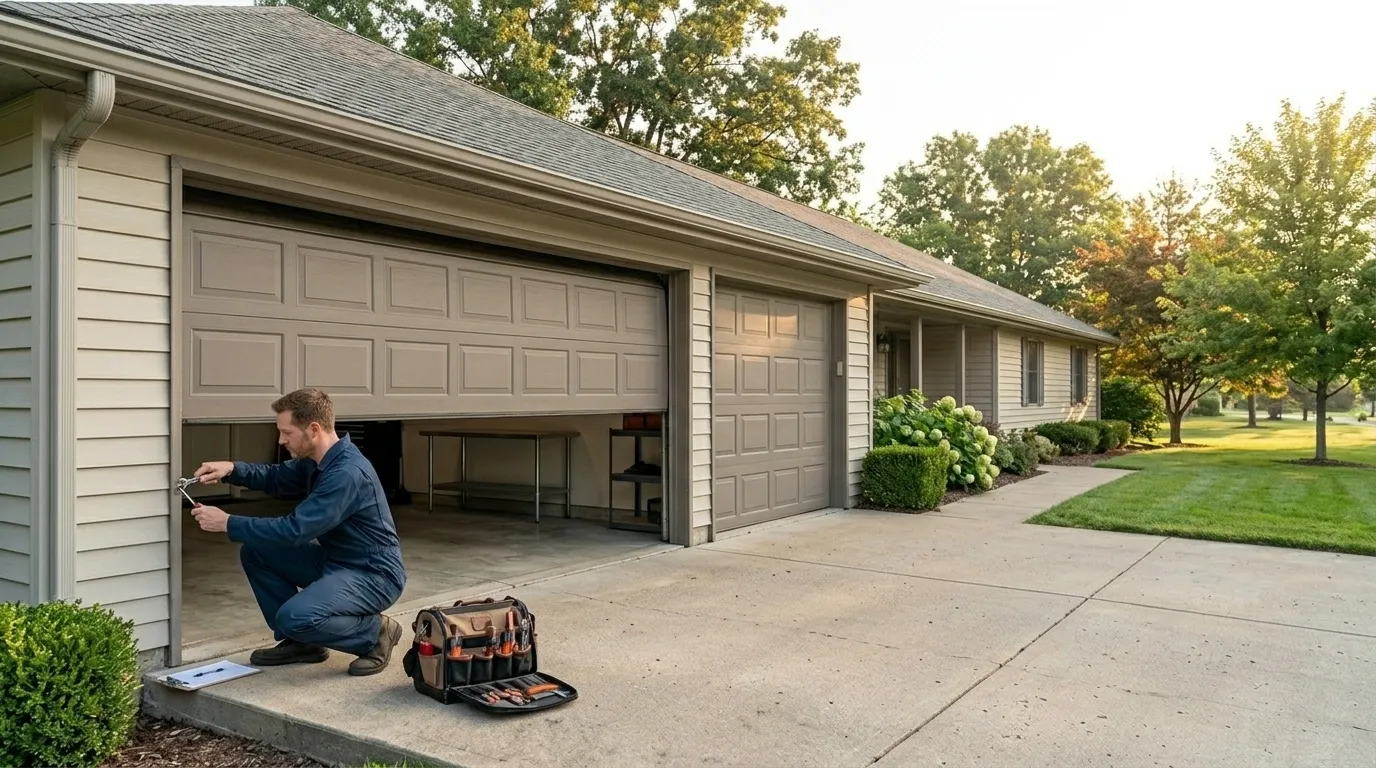
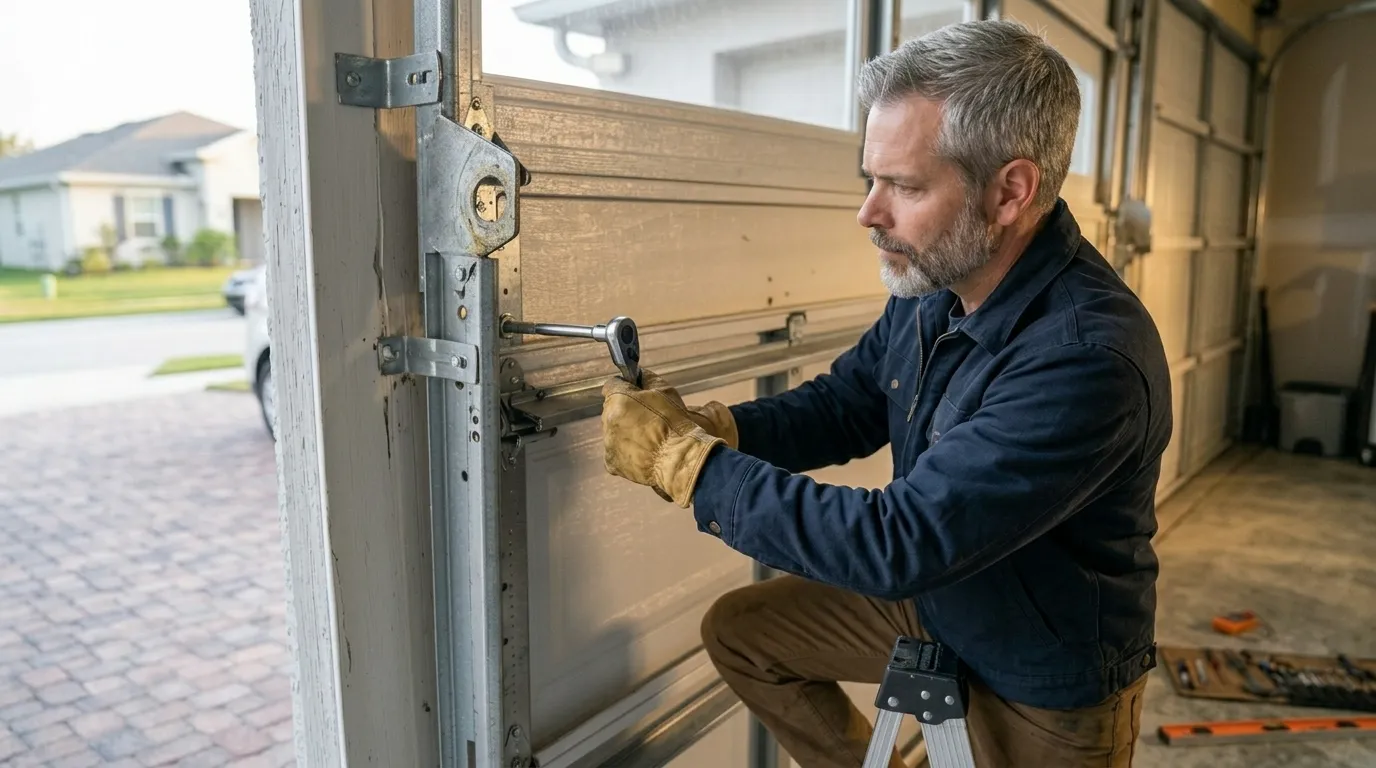
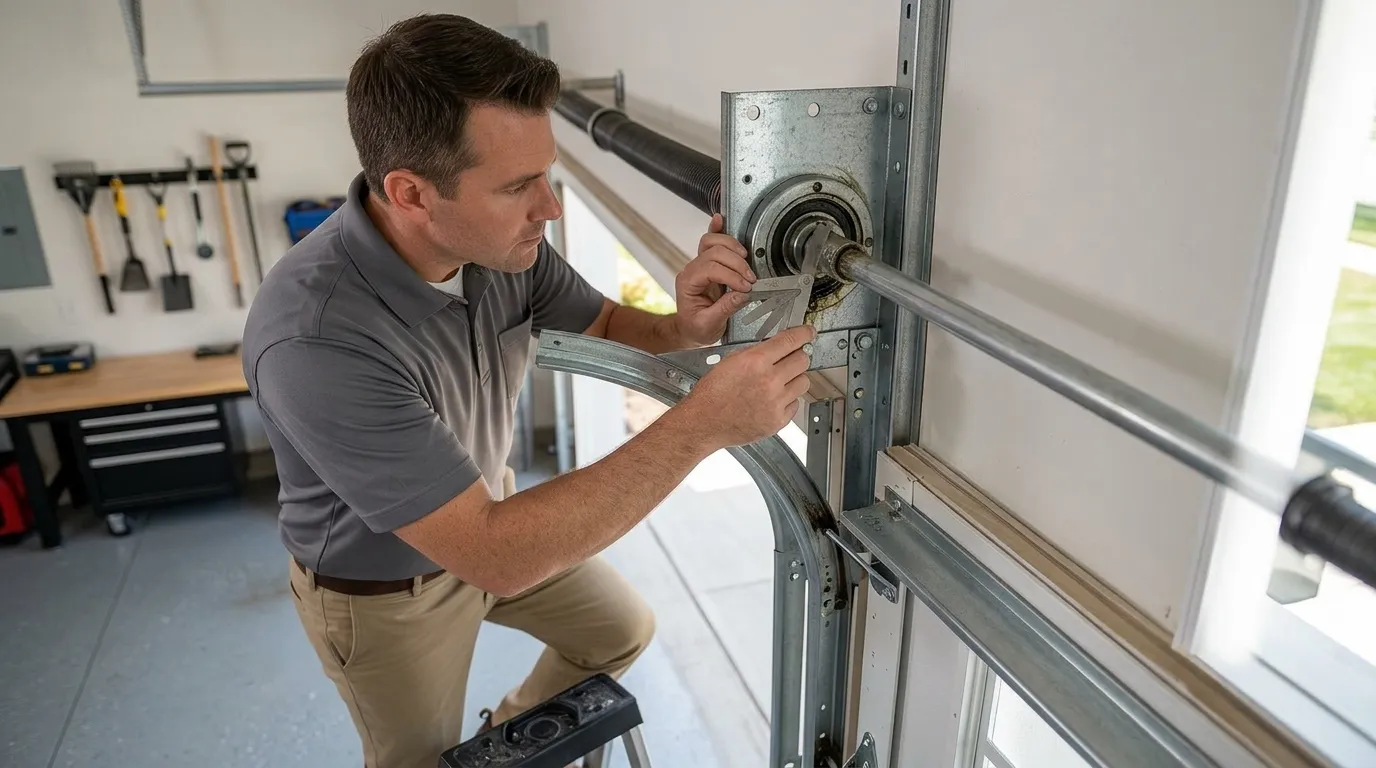
A grinding or rattling sound as the door travels, especially near the top or bottom of the track, usually means a roller bearing has worn out. If the noise gets worse right where the door meets the header, that roller is likely close to failing outright. Visible wobble in the door as it moves, or a roller that looks flat-sided instead of round, means it's past due.
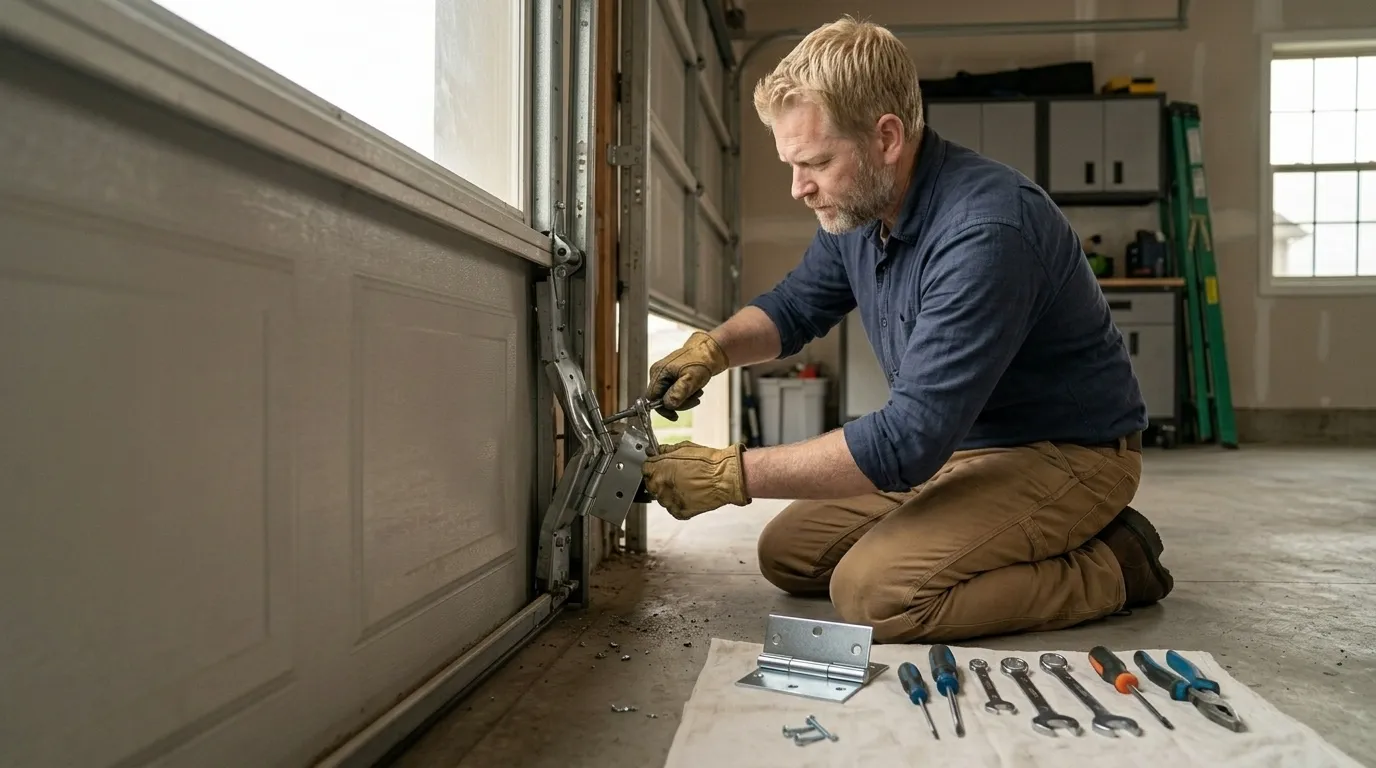
If you see chips of nylon or rust flakes on the garage floor near the track, that's roller material breaking down, not just surface wear. And if the door has ever jumped the track, even briefly, don't wait - a roller that's slipped out once has a weakened stem and will do it again, often at a worse moment. None of this is exotic. It's what steady use over three or four decades does to original hardware that was never meant to last that long without attention.