
Stocked Parts
The median Laguna Beach house went up around 1964, which puts a good share of this town's garage doors and their hardware a full generation ahead of the 1980s-90s stock that makes up most of the wider Dana Point service area. That gap matters more than it sounds. A door installed in the mid-1960s was built to different spring tension standards, often ran on narrower track, and in a lot of cases still has its original lift cables and drum sheaves - nobody's ever had a reason to swap them if the door still lifts.
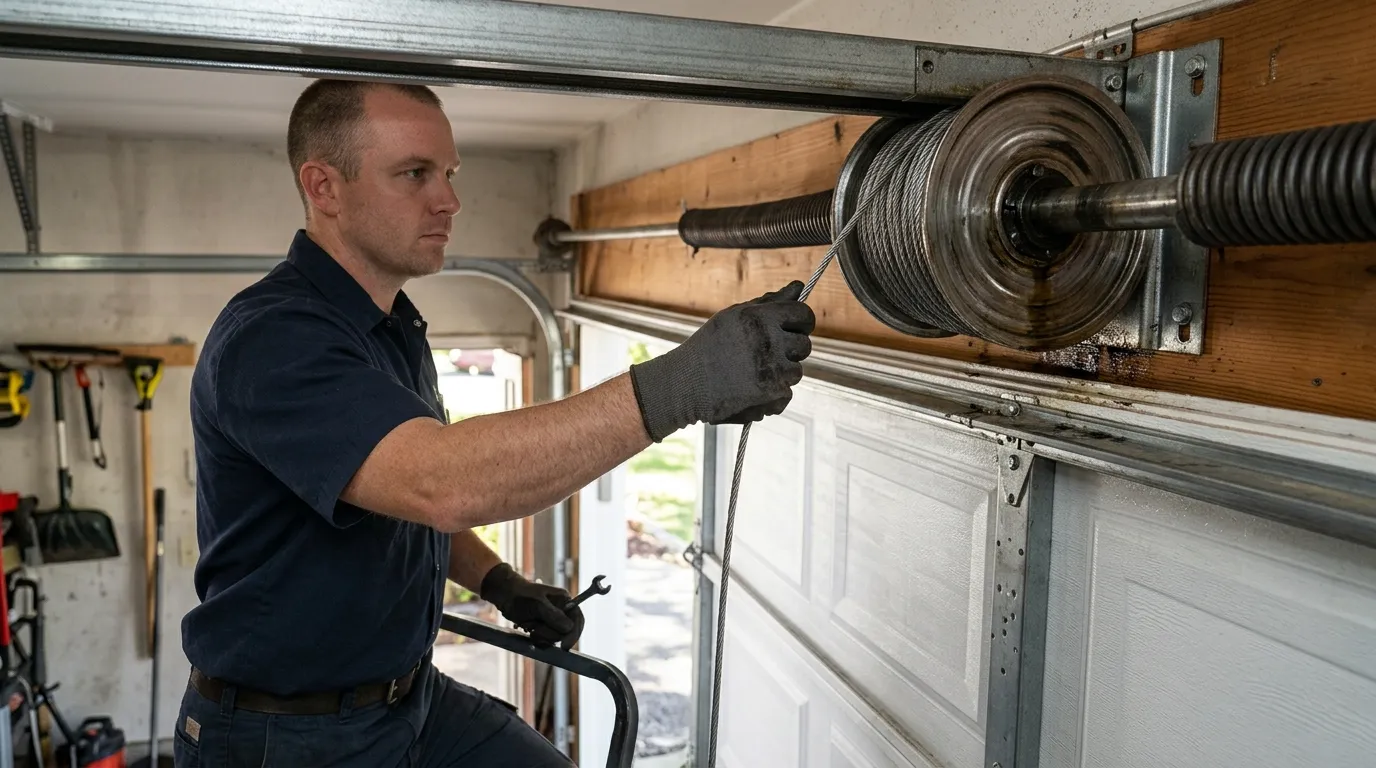
We carry torsion springs across a wide range of wire sizes and drum diameters precisely because a 1964-era door doesn't take the same spring as a 1995 tract-built door, and guessing wrong means a spring that's either too weak to hold the door or one that puts a service tech's fingers at real risk. We also keep older-style extension spring hardware and safety cables on the truck, since older Laguna Beach garages were more likely to be built for extension systems before torsion became the standard retrofit. What we don't stock is anything specific to a door model that's been discontinued for decades - if a panel or a bracket is genuinely obsolete, we'll tell you that up front rather than have you wait on a special order that may never ship.'
Why This Fails Locally
A door that's been running since 1964, or on hardware installed not long after, fails differently than a ten-year-old door. Steel that's been cycling for sixty years develops metal fatigue nobody can see from the outside - a spring doesn't announce it's about to go, it just goes. Cables that have never been replaced fray at the drum from decades of the same contact point, and rollers that started as steel or unlined nylon grind their tracks out of true over that many winters and summers.
Laguna Beach sits in the same mild temperate band as the rest of the area, so we're not dealing with freeze-thaw cycling on hinges the way colder regions do. But mild coastal air still carries salt and moisture, and on hardware that's original to a 1964 build, decades of that exposure adds up on anything not stainless or well-lubricated. The other factor is household income here running near $140,508, noticeably below the broader service area's $160,809 median - which we mention only because it shapes a real decision: on original hardware this old, a full section replacement is sometimes cheaper over ten years than repeated patch repairs on parts that are past due anyway.
What the Fix Involves
For a house this age, the first thing we check isn't the part that broke - it's what else on that same hardware run is close behind it. Replacing one cable on a system that's original to 1964 usually means the matching cable on the other side is just as worn, even if it hasn't snapped yet. We'll tell you when it makes sense to do both sides at once versus patching the one that failed.
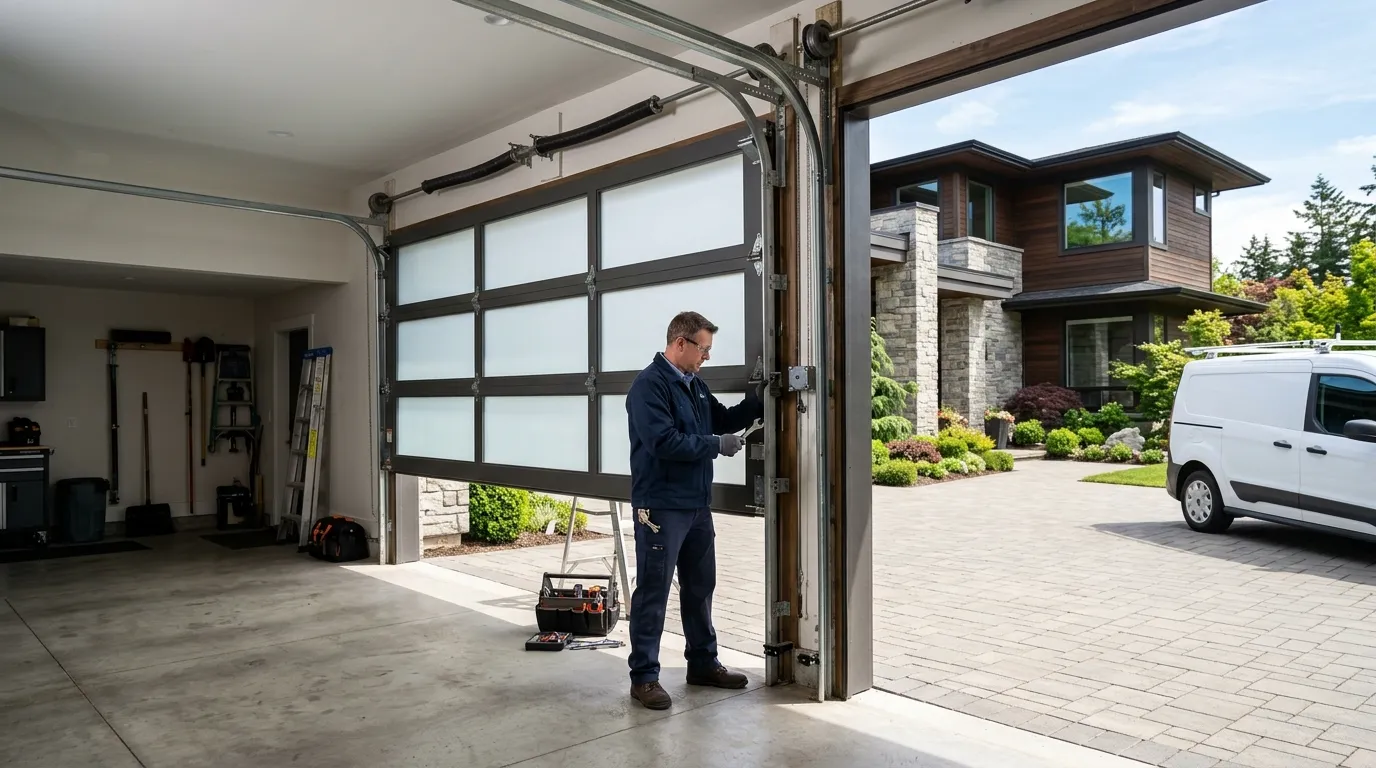
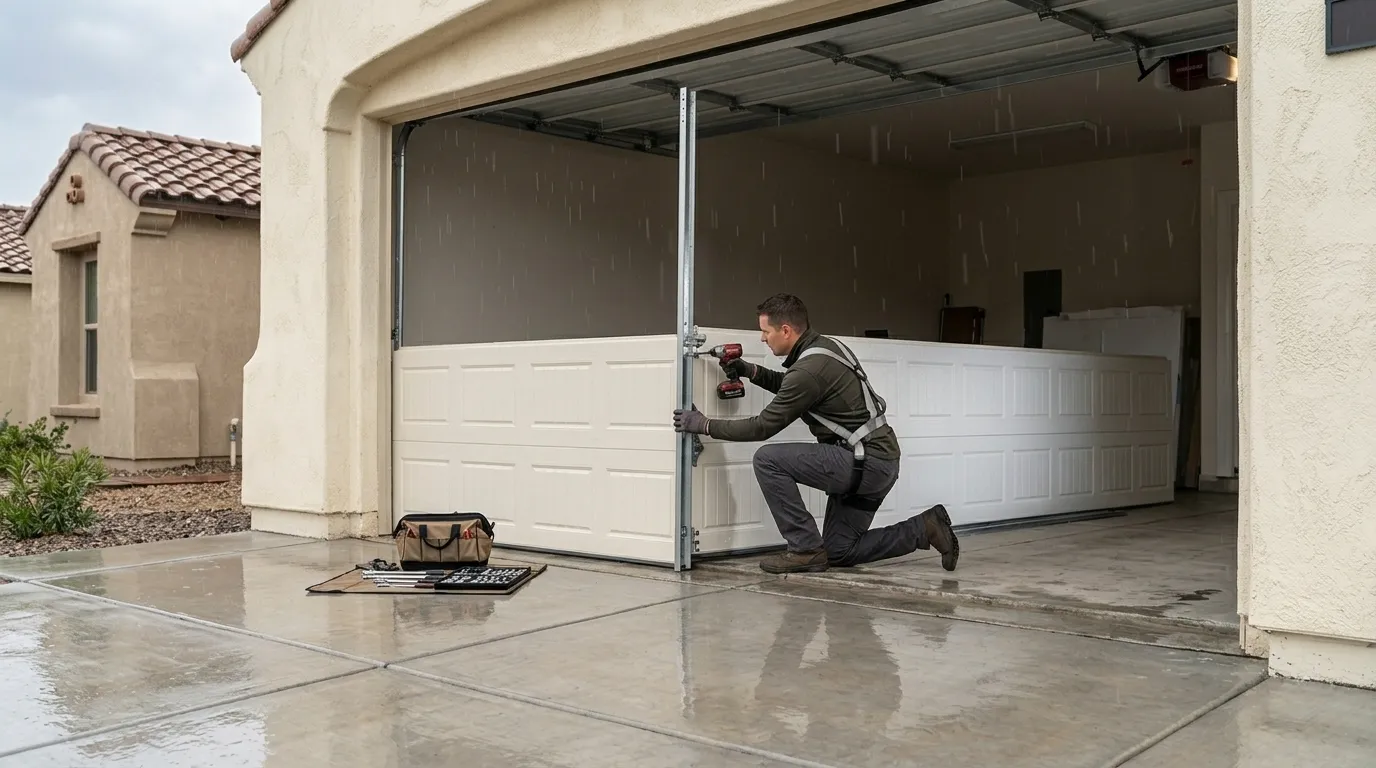
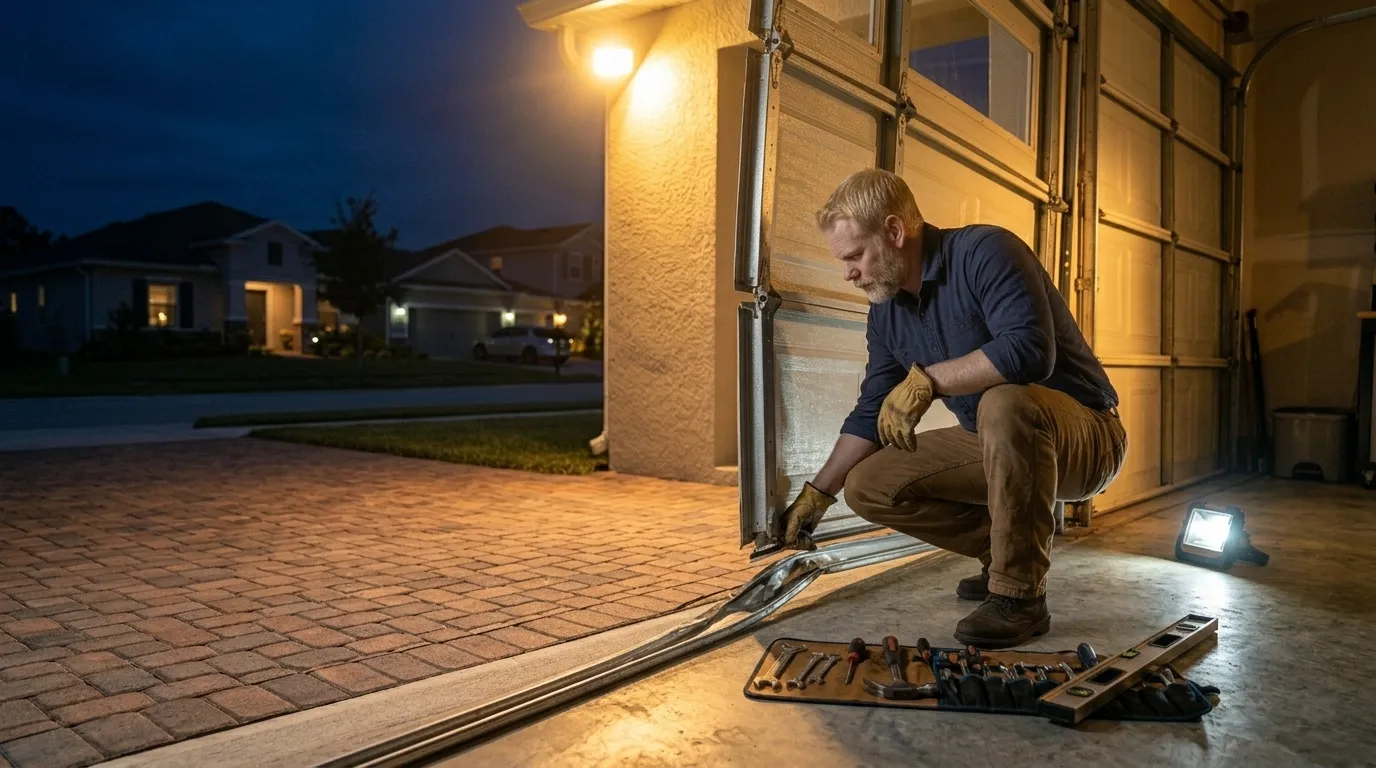
Spring replacement on older hardware means matching wire gauge and winding to what's actually on the door, not swapping in a generic size and hoping the balance is close enough - a mismatched spring either won't lift the door fully or puts too much strain on the opener. Track and roller work on a 1964-era door often means resetting brackets that have shifted slightly over sixty years, not just installing new rollers into the same worn slots. We travel to Laguna Beach from our Dana Point base, about 6 miles out, and on most jobs the honest call is whether the original hardware is worth extending another decade or whether it's finally cheaper to start fresh.