Stocked Parts
A house built around 1964 in Laguna Beach usually didn't come with a steel sectional door. That era favored single-layer wood panel doors or early aluminum-and-glass units, hung on hardware sized for a lighter, narrower door than what gets installed today. The tracks are often narrower gauge, the hinges are riveted rather than bolted, and the torsion spring - if the door has one instead of an old extension-spring pair overhead - is usually undersized by current standards.
We carry torsion springs and extension spring sets in a range of wire sizes, plus standard-width track sections and roller types that fit both older narrow-track setups and newer 2-inch track. Wood panel doors that have swollen or split from decades of coastal moisture usually need a full panel replacement rather than a patch, and we don't try to stock every discontinued wood profile - if the original manufacturer is long gone, we'll talk you through matching hardware to a new door instead of chasing a ghost part.
We travel the 6 miles from Dana Point with the truck stocked for exactly this mix: older narrow-gauge hardware next to modern sectional door parts, since most Laguna Beach street blocks have both sitting a few doors apart.
Why This Fails Locally
Laguna Beach's median build year sits at 1964, noticeably earlier than the 1982 median across the wider Dana Point service area. That gap matters because a door and its hardware age out on their own clock, separate from when a homeowner last touched it. A 60-year-old torsion spring has usually been cycled tens of thousands of times more than the manufacturer rated it for, and the galvanized coating on original cable has often worn through from decades of coastal salt air even under this region's mild temperate climate.
The mild climate band means Laguna Beach doors aren't fighting freeze-thaw cracking or extreme heat warping the way houses further inland might. What they're fighting instead is slow corrosion - salt-laden marine air pitting springs, cables, and unprotected steel hardware faster than the same parts would wear in a drier inland pocket of the service area. On a door that's original to a 1964 build, that corrosion has had six decades of exposure to work on.
This is why a repair call here often turns up more than one failing part at once: spring, cable, and hinge all reaching the end of their working life together, because they all started the clock the same year.
What the Fix Involves
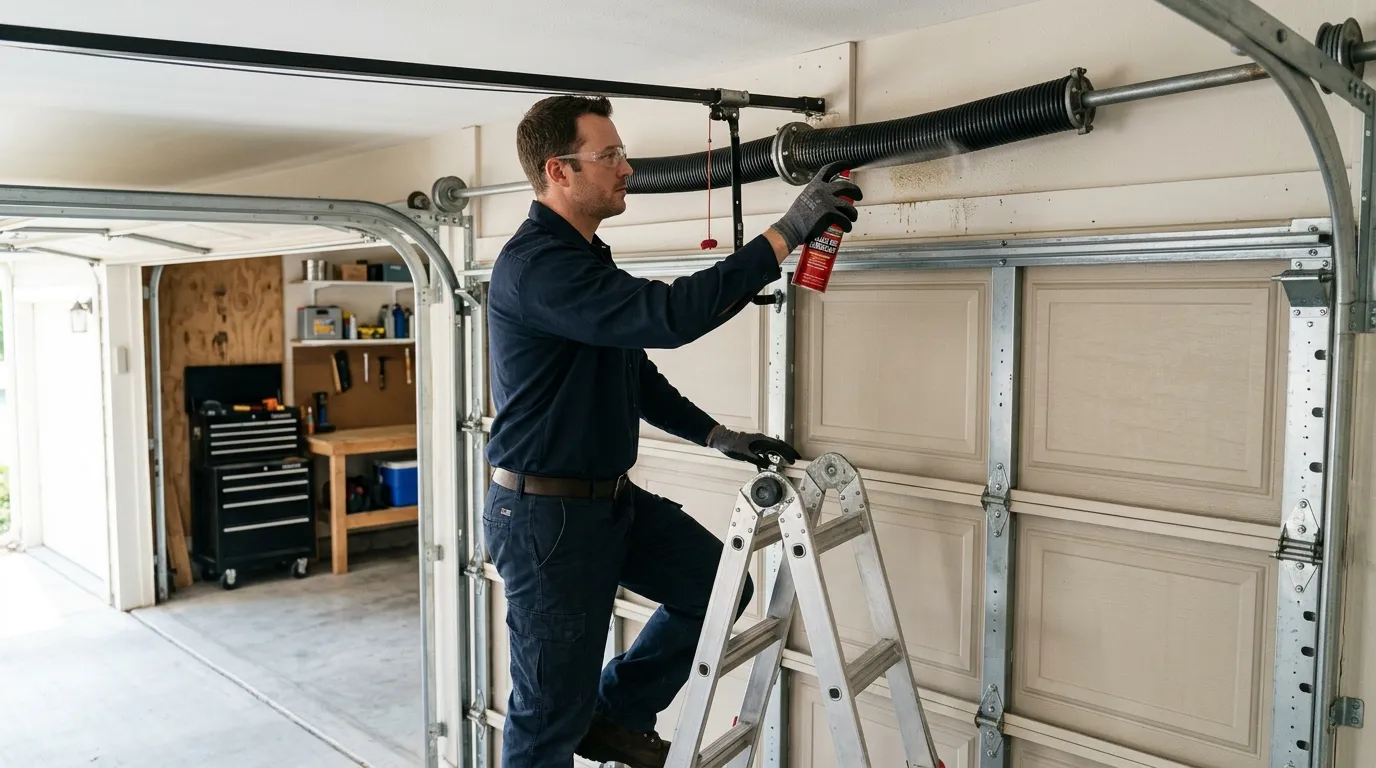
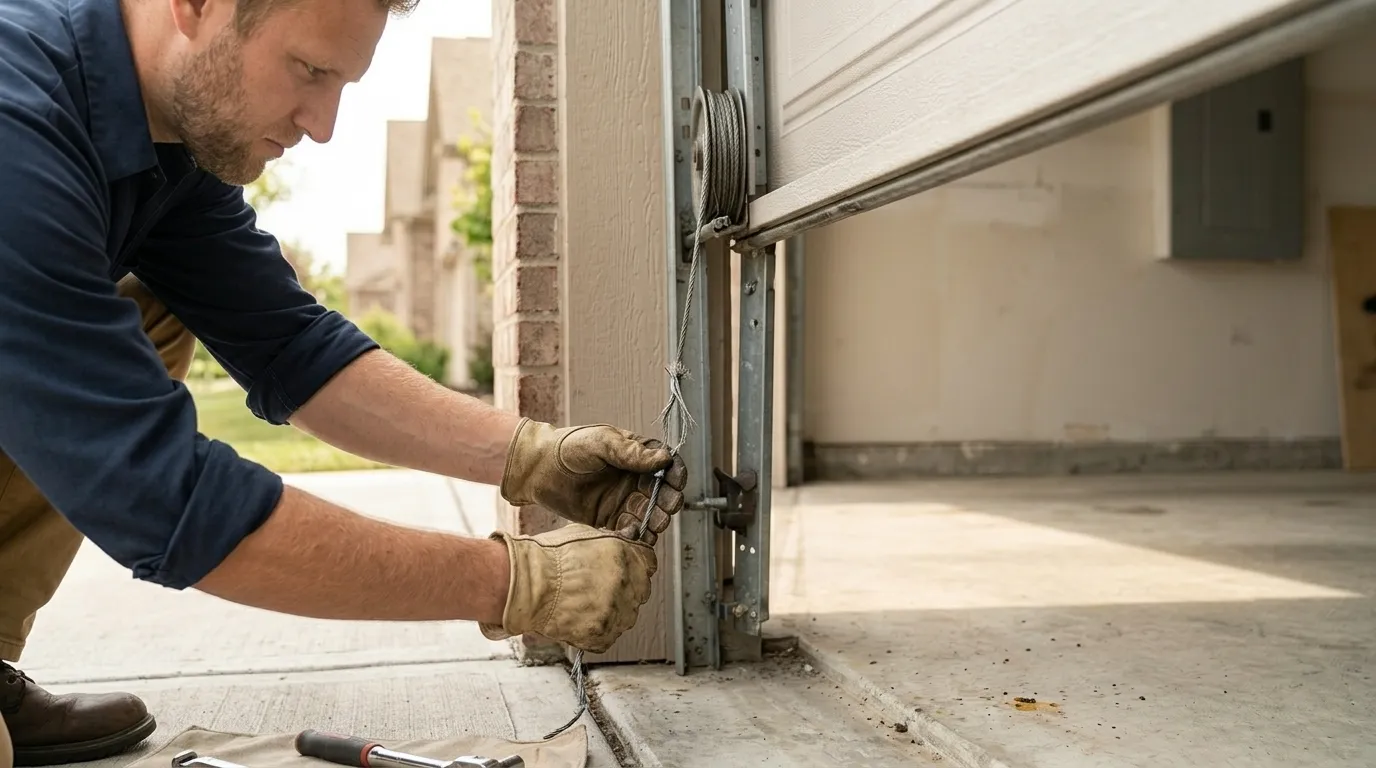
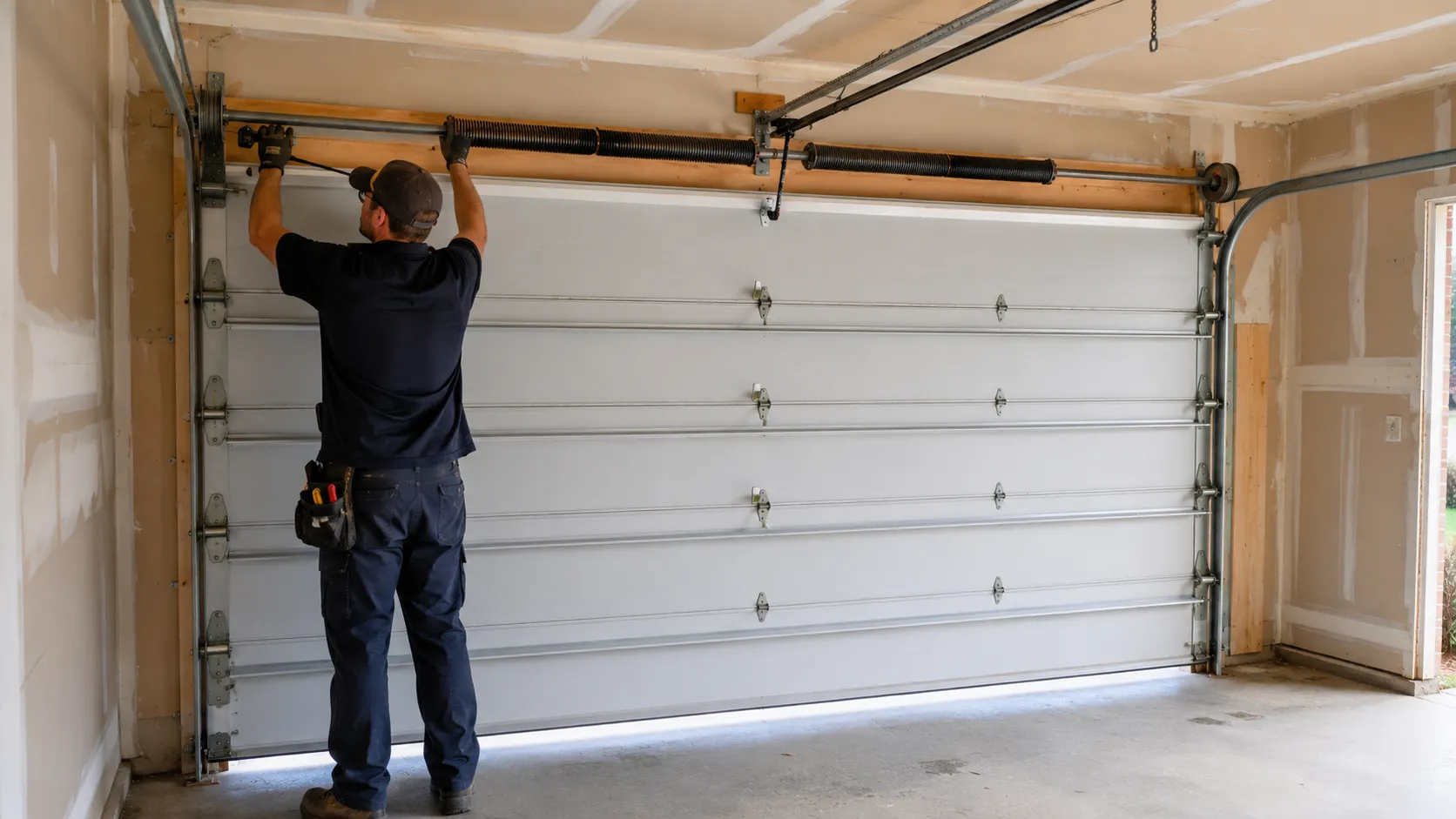
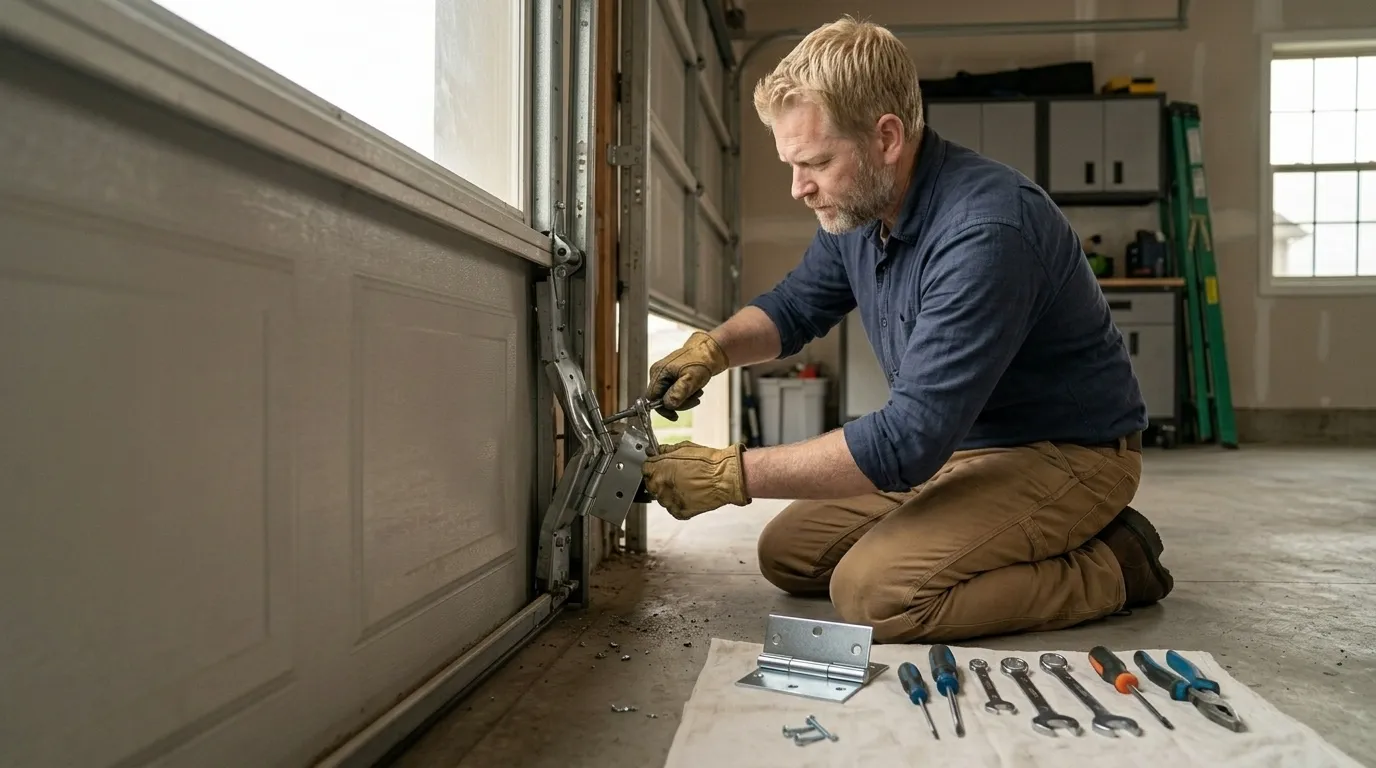
For a snapped torsion spring, we measure the door's actual weight and re-spring to that number rather than reusing the original spec, since a 1964-era spring was often sized for a lighter door than current safety and balance standards call for. Cable gets replaced in pairs, not one at a time, because if one side has corroded the other side is close behind.
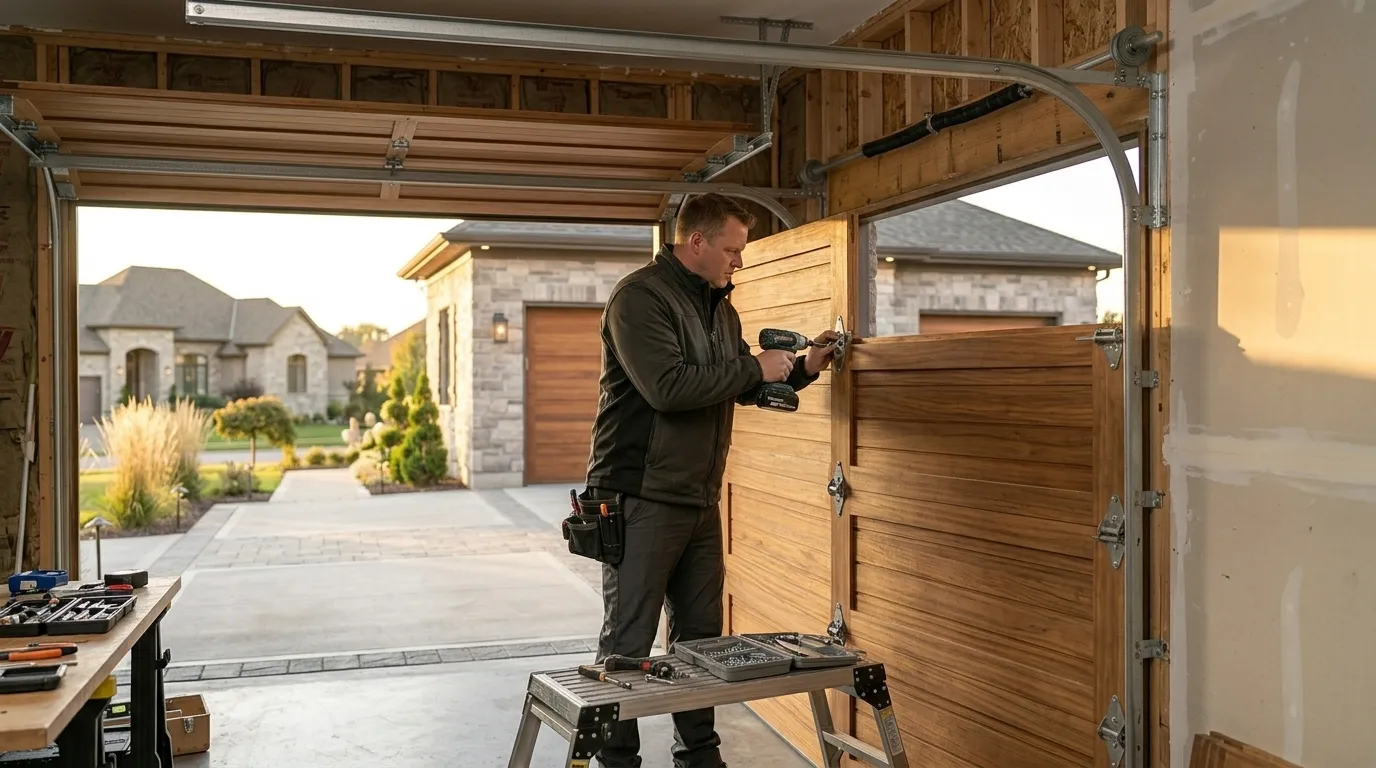
On wood panel doors, if the swelling is confined to one or two panels we can source a matching panel and rehang it on the existing track, provided the track itself hasn't gone out of square. If the whole door has moved past that point, we'll walk you through replacing it with a door built for this climate and this household's actual budget - Laguna Beach's median household income runs lower than the wider service area, and we price the repair-versus-replace conversation around that rather than defaulting to the most expensive fix.
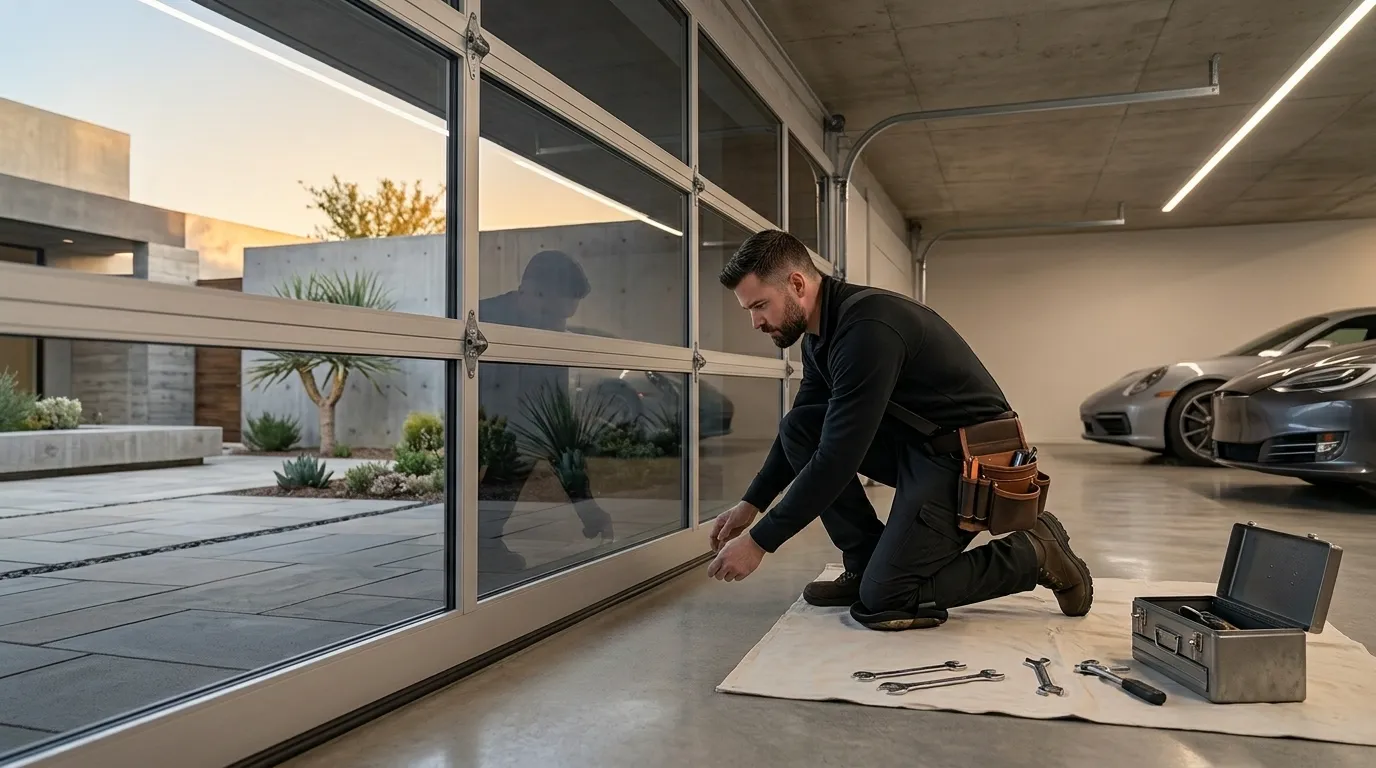
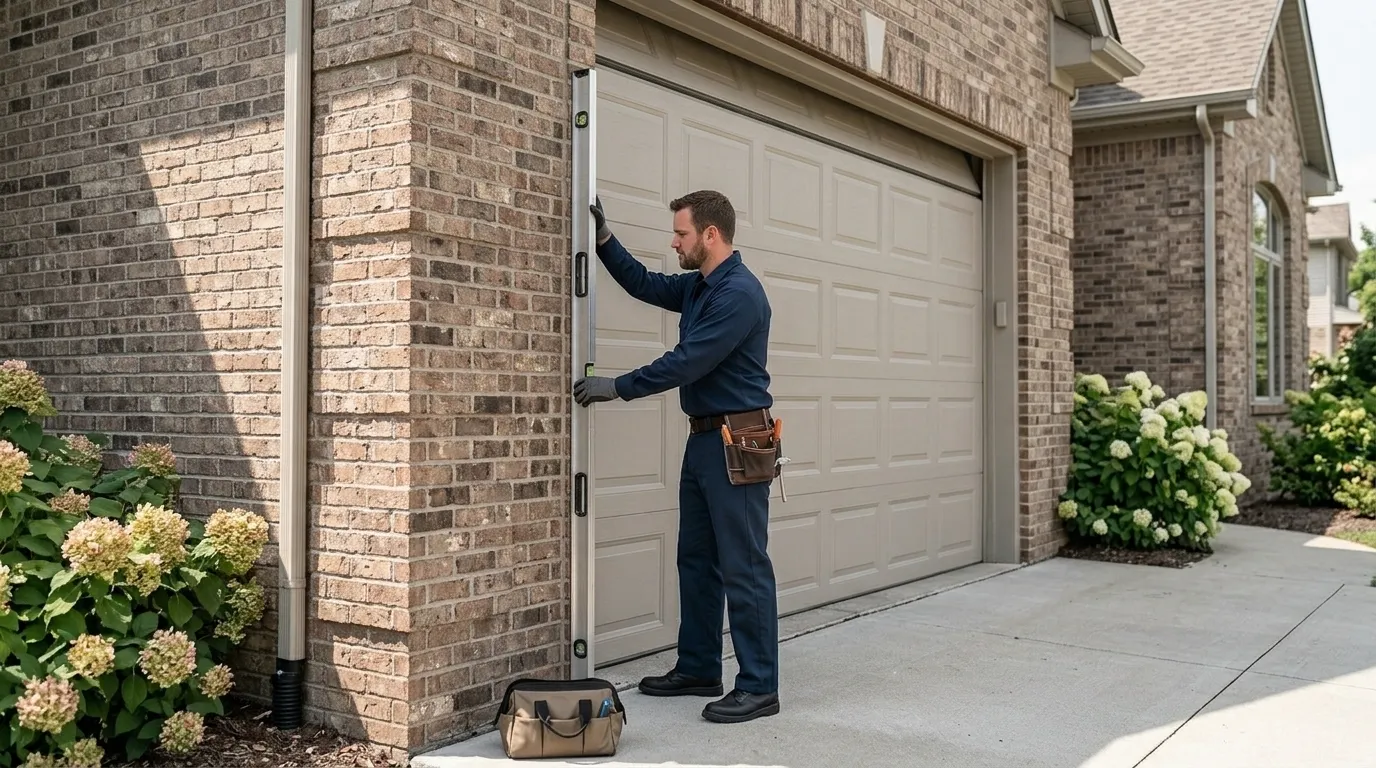
Aluminum-frame door glass gets reglazed in place when the frame is still square; a bent stile usually means the whole panel needs swapping. Every job gets a balance test before we leave, since an older door that's been resprung to modern spec often needs the opener's travel limits reset too.