Stocked Parts
We keep a mixed roller inventory on the truck because the houses we cover span a wide build range - 1938 to 2015 across the service area, with a median around 1982. Laguna Beach sits well outside that median. The typical house here went up around 1964, which is closer to the front end of that range than the middle. That matters for rollers because pre-1970s doors were built with narrower track and shorter roller stems than what became standard by the 1980s.
We carry both 2-inch and 3-inch nylon rollers, sealed-bearing steel rollers for heavier commercial-style doors, and the shorter-stem hardware that fits older track profiles. What we don't carry on the truck is anything obscure or discontinued - if a door has a proprietary roller that hasn't been made in decades, that's a special order, and we'll say so before we quote the job rather than after we've opened the door up.
Most jobs in this pocket call for the shorter-stem parts, not the longer stems that fit newer builds elsewhere in our area. Bringing the wrong stem length means a second trip, so we ask the build year up front.
Why This Fails Locally
Dana Point's service area has a median build year of 1982. Laguna Beach's typical house is closer to 1964 - an 18-year gap that isn't cosmetic. Doors from that era were hung on narrower track with rollers that have a different stem length and often a smaller wheel diameter than what's sold as standard today. When a roller on one of these doors fails, the replacement isn't a straight swap off the shelf; it has to match track built to an older spec, or the door binds.
The area sits in a mild temperate climate band, so we're not dealing with the freeze-thaw cracking that ages plastic rollers in colder regions. What ages rollers here is straight cycle count - years of daily opening and closing on hardware that was never rated for today's cycle life. Nylon rollers from the 1960s and 70s were often solid-core, not the ball-bearing sleeve type used now, and they wear unevenly rather than cracking outright. That uneven wear is what throws the door out of alignment long before anyone notices a roller is bad.
We drive out from Dana Point, about 6 miles, for these calls. There's no branch location here - just a truck stocked for the age of the housing we're heading to.
What the Fix Involves
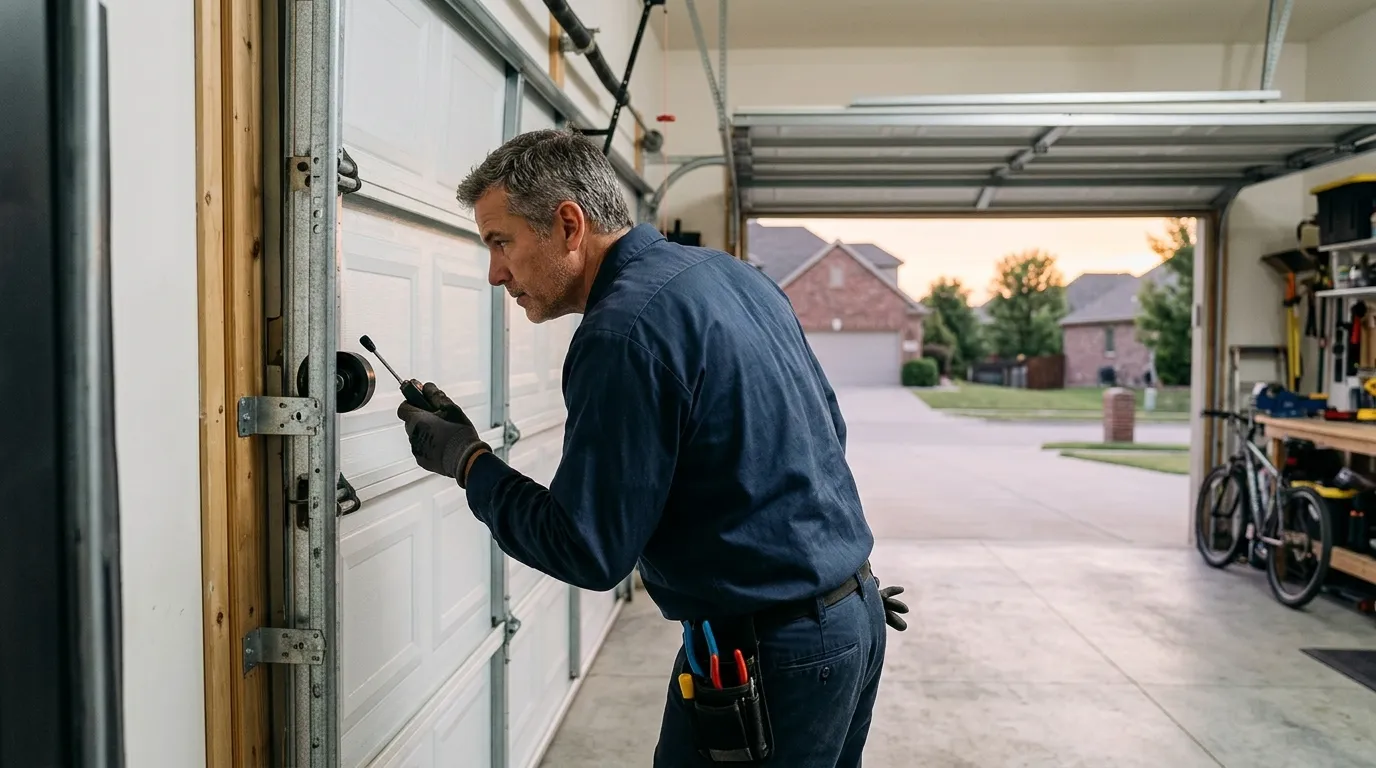
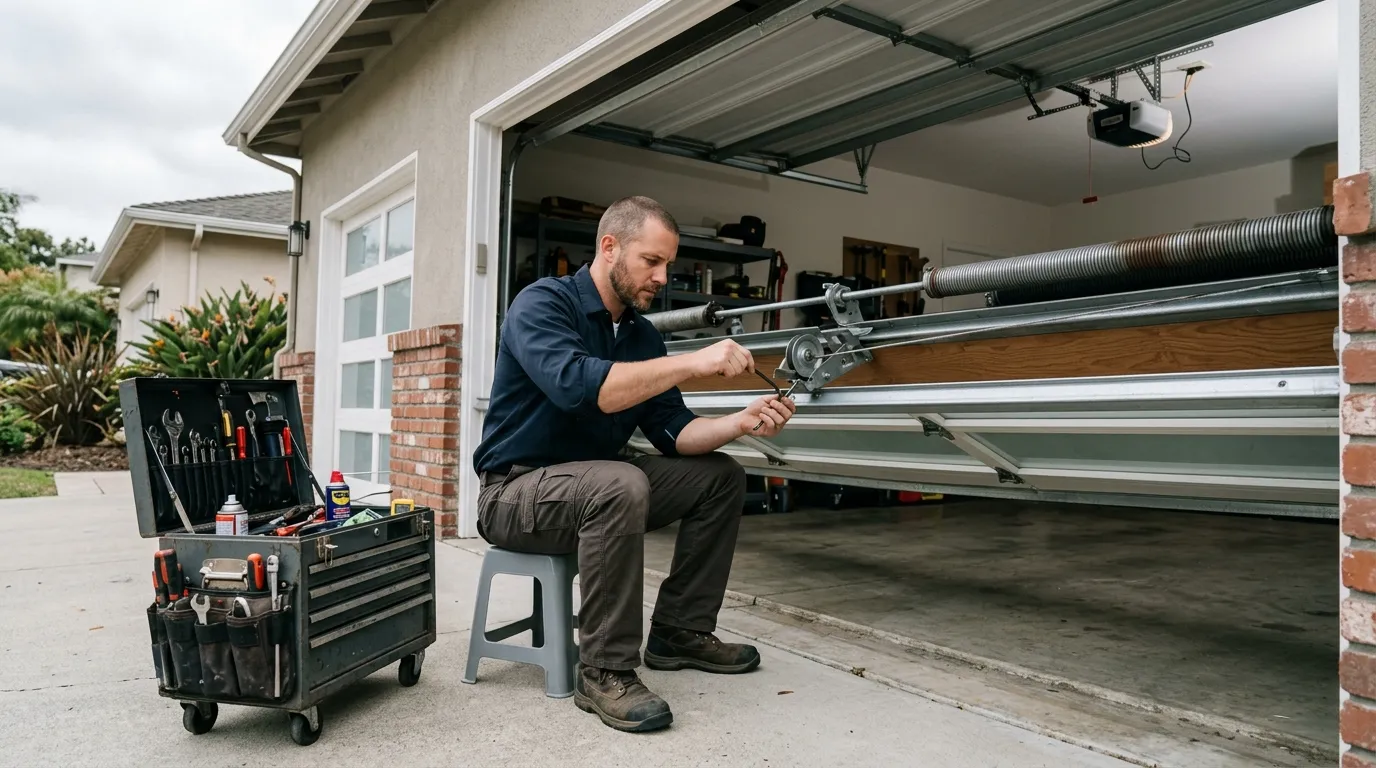
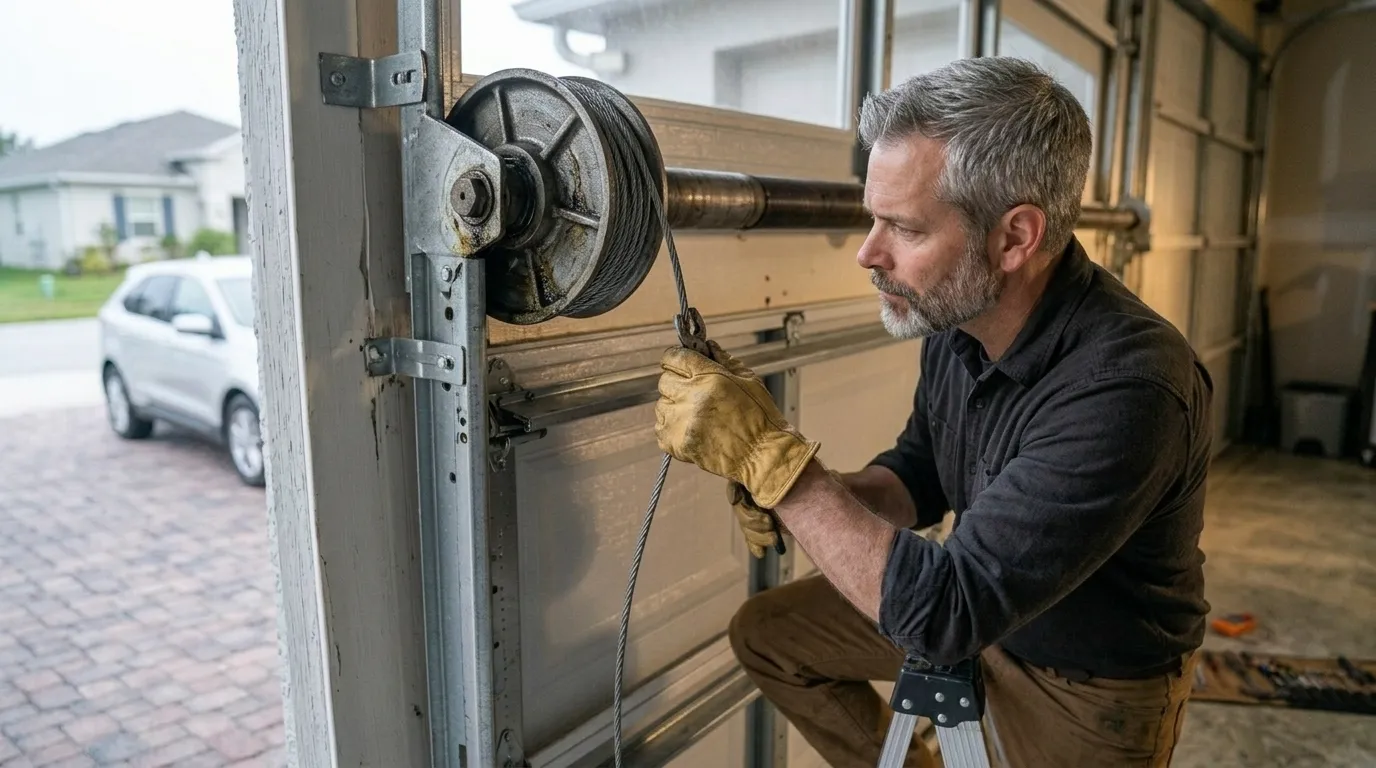
We pull the old rollers, check the stem length and wheel width against the track profile, and match new rollers to that - not to whatever's easiest to grab off the shelf. On these older Laguna Beach doors that usually means shorter-stem 2-inch nylon rollers rather than the 3-inch stock that fits newer builds elsewhere in our coverage area.
We also check the track itself while the rollers are out, since a roller that failed from grinding often left burrs or dents behind. Rollers alone won't fix a bent or gouged track section - that's a track repair or replacement, and we'll tell you straight if that's what's needed rather than sell you rollers that will fail again in a month.
Here's the honest limit: if the door has an obscure or long-discontinued roller size, we may need to special-order the exact match, and that adds lead time we can't shorten. In a few cases, matching the original hardware costs more than upgrading the whole track to current-spec rollers, and when that's true, we say so and let you decide which way to go.