How Long You Are Without the Door
Coto de Caza is a small place - around 5,010 households, not a dense grid of tract homes but larger lots spread out. That matters for how a broken door plays out here. In a town this size, a stuck door isn't something you can walk to a neighbor's garage to borrow a workaround for; you're waiting on a truck. We run out of Dana Point, about 10 miles away, so the drive is part of the picture from the start. We're not going to promise a number of minutes we can't back up, because traffic on the route in changes day to day. What we can tell you is that we treat a jammed door or a spring that's let go as the priority call it is, and we bring the parts likely to fit houses built around here rather than showing up to diagnose from scratch. Most of what fails on a Coto de Caza door is mechanical - a spring, a cable, a broken roller - not something that needs a specialty part ordered in. That's the piece that keeps the wait from turning into a second day.
How to Book
Call and tell us what the door is doing - won't open, won't close, opens partway and stops, makes a bang and drops. That description tells us more up front than a photo usually does, because a torsion spring letting go sounds different from a cable snapping or an opener gear stripping. We'll ask for the door's rough age if you know it, since houses in this area were mostly built in the 1990s and that narrows down which hardware we're dealing with before the truck leaves Dana Point. If the door is stuck halfway with a car trapped inside or outside, say so - that changes what we load. You can also look over what we cover for this area first if you want the full picture of the trip before you call: /near/coto-de-caza/. For the general shape of our emergency work across the wider service area, that's covered on our main page: /emergency-garage-door-repair-dana-point-ca.
Why This Fails Locally
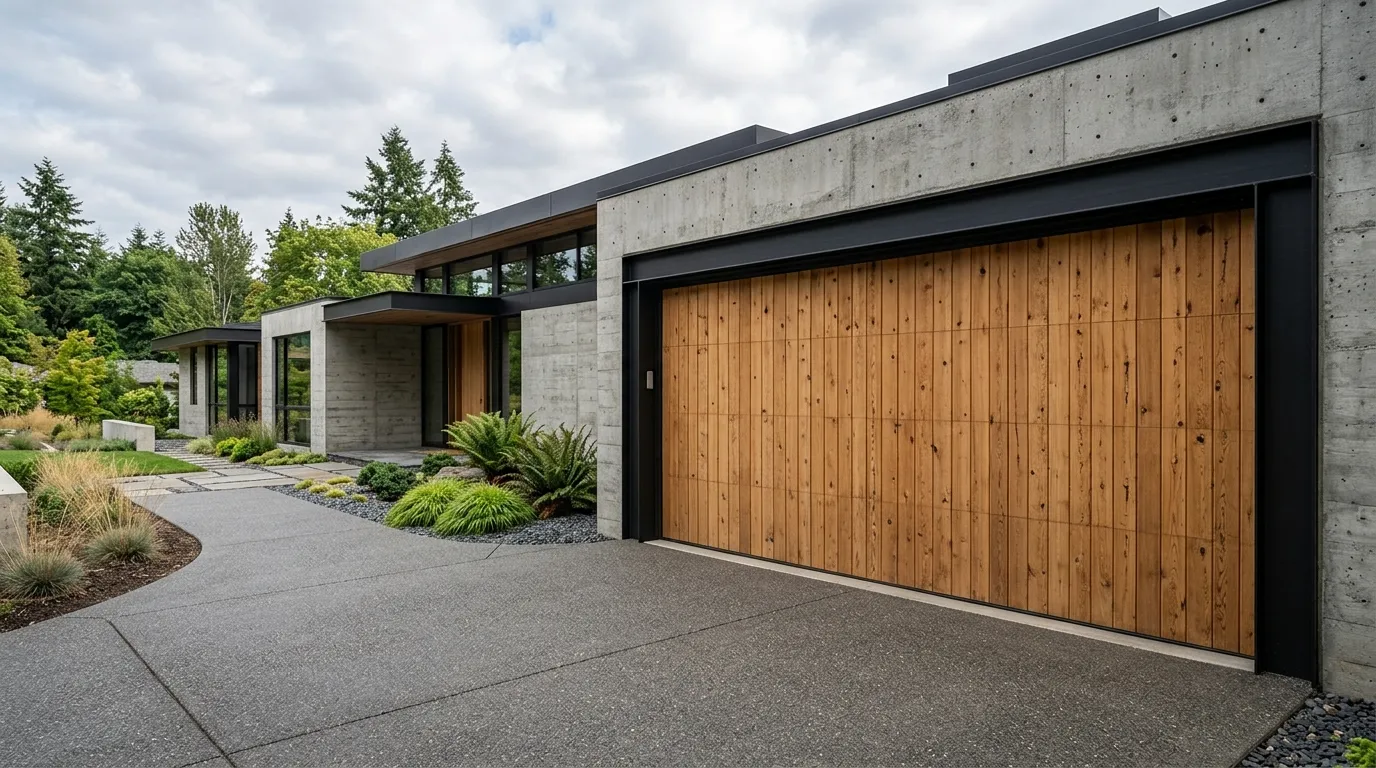
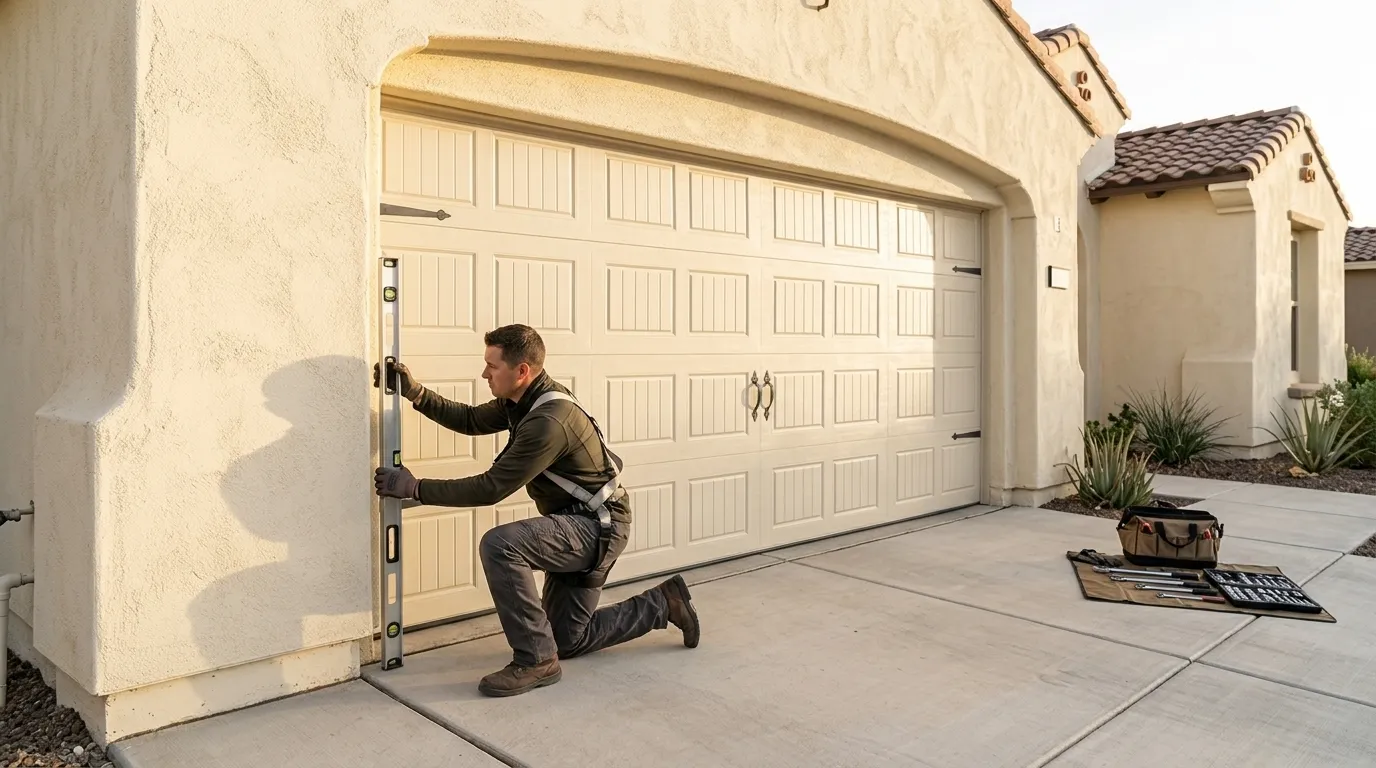
Two things line up in Coto de Caza that you don't get everywhere in the service area. First, the housing here is newer than a lot of what we cover - built mostly in the mid-1990s - so the failures skew toward age-related fatigue on original hardware rather than the older one-piece doors and dated track systems we see closer to the coast. A spring on a 30-year cycle is due, and a lot of these doors are right in that window now. Second, household income here runs high - over $232,000 median - and that tracks with larger, heavier custom doors: wider double panels, insulated cores, beefier openers rated for more weight. A heavier door puts more load on the spring and cable from day one, so when it fails, it tends to fail hard rather than just sagging. The mild temperate climate here isn't doing much damage on its own - this isn't a freeze-thaw or hurricane problem - but it also means owners rarely think about maintenance until something snaps, since there's no seasonal reminder to check the hardware.
What You Are Seeing
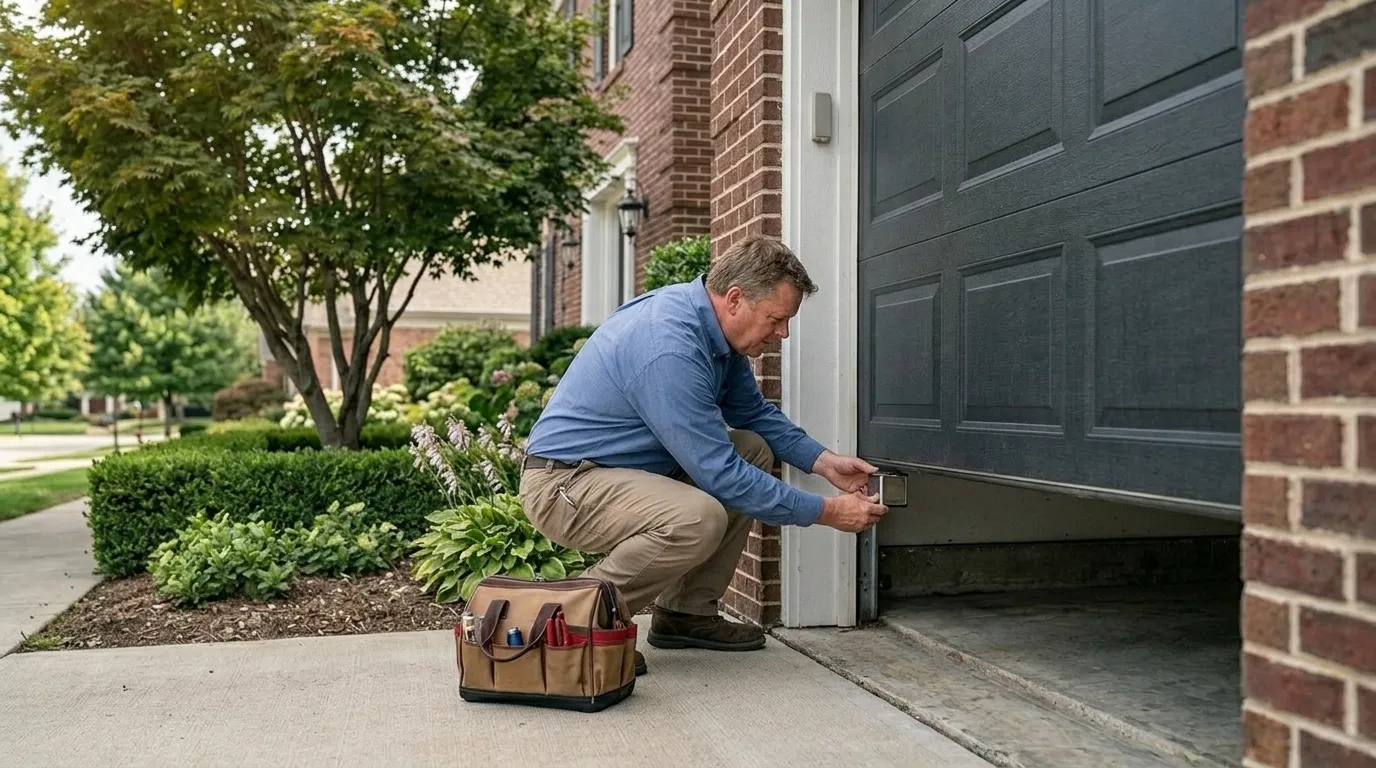
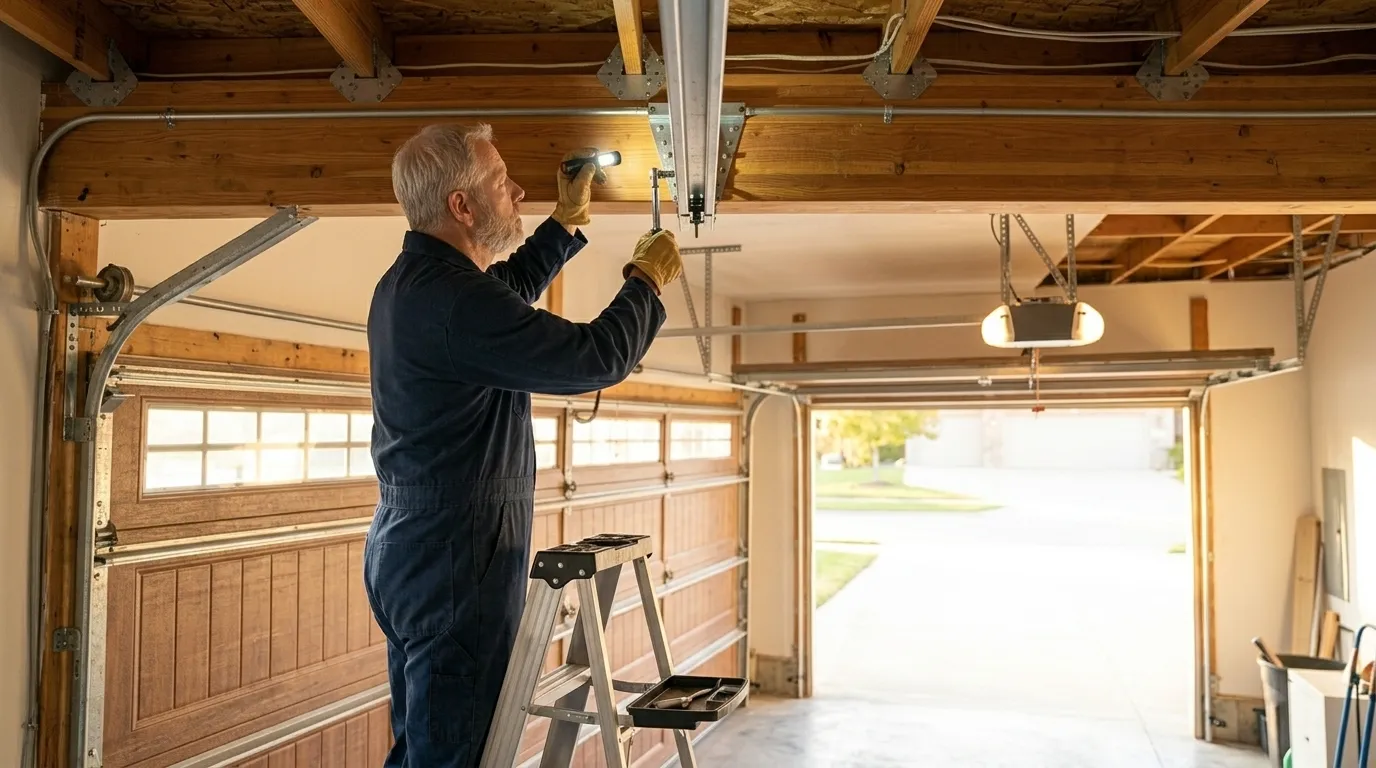
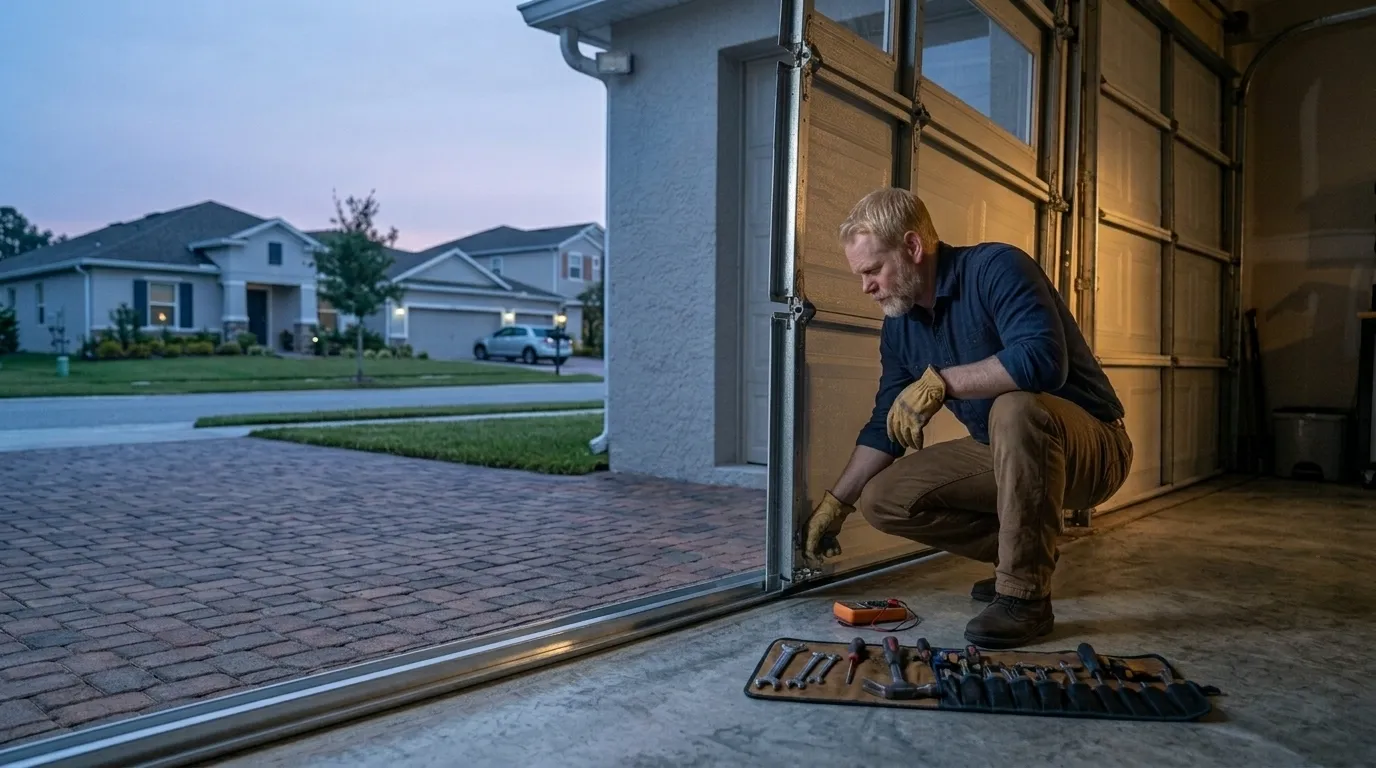
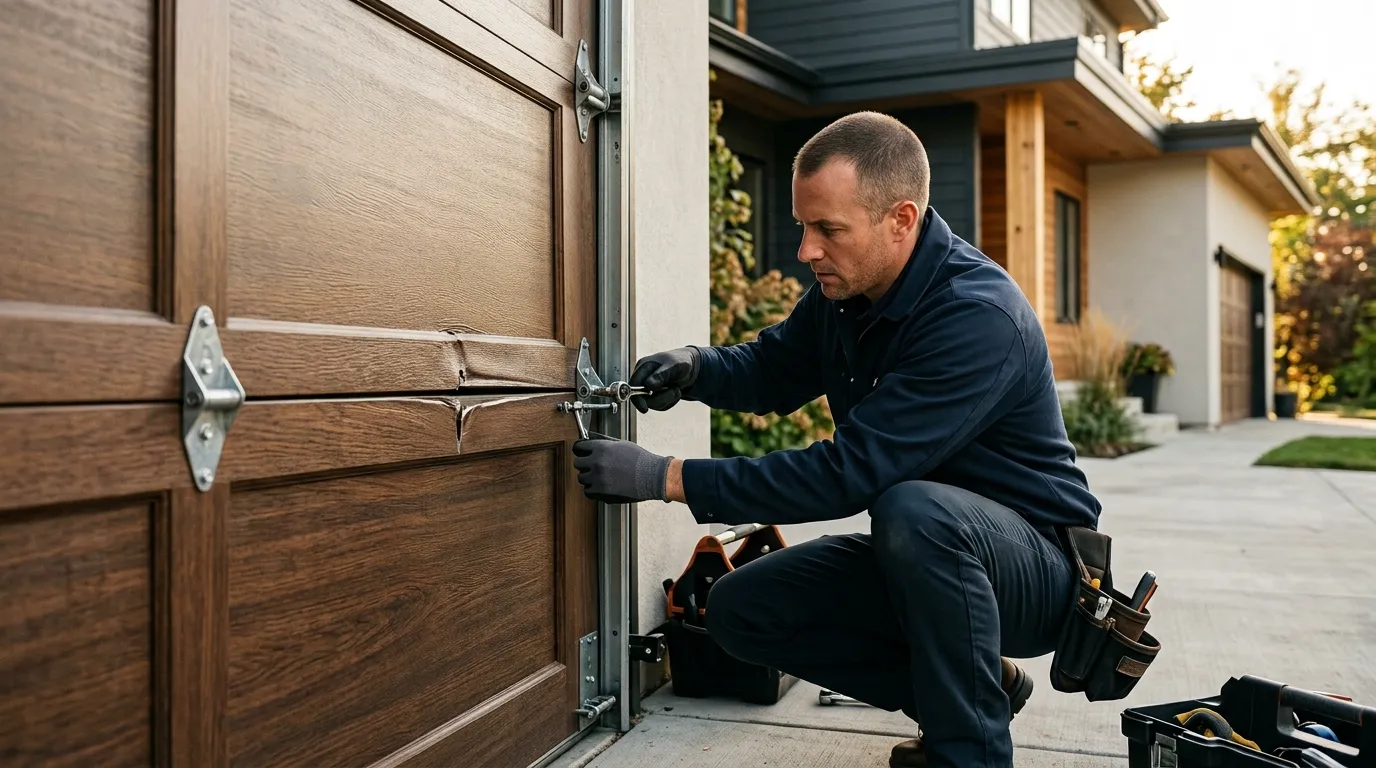
A door that won't budge and a loud bang beforehand usually means a torsion spring has gone. A door that opens a few inches and stalls, with the opener straining, points to a spring that's weakened but not fully broken, or a cable starting to fray. If the door reverses right after it starts closing, check the sensors near the bottom of the track first - a spider web or a stray leaf blocking the beam is more common than an actual electrical fault. A door that's silent and dead when you press the remote or wall button could be the opener itself, a tripped breaker, or in some cases a battery backup that's failed quietly. Grinding or scraping along one side usually means a roller has worn out or a track has knocked out of alignment, which on a heavier custom door tends to get worse fast rather than staying minor.