Serving Dana Point, CA & nearby
(949) 882-9898
Dana Point, CA

New Garage Door Installation for Coto de Caza Homes

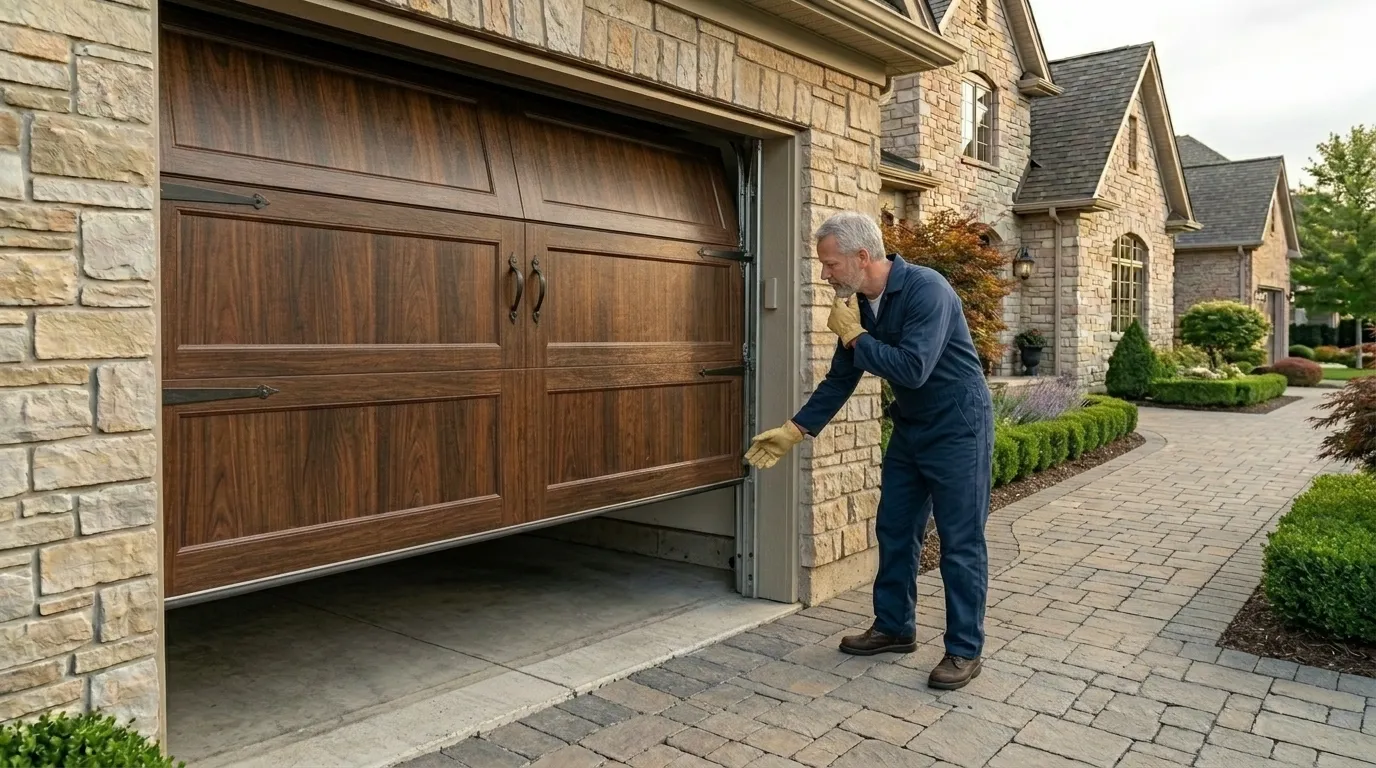
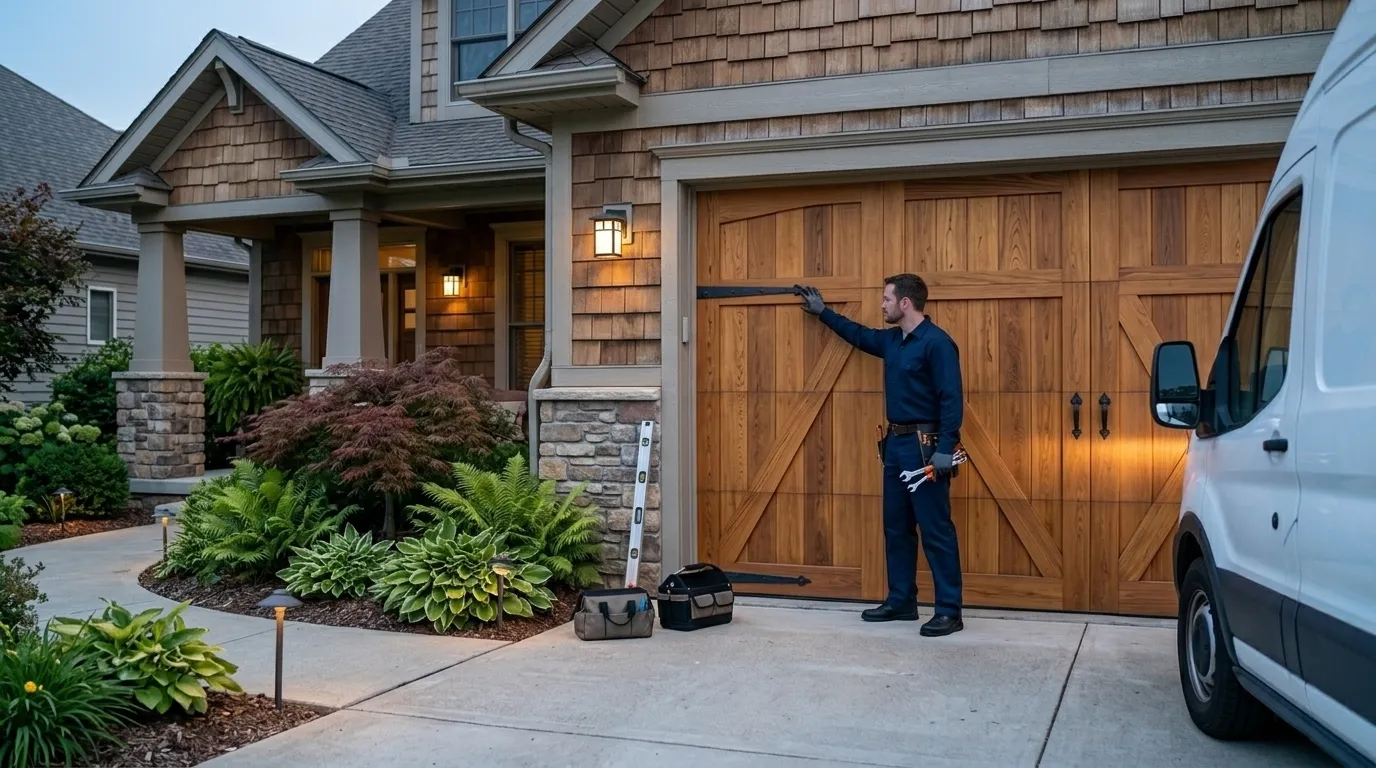
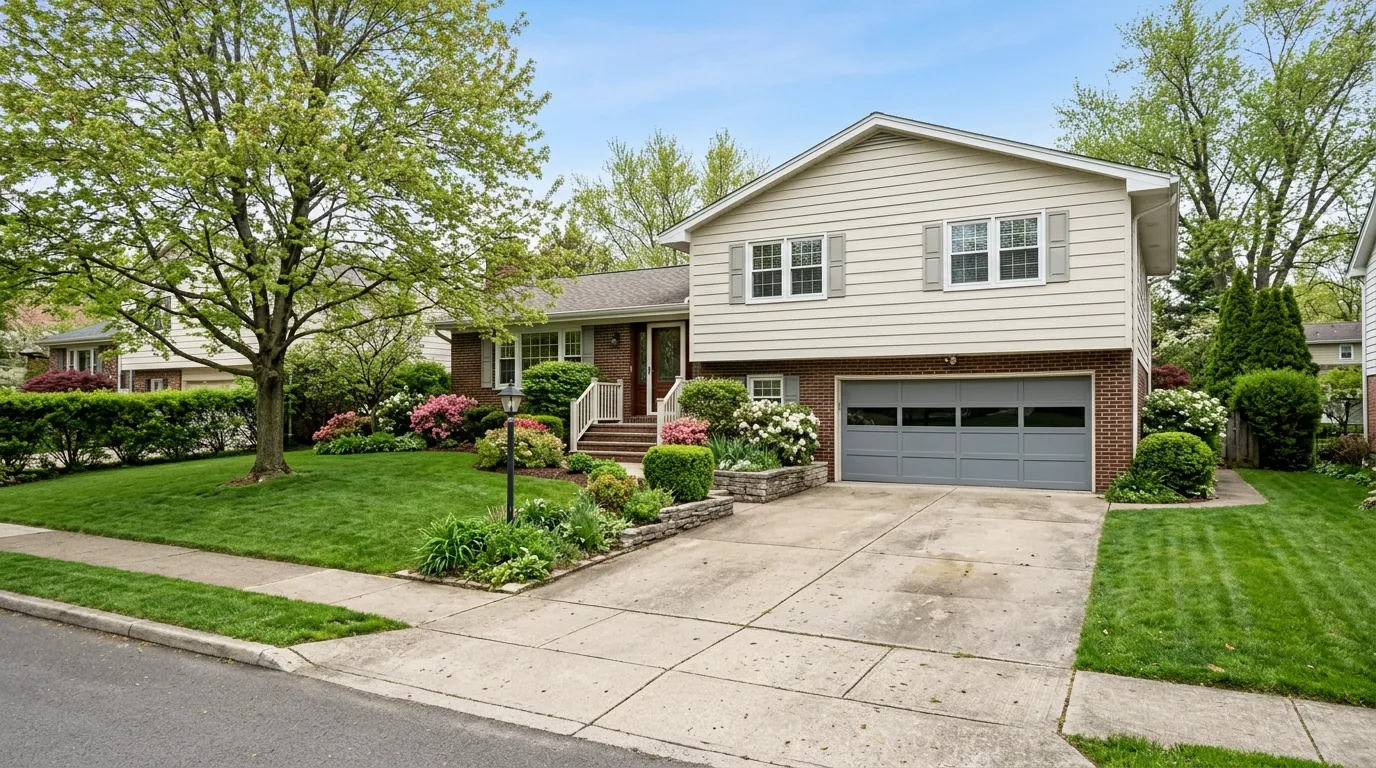
New garage door installs for Coto de Caza homes, most built around 1995. We travel the 10 miles from Dana Point to size and set doors right for this stock.

New Garage Door Installation for Coto de Caza Homes
Dana Point, CA
8 services
4 service areas
Diagnosis first, then the fix

How Long You Are Without the Door

Coto de Caza sits about 10 miles from our shop in Dana Point, which changes how a new-install job here actually runs compared to something closer in. We don't stock every panel size and finish on the truck, so a new door is almost always a two-trip job: one visit to measure the opening, check header clearance, and confirm track type, then a second visit once the door itself arrives to set it and balance the springs. The drive itself isn't the bottleneck - the lead time on ordering the right door is. If you're replacing a door that's failed completely and the opening needs to stay usable in the meantime, say so when you call, because we can sometimes shore up the old door as a stopgap while the new one is on order. That's a judgment call made on site, not something we promise sight unseen.

How to Book

Call and tell us the size of the opening (single or double), roughly how old the house is, and what you don't like about the current door - noise, sag, looks, insulation. Because most homes out here went up around 1995, we usually already have a good guess at header height and track style before we arrive, but we still confirm on site rather than quote blind over the phone. We travel from Dana Point for every visit, so we schedule the measuring trip and the install trip together where the order allows it. You can see the areas we cover from Dana Point at Coto de Caza service page, and general installation pricing and process detail lives on our main installation page.

What the Fix Involves

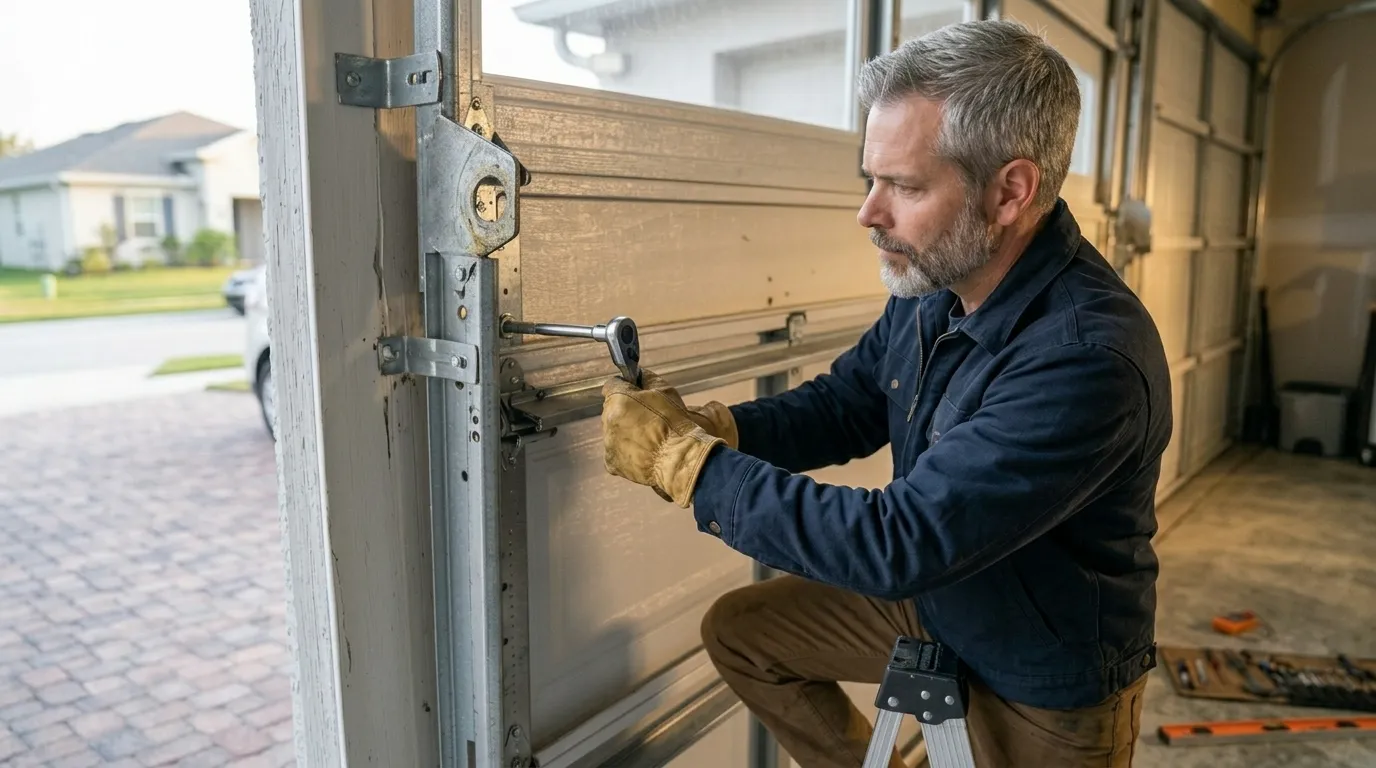
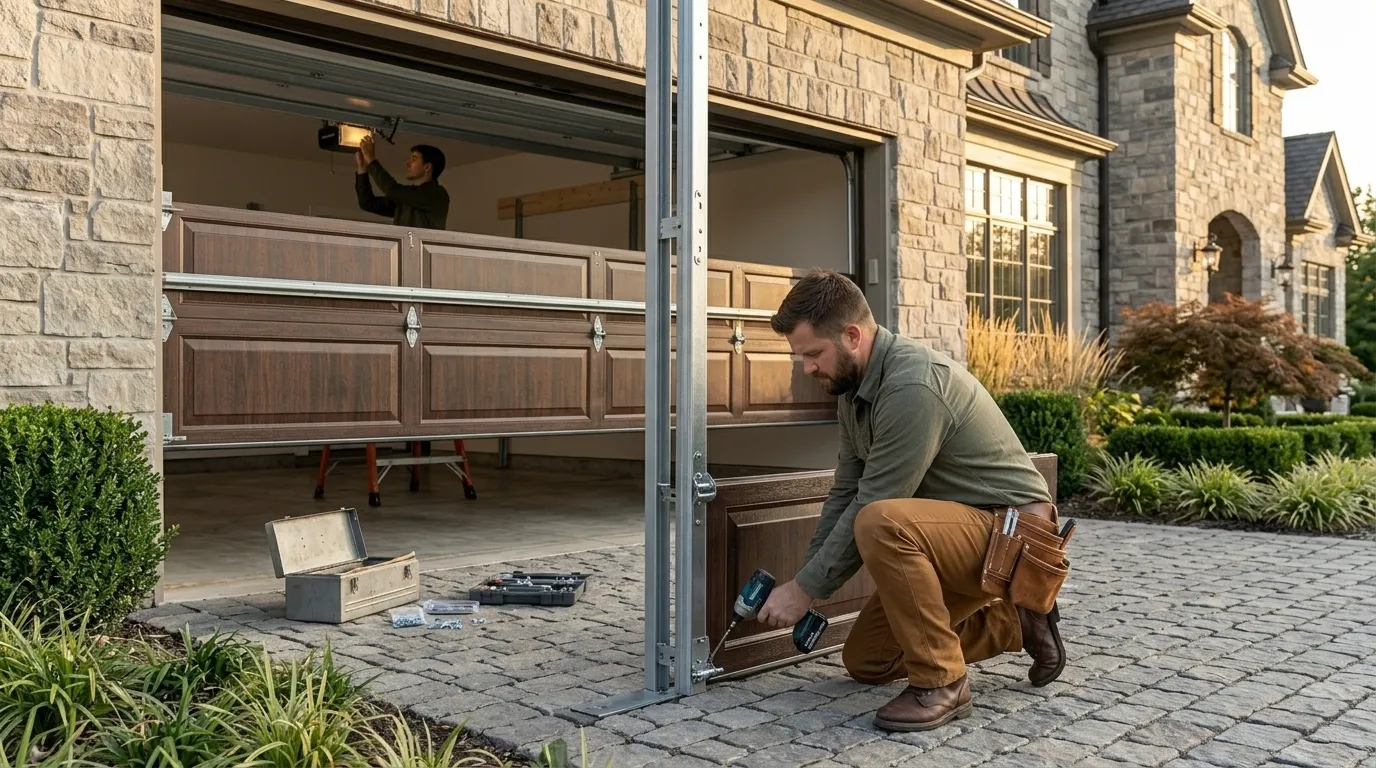
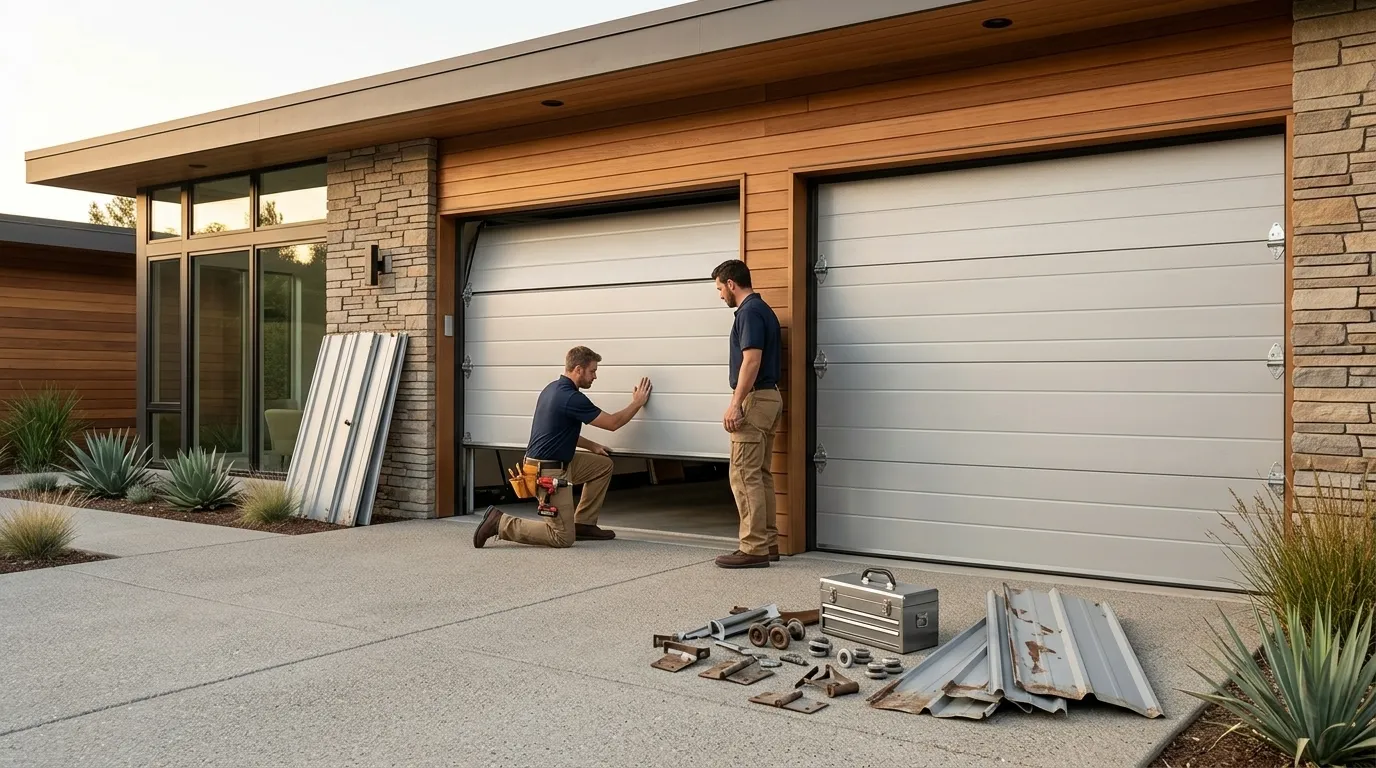
A new install starts with tearing out the old door, track, and springs down to the framing, then checking that the header can carry the torsion bar for whatever door you're putting up. Homes built around 1995 in this area were framed for the steel sectional doors common at the time, which is a fair setup, but many of those original torsion springs were sized for a lighter, uninsulated panel. If you're stepping up to a heavier insulated door - common on the larger openings we see out here - the spring has to be resized, not just reused. We set new track, mount the opener bracket, hang and balance the door, then run the opener through a full open-close cycle checking travel limits and force settings before we call it done. None of that is optional; skipping the balance step is how you get a door that slams the last six inches or won't stay open on its own.

Why This Fails Locally

The housing stock here runs newer than a lot of what we service - median build year around 1995, inside that broader 1980s-to-90s wave across the wider area - so you're not dealing with the original one-piece wood doors we see on much older houses. What we do see is the first-generation steel sectional door reaching the end of its service life: rollers worn oval, hinges stretched, and hardware that was fine for a lighter door but wasn't spec'd for the insulated, heavier panels owners want now. Median household income out here runs well above the wider service area, and that shows up in the door choices - custom widths, wood-look composite panels, glass inserts - which almost always means new hardware, not a straight swap onto what's already there. Mild temperate weather in this area means you're not fighting the freeze-thaw cycles that crack panels elsewhere, so when a door here fails, it's usually wear and undersized hardware catching up with a heavier replacement, not weather damage.

What You Are Seeing

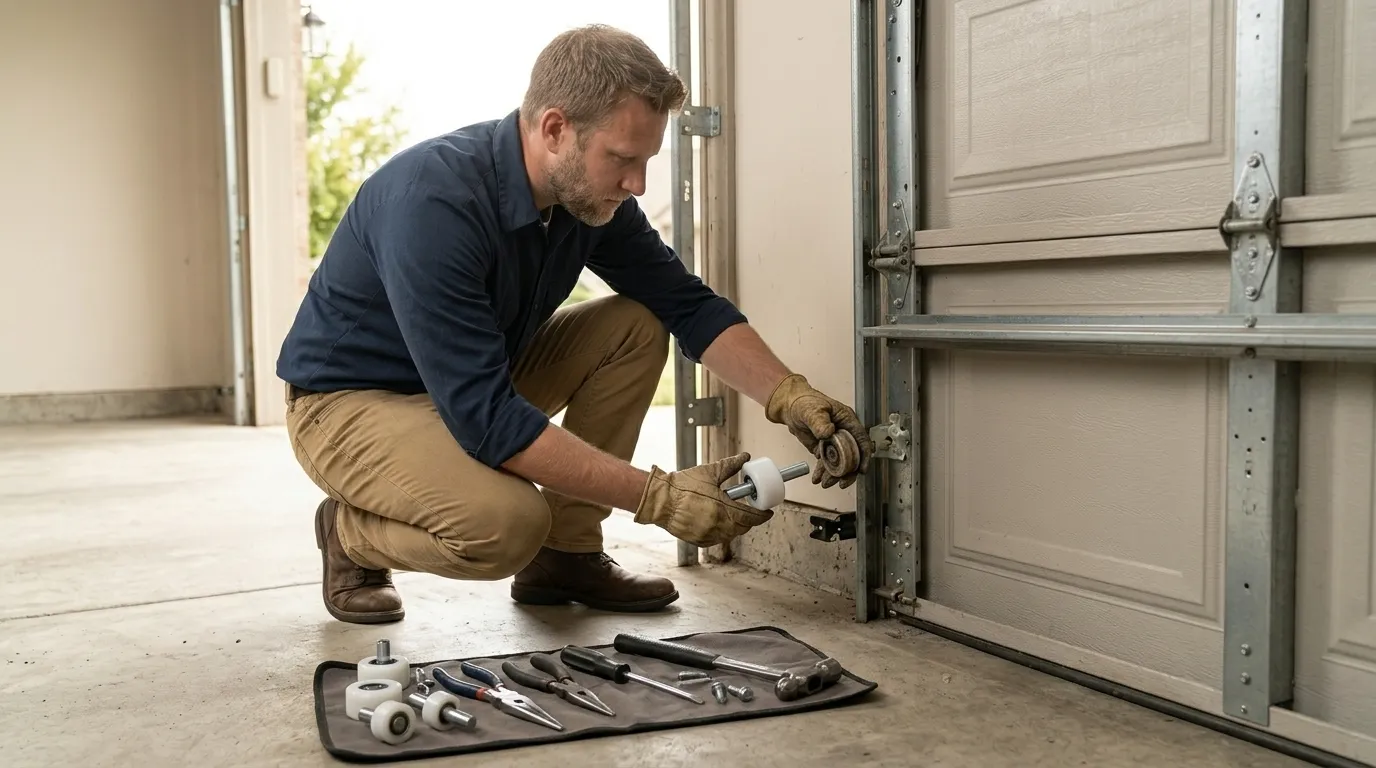
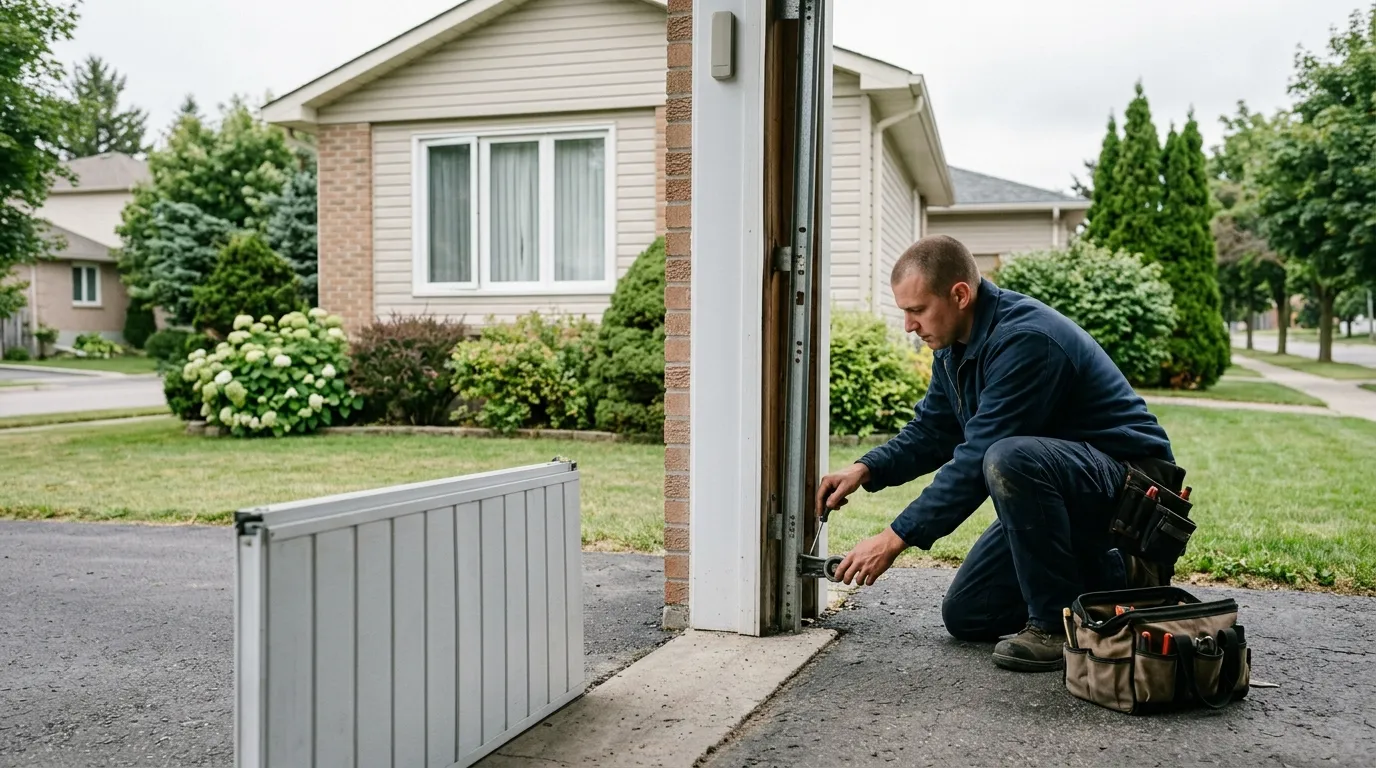
If the door is original to a house built in the mid-1990s, thirty years of daily cycles is enough to wear out rollers, hinges, and cables even without any weather stress to speed it along. Look for a door that's noticeably heavier to lift by hand than it used to be, uneven gaps at the panel seams, or an opener that strains and reverses before it reaches the floor. Sagging in the middle of a wide double door, especially on the larger openings common on bigger lots in this area, points to a structural issue in the door itself rather than something an adjustment fixes. If you're mainly bothered by noise or looks and the door still operates smoothly and balances correctly by hand, that's usually a repair or panel job, not a full replacement - we'll tell you straight if that's the case rather than sell a new door you don't need.

Doing It Yourself

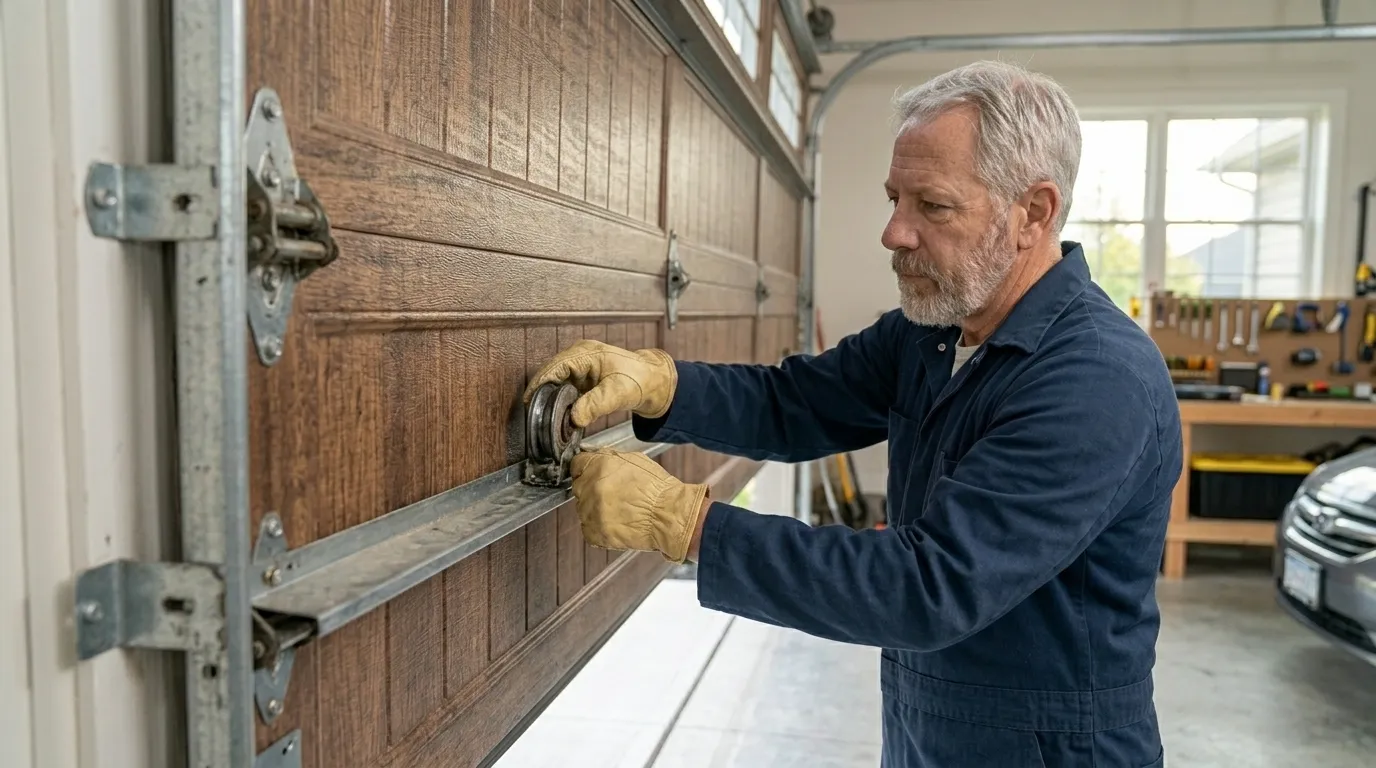
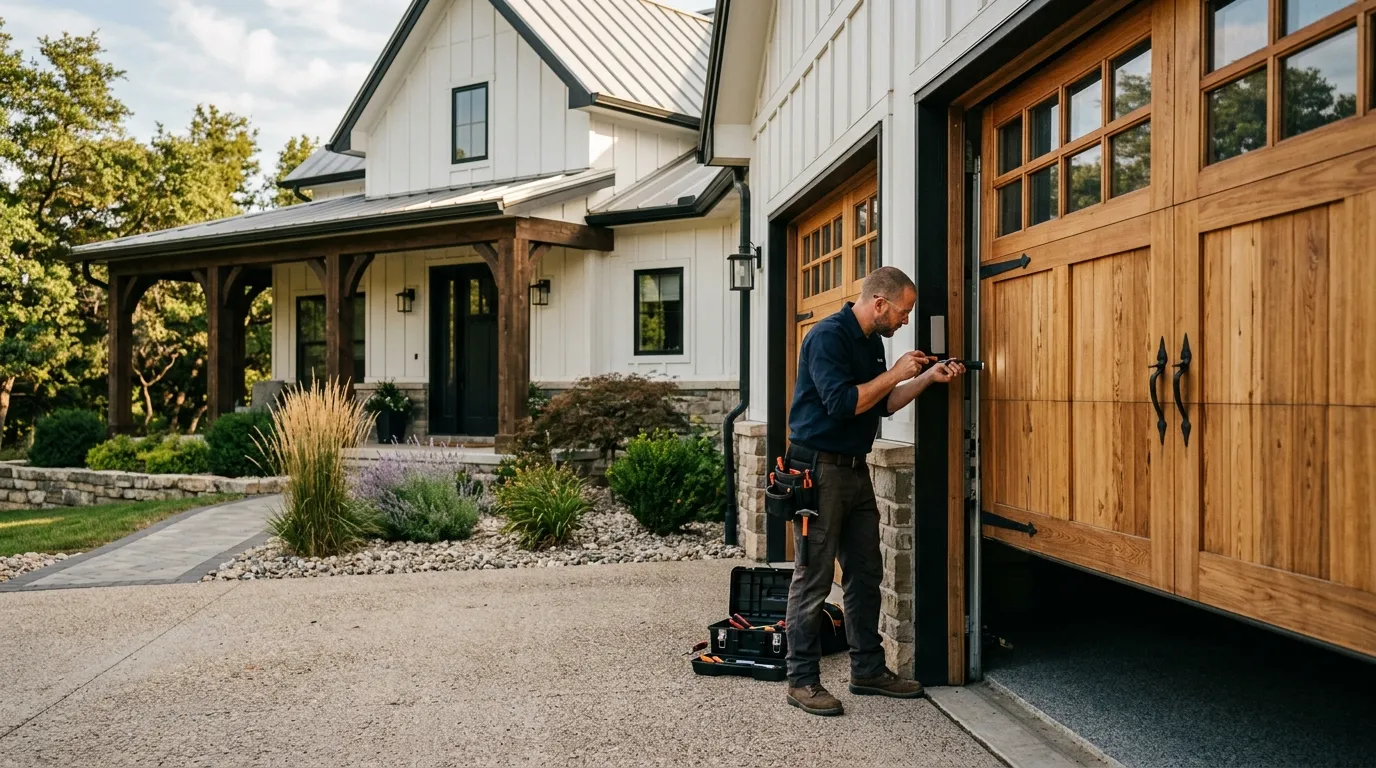
We'll say this plainly: do not attempt a new garage door install yourself. A wound torsion spring holds enough stored energy to break bones or worse if it lets go while you're working near it, and setting one takes a spring bar, cage, and a feel for winding turns that isn't something you pick up from a video. Beyond the spring, getting the header reinforcement and track alignment right on a heavier insulated door - the kind of upgrade a lot of owners out here are after - takes more than a level and a tape measure. Where you can save yourself a trip: have the opening measured (width, height, headroom above the opening, and side room) before you call, and know whether you want insulated or standard panels. That prep speeds up the first visit, even though the install itself is not a DIY job.

How it works

From “it’s stuck” to “it’s fixed”

Tell us what’s wrong - Dana Point garage door service

Tell us what’s wrong

Describe the symptom - won’t open, loud bang, opener runs but the door won’t move.

On-site diagnosis - Dana Point garage door service

On-site diagnosis

A technician tests the door under power and by hand and finds what actually failed.

Clear, up-front plan - Dana Point garage door service

Clear, up-front plan

You get the fix that’s needed and what drives the cost - before any work starts.

Repaired & tested - Dana Point garage door service

Repaired & tested

The repair is done, the door is set true and tested, and the work area left clean.

Serving Dana Point, CA - tell us what your door’s doing and we’ll take it from there.

How we work

What to expect

Diagnosis firstEvery visit starts by finding what actually failed - not a pre-written parts list.
The right part for the doorSprings and openers matched to the door’s weight and age, so the fix holds up.
Straight answersWhen a repair makes more sense than a replacement - or the reverse - you hear it plainly.
Clean, careful workTension released safely, hardware set true, the door tested under power before we leave.
34,181Residents in Dana Point
8Garage door services
4Neighborhoods & suburbs
CAServing Dana Point, CA
Questions

Frequently asked

Straight answers about garage door repair in Dana Point. Still unsure? Ask us directly.

How long does a new garage door install take once the door arrives?

The install visit itself typically runs a few hours for a single door and longer for a double, covering teardown of the old door, new track and spring setup, hanging the panels, and balancing and testing the opener. The wait is almost always on the door arriving from the order, not the install day.

Do I need a heavier spring if I'm upgrading to an insulated door?

Usually yes. Original torsion springs on homes built in the mid-1990s were sized for the lighter, uninsulated steel doors common then. An insulated panel weighs more, and running it on the old spring means premature spring failure or an opener straining to lift the door.

Since Coto de Caza is 10 miles from your shop, can you do same-day install?

It depends on whether the door you want is one we can source quickly. Because most new-door jobs need a measuring visit before ordering, same-day install isn't typical - the drive isn't the limiting factor, the order lead time is.

Ready to get your garage door sorted?

Tell us what it’s doing and where you are in Dana Point - we’ll take it from there.

Request a QuoteCall