What Can Go Wrong
Laguna Hills homes went up mostly around 1980, and that single fact drives most of the calls we get from this side of the service area. A house built in 1980 is old enough that its original garage door hardware has been cycling for over four decades, and it's also old enough to predate the 1993 federal rule requiring photo-eye safety sensors on residential openers. That means a fair number of these doors still run on the first-generation chain-drive opener that came with the house, or a swapped-in unit from the 90s that was never brought up to current safety code.
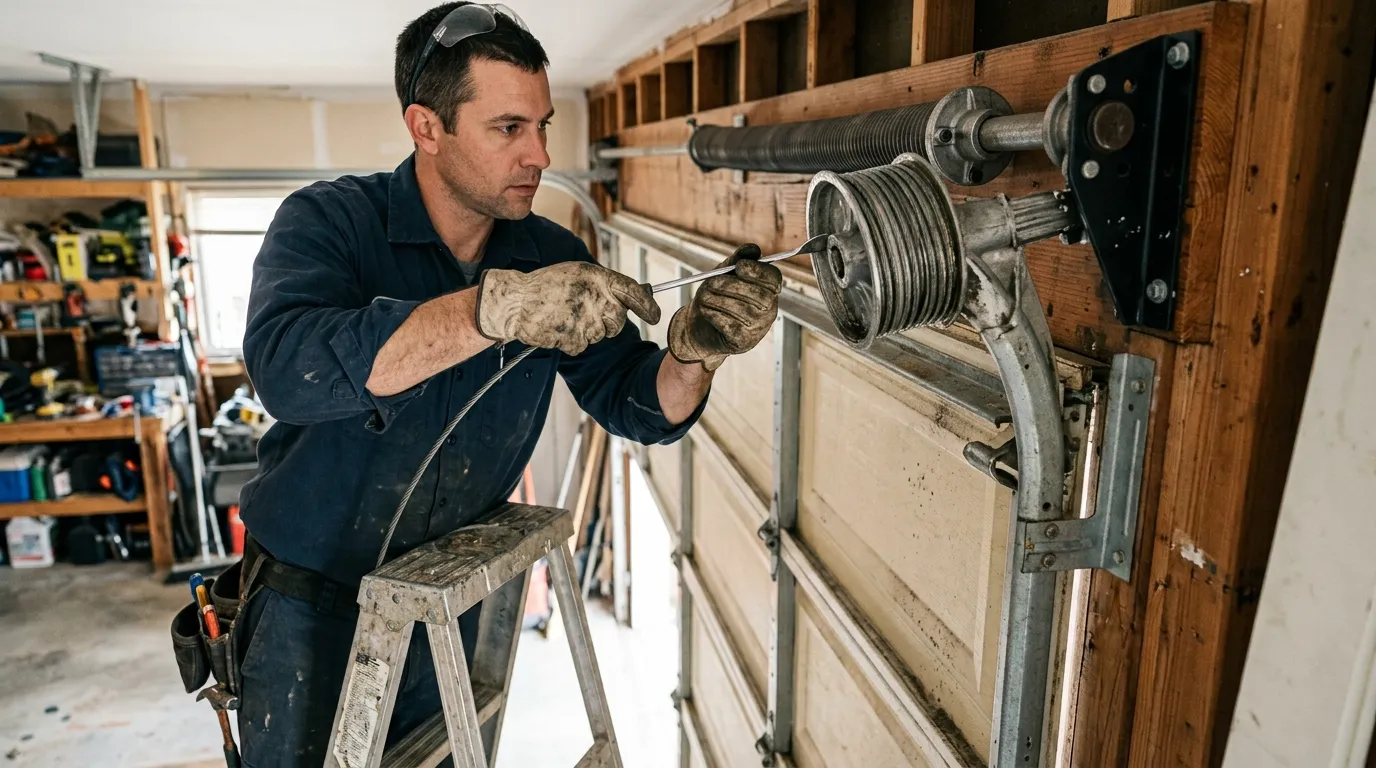
The spring side tells the same story. Houses from this era typically got either extension springs stretched above the horizontal track on single doors, or a torsion spring over the header on doubles - both sized for the door weight and steel gauge common in 1980 construction, which isn't always what's sold off the shelf now. Add in more than forty years of expansion and contraction and you get frayed cables, pitted torsion bar bearings, and end bearing plates that have worked themselves loose from the jamb. None of this is caused by the coastal climate here being harsh - it's mild, not extreme - it's just the ordinary fatigue of old steel that's outlived its expected service life.
What You Are Seeing
The most common early sign is a door that reverses partway down, or won't fully seat on the floor before backing up again - that's usually a limit switch that's drifted out of adjustment over the years, not a new problem so much as an old one finally showing itself. A sudden loud bang from the garage, followed by a door that won't budge or feels twice as heavy when you lift it by hand, is almost always a broken spring, and on a door this old it's often the original one.
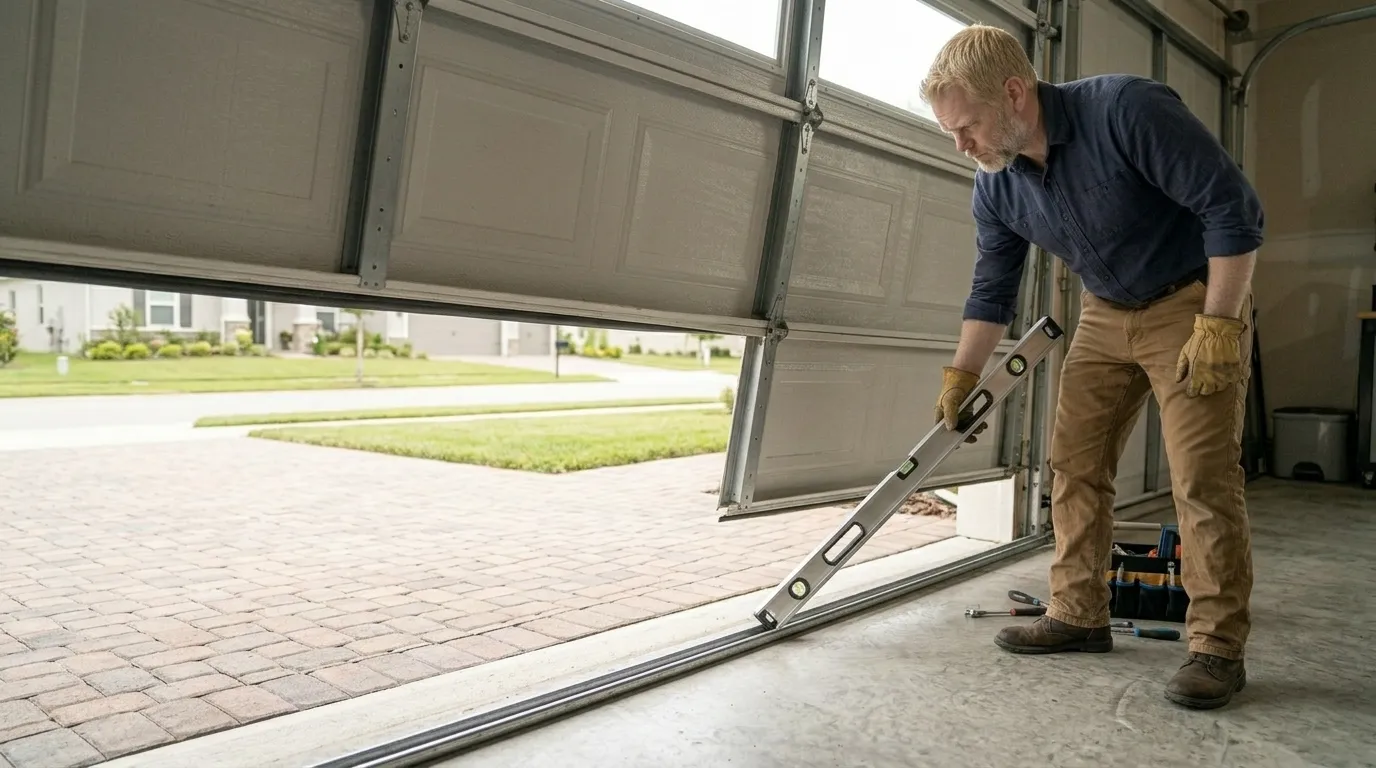
If the opener motor hums or clicks but the door doesn't move, look at the gear and sprocket assembly first - plastic drive gears from decades-old openers wear down and strip, especially on units that predate today's safety-sensor requirement. A door that sags at one bottom corner, or that scrapes the track on the way up, usually means the rollers or the track itself have worn unevenly, which is common once a door and its hardware pass the thirty-year mark. None of these are emergencies in the sense of an active safety hazard, but a spring under tension that's about to go is not something to leave for later.
What the Fix Involves
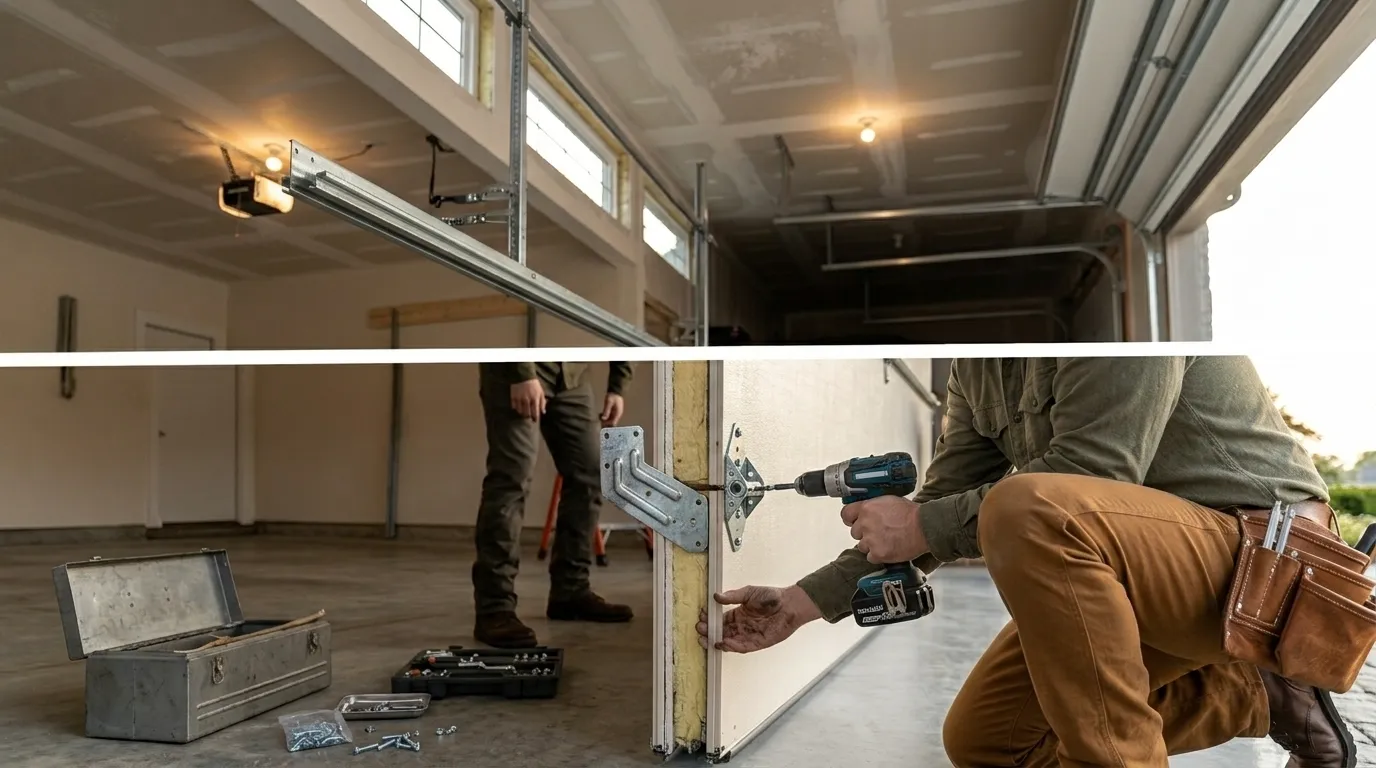
We come out from Dana Point, about eight miles from Laguna Hills, so the job starts the same way most repair calls do: identifying the spring size and door weight before we show up with the right part, rather than guessing on site. On a house from around 1980, that often means matching an extension or torsion spring to a door and track that were never updated to current sizing, so we measure rather than assume the part on the shelf will fit.
If the opener is original or close to it, replacing it with a current unit brings the door up to the photo-eye safety standard that didn't exist when the house was built - that's usually the single biggest safety upgrade on a house this age, more than any spring swap. We'll also check the bottom brackets, the track alignment, and the cable drums while we're in there, since on a door with this many years on it, one worn part is rarely the only worn part. If the door itself has rusted through at the bottom panel or the track is bent beyond straightening, replacement ends up cheaper than chasing repairs on hardware this old, and we'll say so rather than keep billing for patches.