What Can Go Wrong
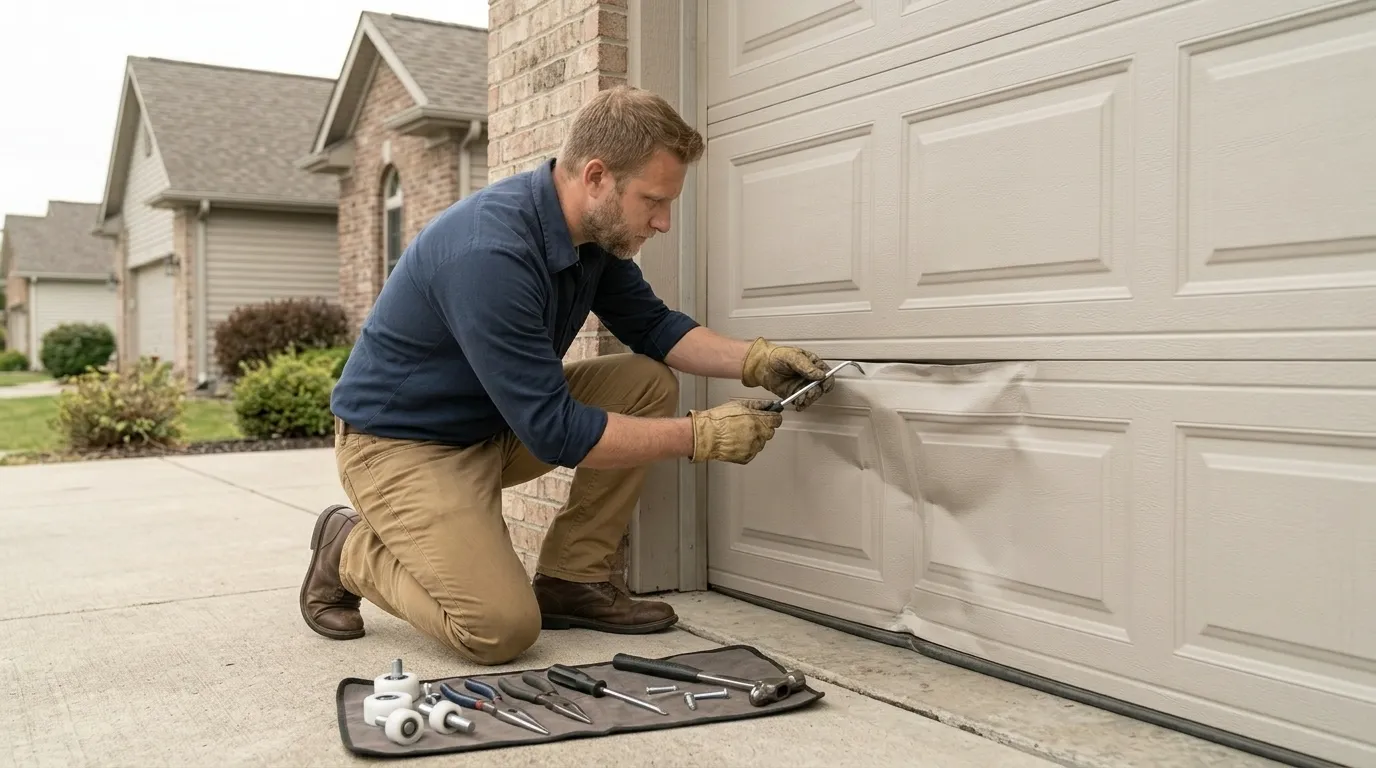
Most houses in Laguna Hills went up around 1980, which puts the original garage door well past its working life by now. That era's doors are single-layer steel, usually a plain raised-panel or flush design, hung on a standard 16-by-7 or 8-by-7 opening depending on whether the house has a single or double bay. There's no insulation layer in most of them - just steel and a coat of paint - so the panels dent easily and the door itself has gone soft in the middle from thirty-plus years of sun and use.
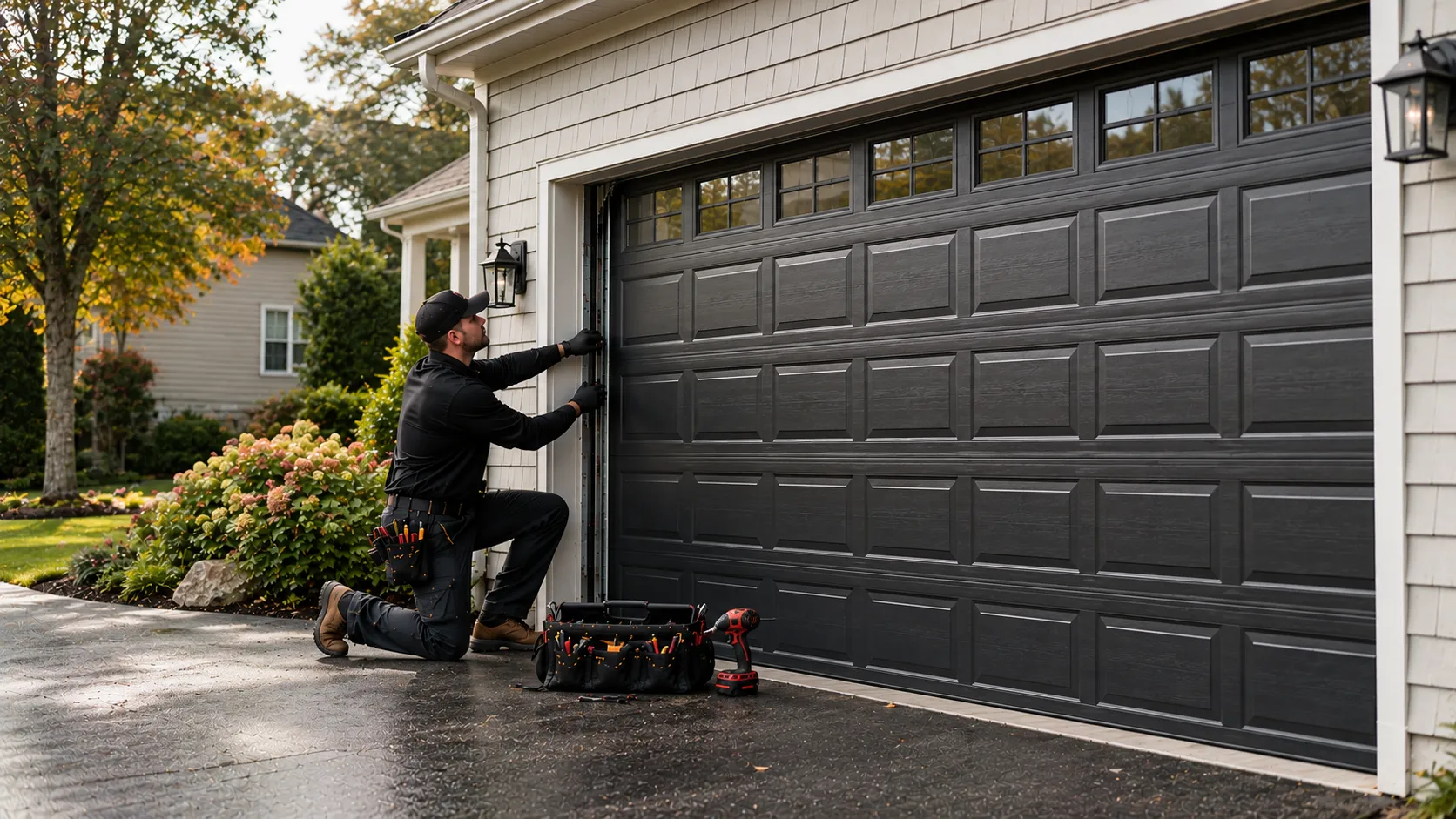
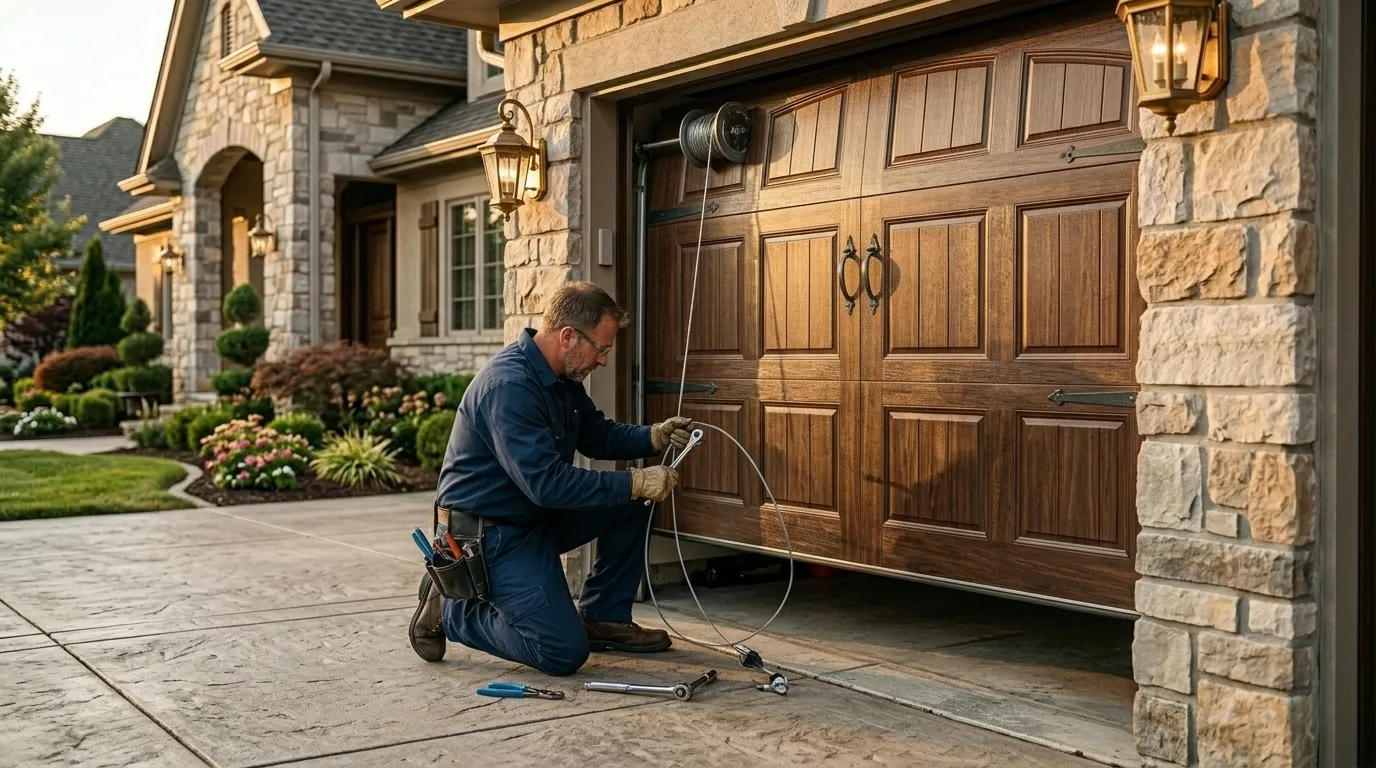
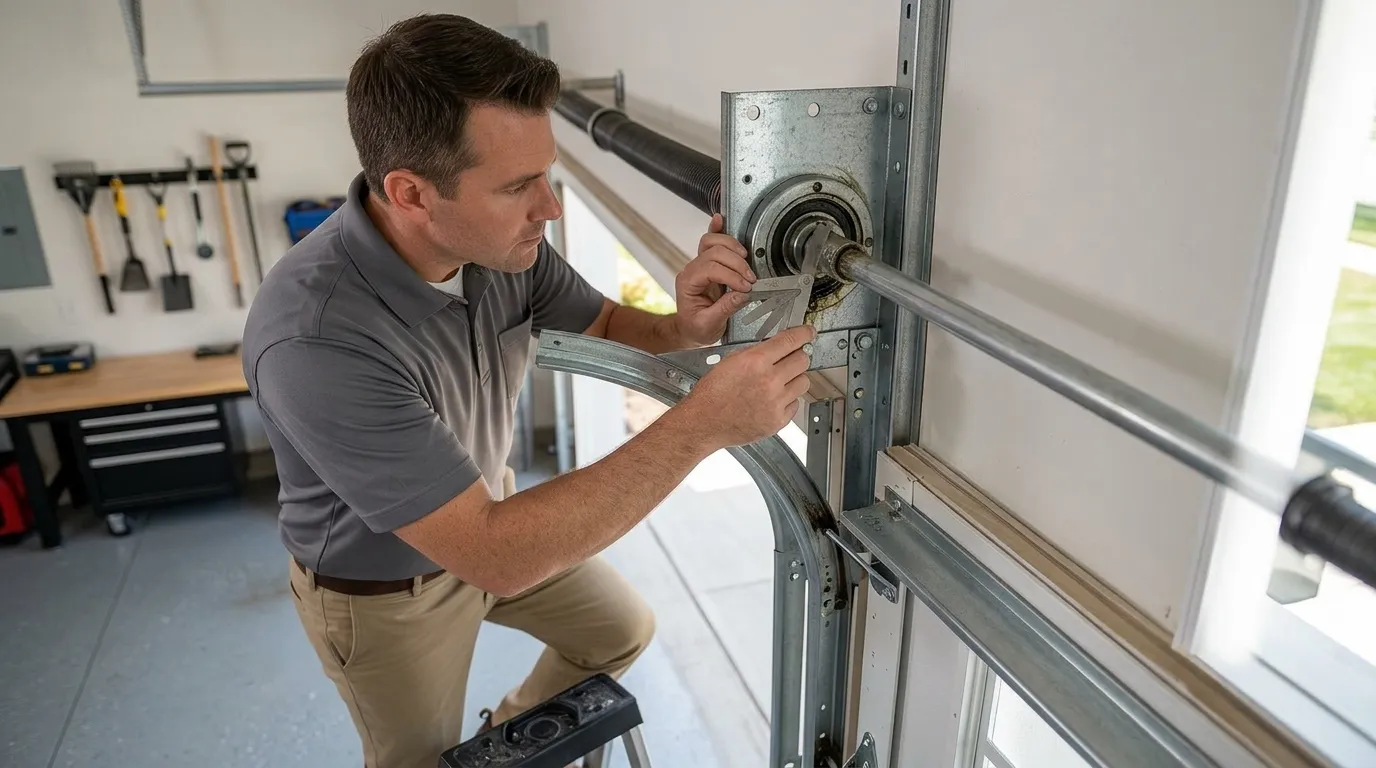
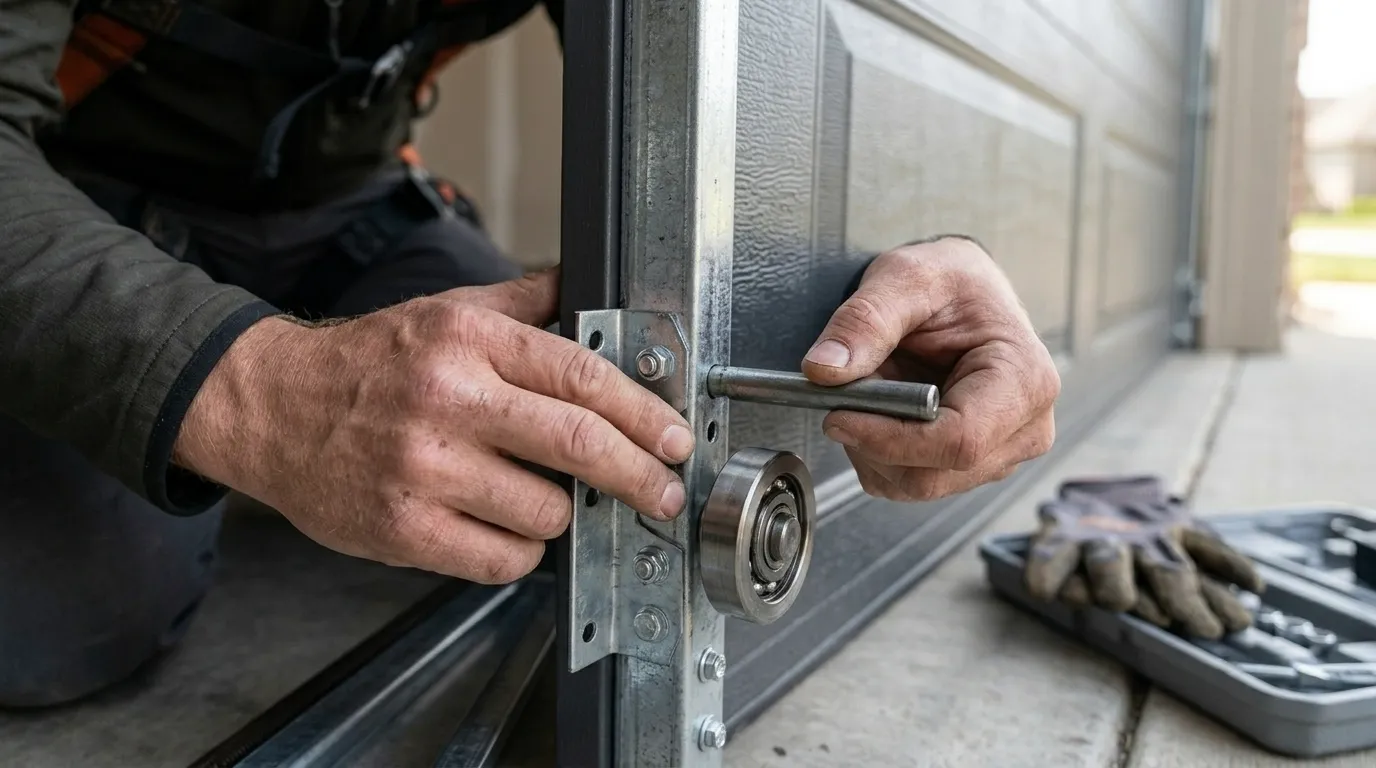
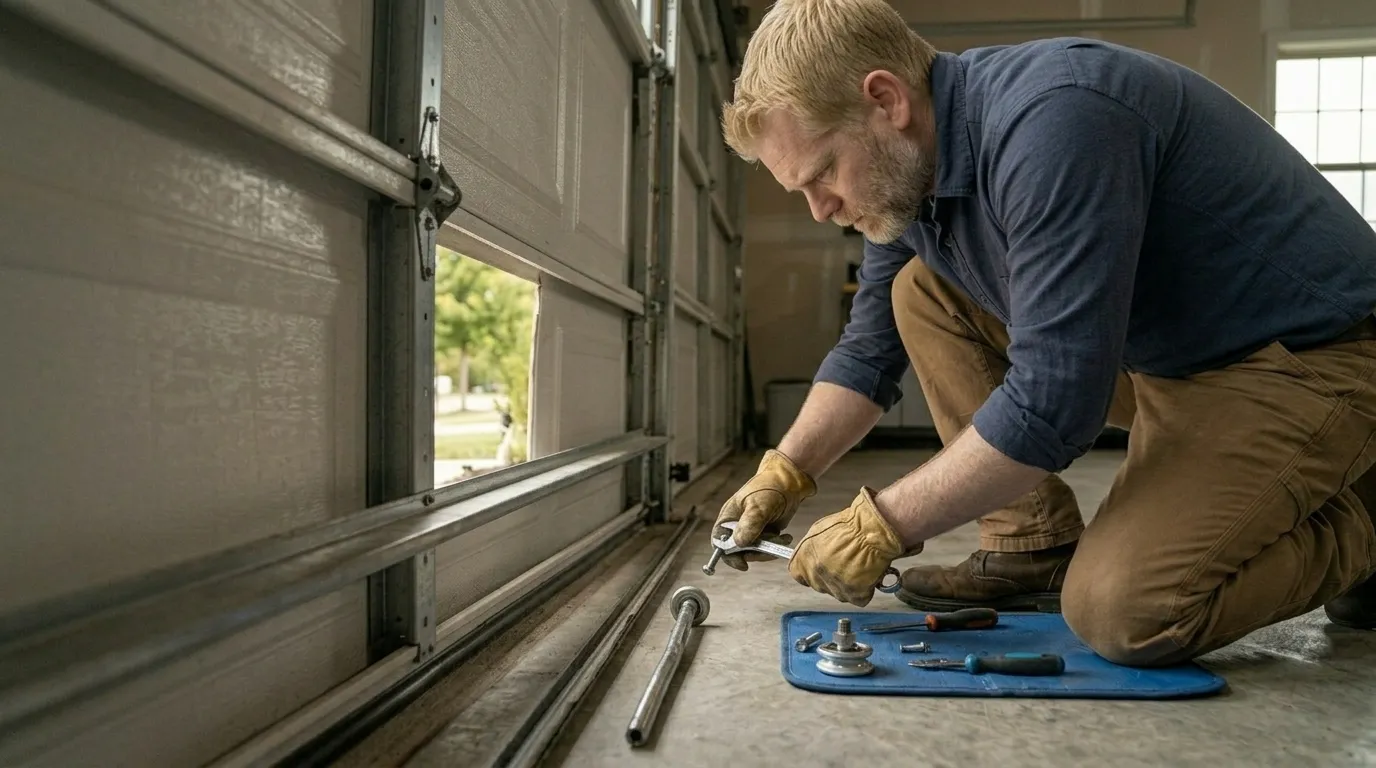
The track and spring hardware from that period wasn't built for today's heavier insulated doors, so when a homeowner swaps in a new door without checking the drums, cables, and jamb brackets, the old hardware fights the new door from day one. Rust at the bottom panel is common too, not from storms - this area doesn't get the weather extremes that chew through hardware - but from decades of sprinkler overspray and morning condensation sitting against the bottom seal.
A door this old is also almost certainly running on the original opener, if it has one, which won't have the safety reversal sensors required on doors sold today.
What You Are Seeing
If your door is original to a 1980-built house, you're likely seeing a panel that's bowed or dented at the bottom third, paint that's chalked and flaking, and a door that feels heavier to lift by hand than it should. Some owners notice the door racking side to side as it travels, which usually means the track was never re-set for the door's actual weight.
On the newer end of the stock - homes built into the 1990s and 2000s that make up a good share of this pocket of the service area - the door itself might still look fine but the opener has started grinding or stalling partway up. That's less about the door and more about a motor that's simply worn out.
Either way, once a steel door from this era starts flexing visibly when the wind pushes on it, or the bottom corners have rusted through, patch repairs stop making sense. At that point you're not maintaining a door, you're propping one up.
What the Fix Involves
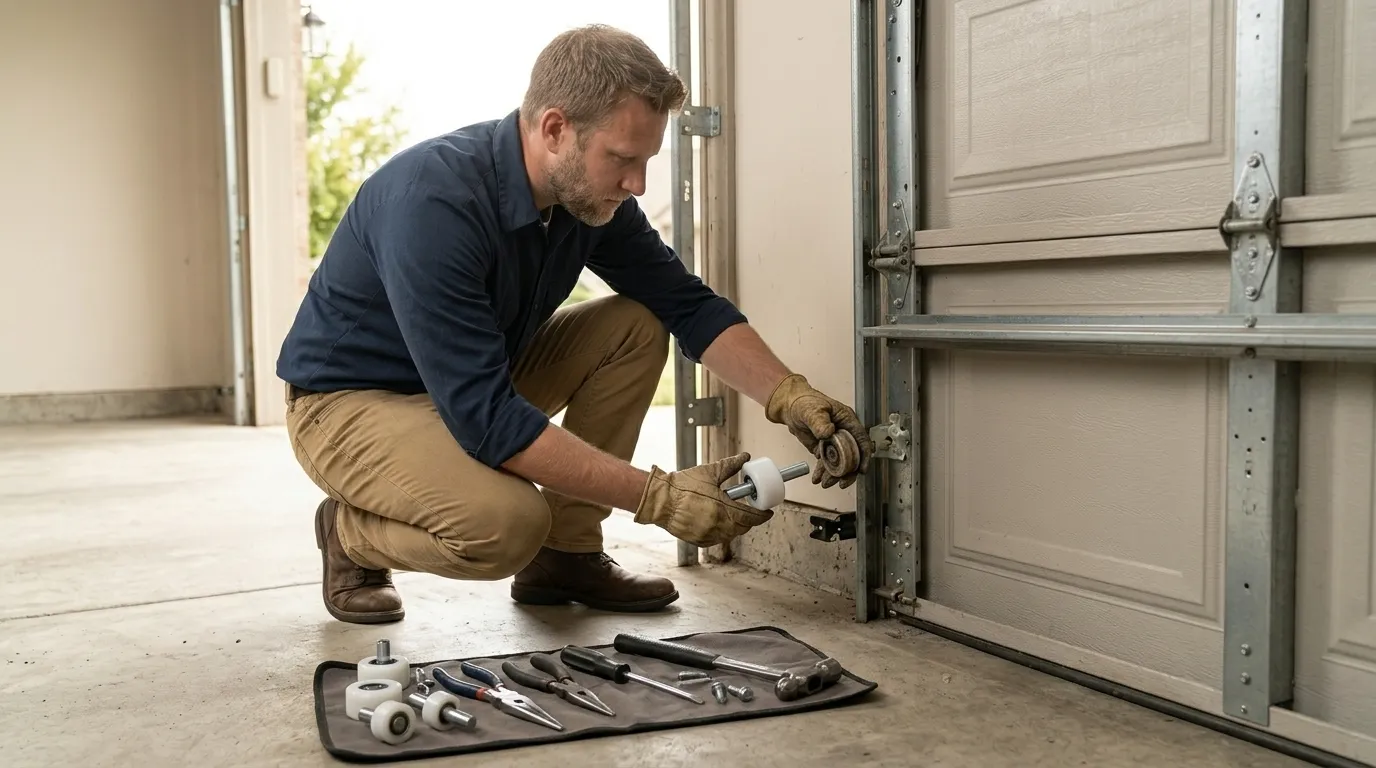
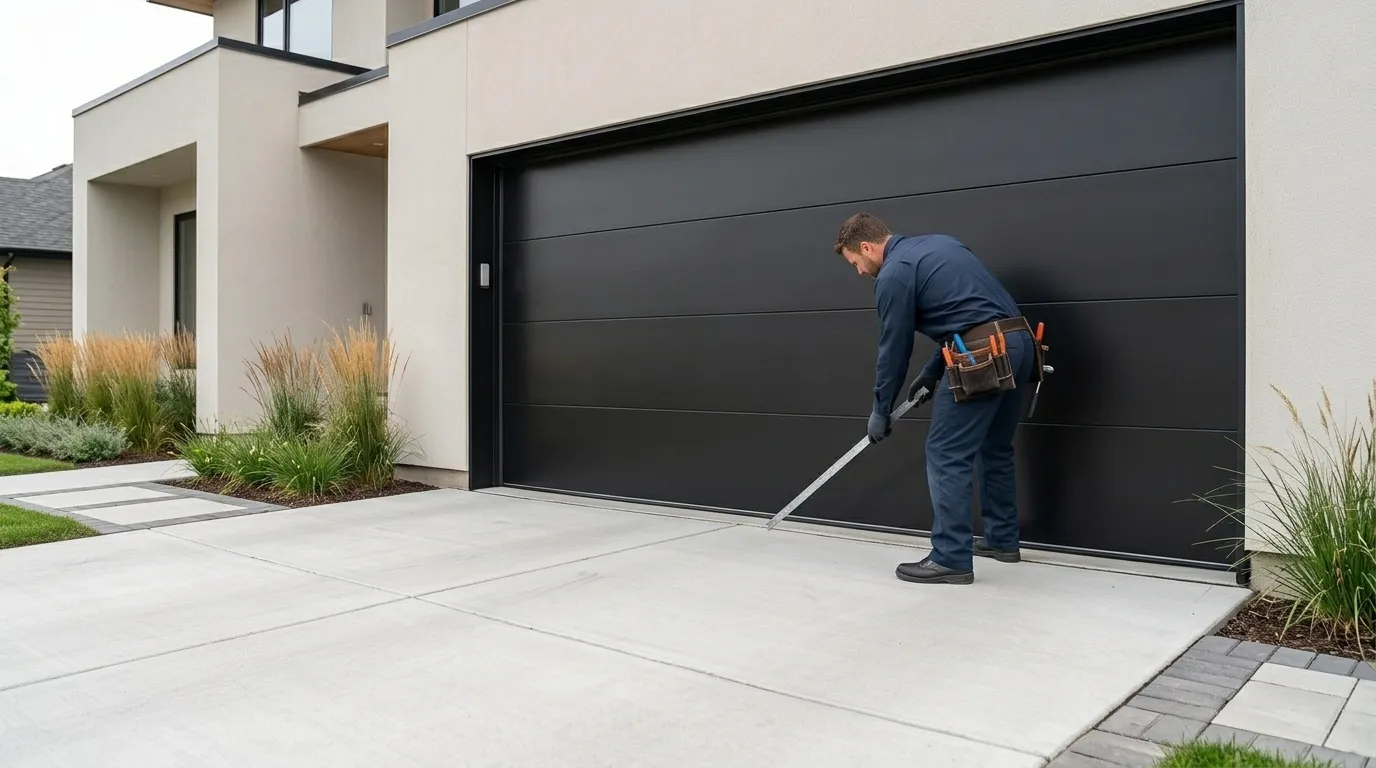
For most Laguna Hills replacements, the job starts with measuring the original opening against what a current insulated steel door needs - the jamb, header, and track clearance from a 1980 build often don't match a modern door's specs without some adjustment. We size the new torsion spring to the actual door weight, not the old one, and check the drums and cables since original hardware this age is usually due for replacement anyway.
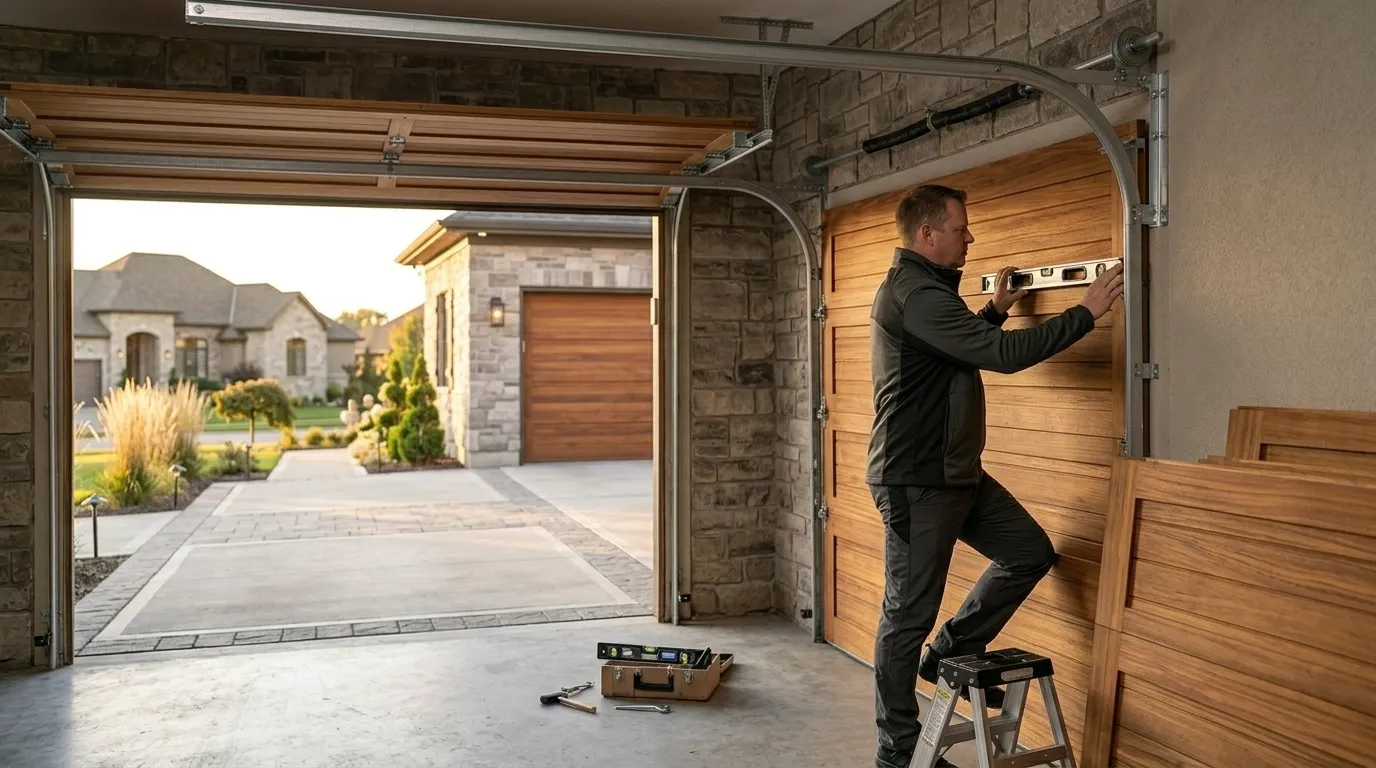
With median household income in this part of the service area sitting around $122,778, we see a fair number of owners choosing a mid-tier insulated steel door over the base model - not a luxury upgrade, just a door built for another few decades rather than a patch job. One limitation worth saying plainly: if your opening is out of square from decades of settling, that adds labor to true up the jamb before the new door goes in, and we won't know that until we're on site with a level.
We run this job out of Dana Point, about 8 miles from Laguna Hills, so scheduling is arranged in advance rather than same-day.