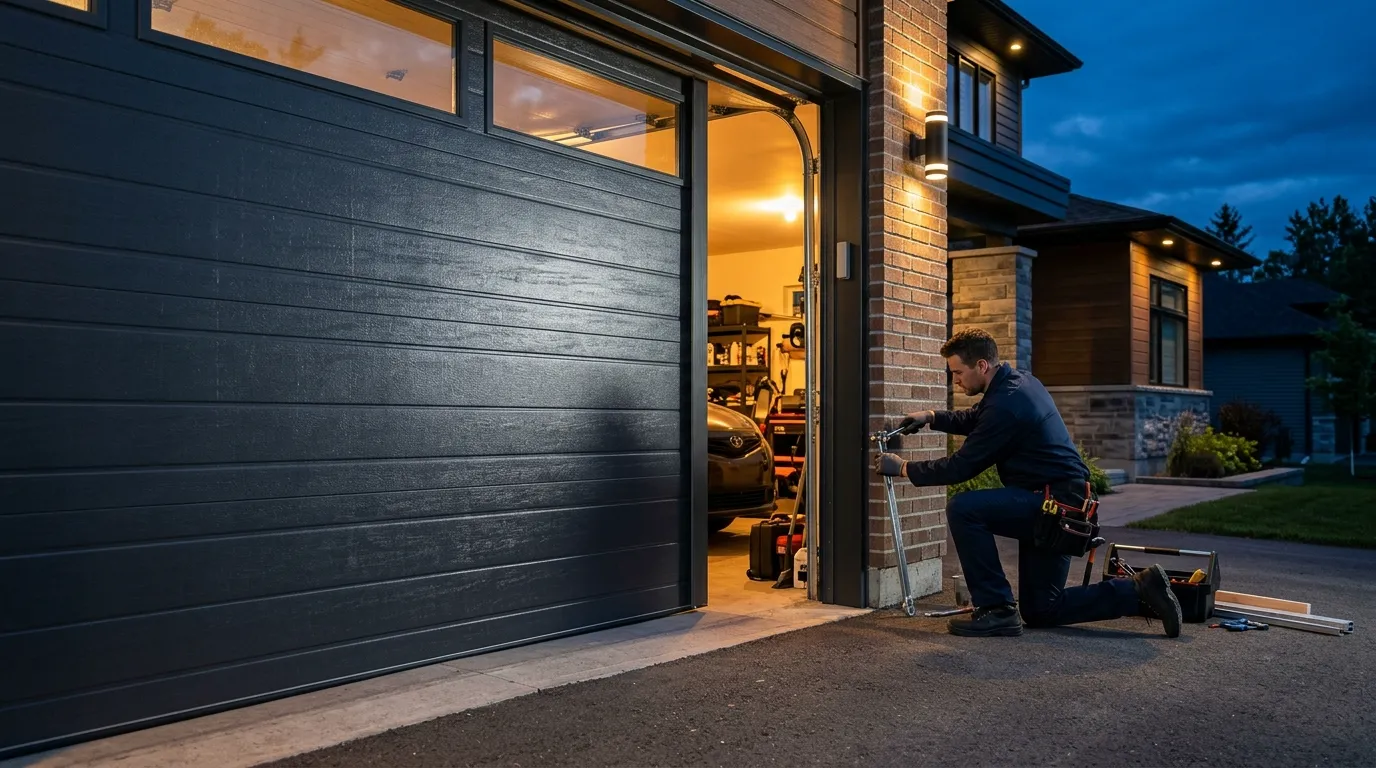
What Can Go Wrong
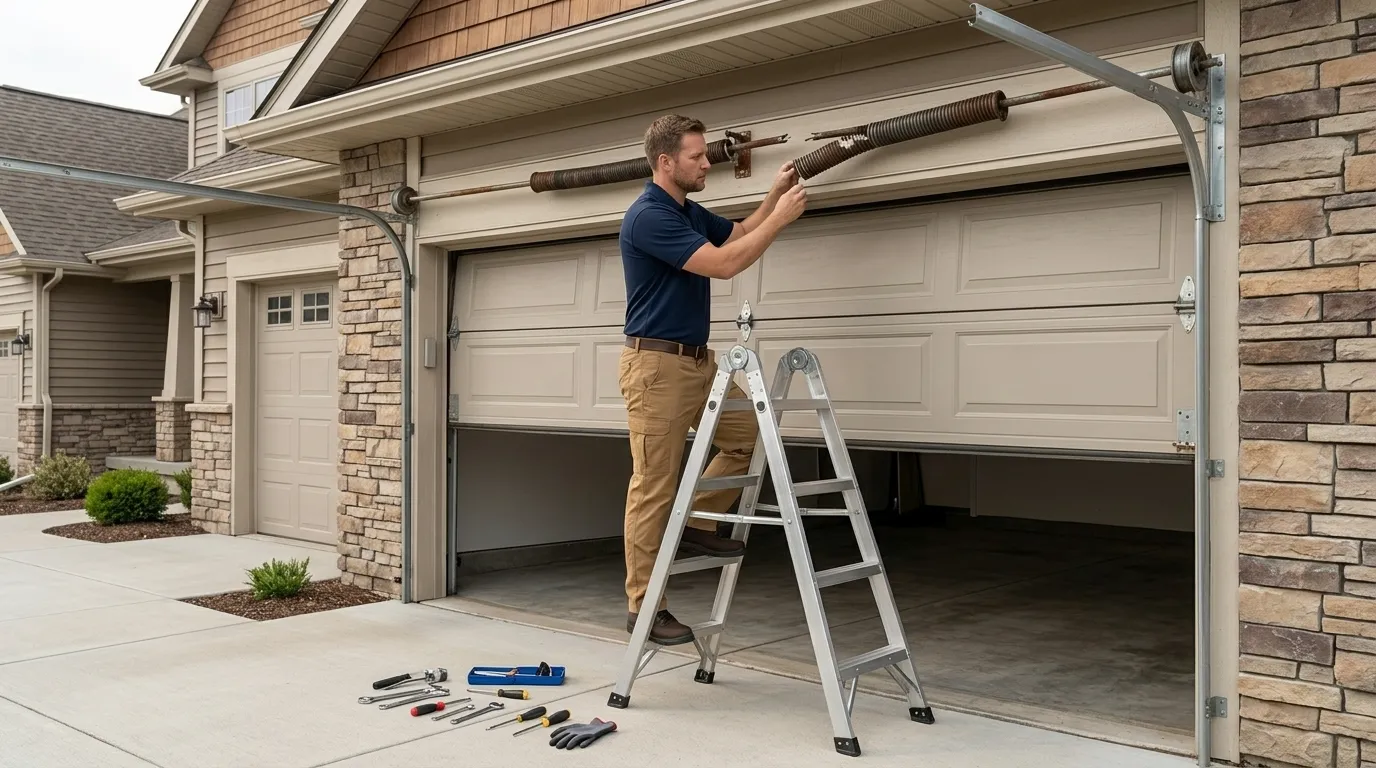
Laguna Hills sits about 8 miles from our Dana Point shop, and the housing stock here runs a touch newer than the service-area median of 1982 - most of this area's garage doors went up around 1980, give or take a few years on either side. That two-year gap sounds small, but it lines up with a manufacturer transition a lot of homeowners don't know about: doors from right around 1980 often carry the last generation of a spring wind style before the industry shifted to today's standard cycle-rated torsion springs.
What that means in practice is a spring that's now pushing 44 years on the original wind, well past any reasonable service life regardless of how well it was maintained. In our mild coastal climate the steel itself doesn't rust through the way it would somewhere with real winters, but metal fatigue doesn't care about weather. A spring wound and unwound tens of thousands of times weakens from the inside, and age is the bigger factor here than corrosion.
The other common failure on houses this age is a spring that was already replaced once, sometime in the 90s or 2000s, with hardware that doesn't match the door's current weight if panels were ever swapped. That mismatch shows up as a door that slams the last foot of travel or one that won't stay put when you try to lift it by hand.
What You Are Seeing
The clearest sign is a door that feels unusually heavy the moment the opener kicks in, or one that reverses itself partway up. If you disconnect the opener and try lifting the door by hand, a good spring holds the door roughly waist height on its own. If it drops like dead weight, the spring's done or close to it.
A loud bang from the garage, often mistaken for something falling off a shelf, is usually a torsion spring letting go under tension. Don't try the door afterward - with one spring broken, the other is carrying double load and the opener can strip its gears trying to compensate.
On older winds specifically, watch for a spring that's visibly stretched or has a gap between coils that wasn't there before. That's a spring on its way out, not one that's already failed, and it's the safer time to call for a look than after it snaps.
What the Fix Involves
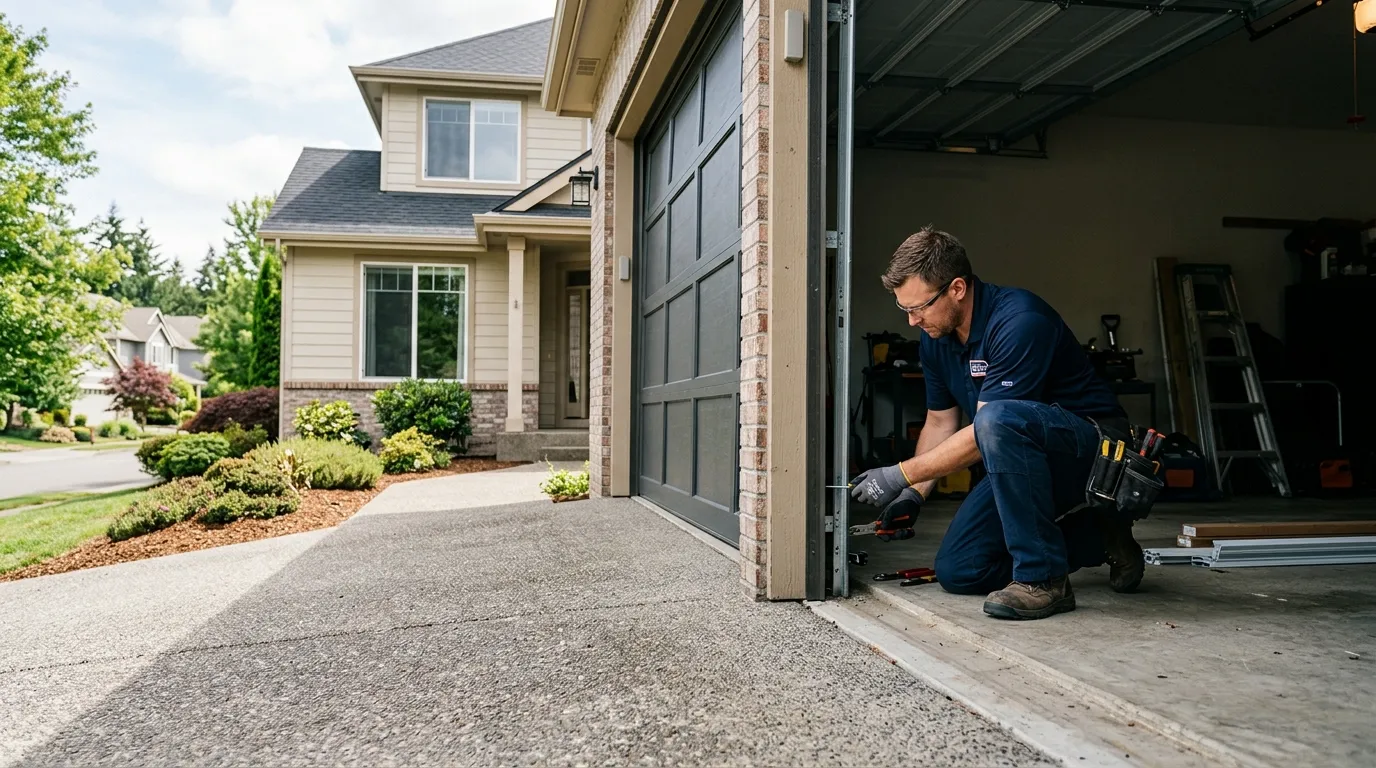
For a spring job in Laguna Hills, we bring stock sized to the door's actual weight, not just a swap for whatever wound down originally - that matters more here given how many doors on 1980-era homes have had at least one panel or opener change since. We measure the door, check the drum size and cable routing, and replace both springs as a pair even if only one broke, since the other is now the same age and just as fatigued.
We travel the 8 miles out from Dana Point for the visit, so scheduling accounts for that trip rather than treating it as a walk-in stop. Once on site, the swap itself is usually the fastest part of the job; balancing the door afterward so it holds position at any height takes longer and is the step that gets skipped by anyone rushing the work.
See more on how we cover Laguna Hills or read about spring repair generally at our Dana Point page.