What Can Go Wrong
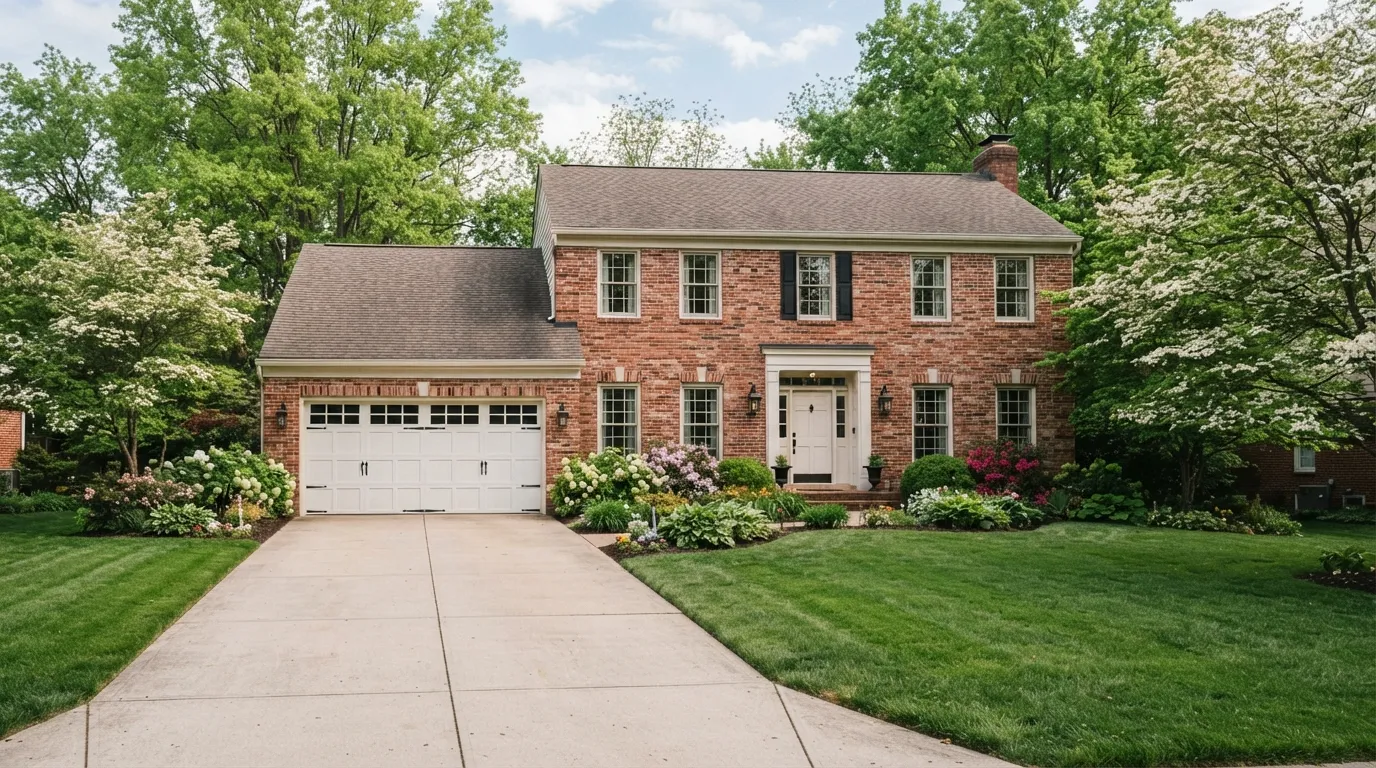
Laguna Hills isn't a huge town by household count, but it's dense enough with houses from one era that we see the same failure over and over. With roughly 11,490 households here, most sitting in homes built around 1980, the track hardware going bad right now is the original steel that came with the house, or a first-generation replacement installed sometime in the 90s. That's 40-plus years of thermal cycling on brackets and rollers that were never built to last that long.
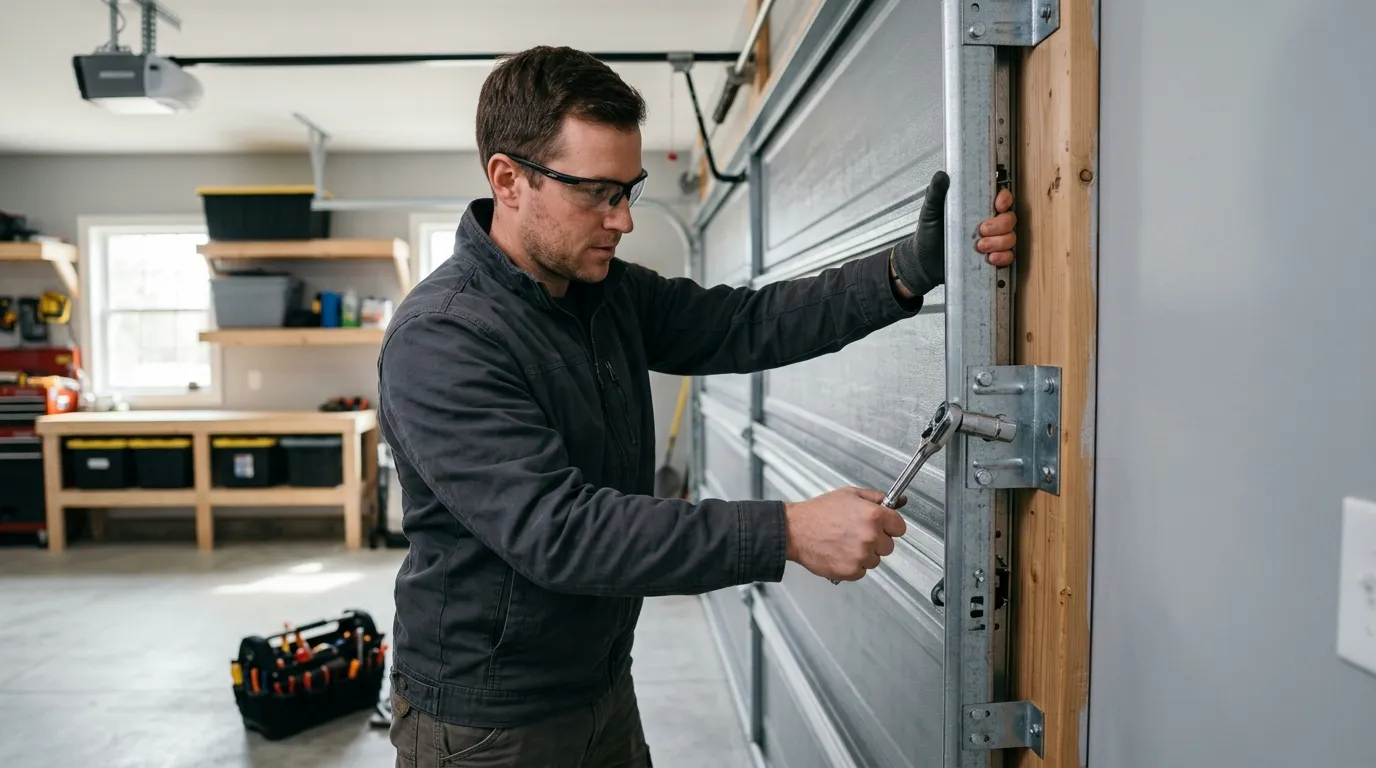
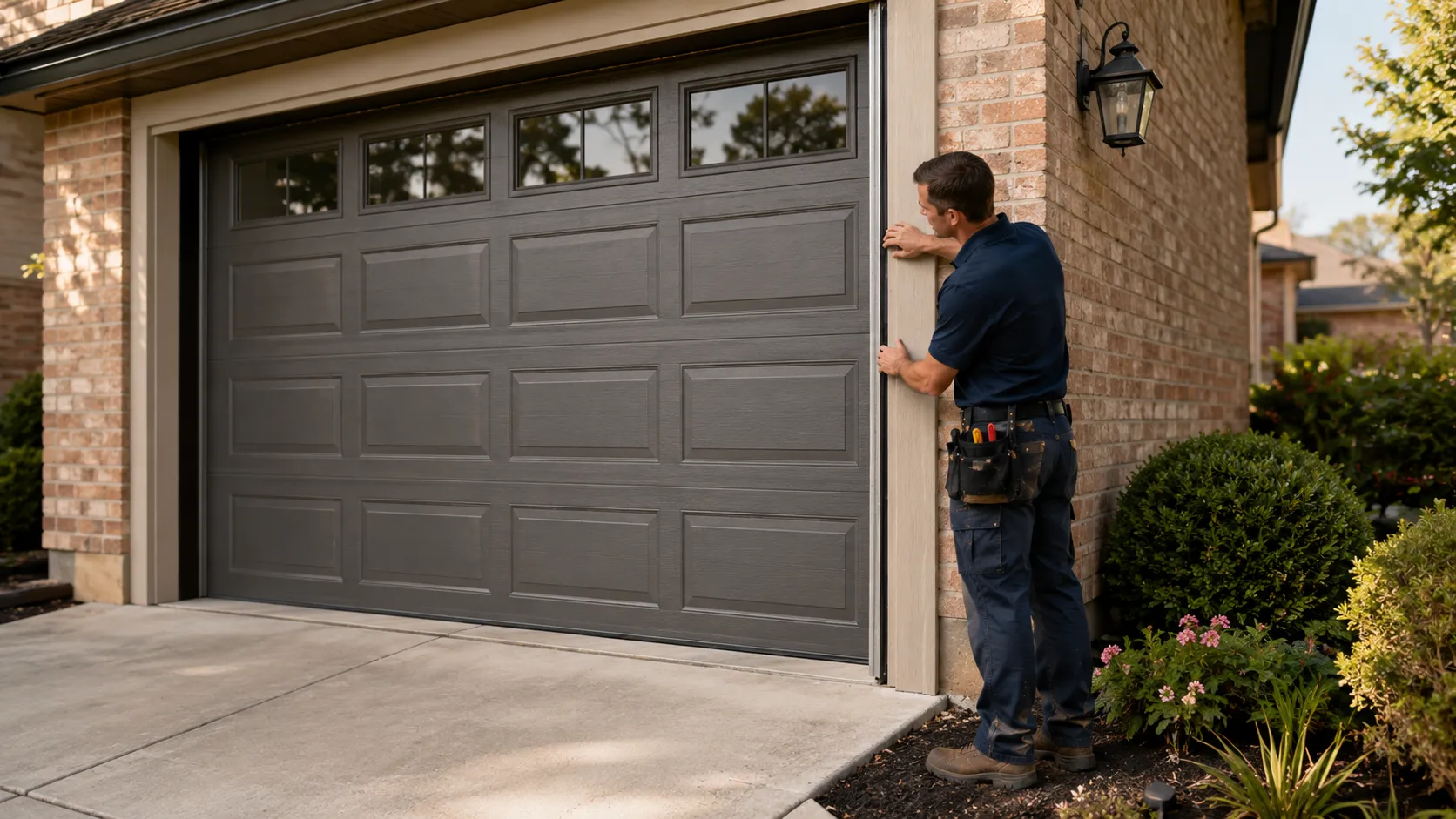
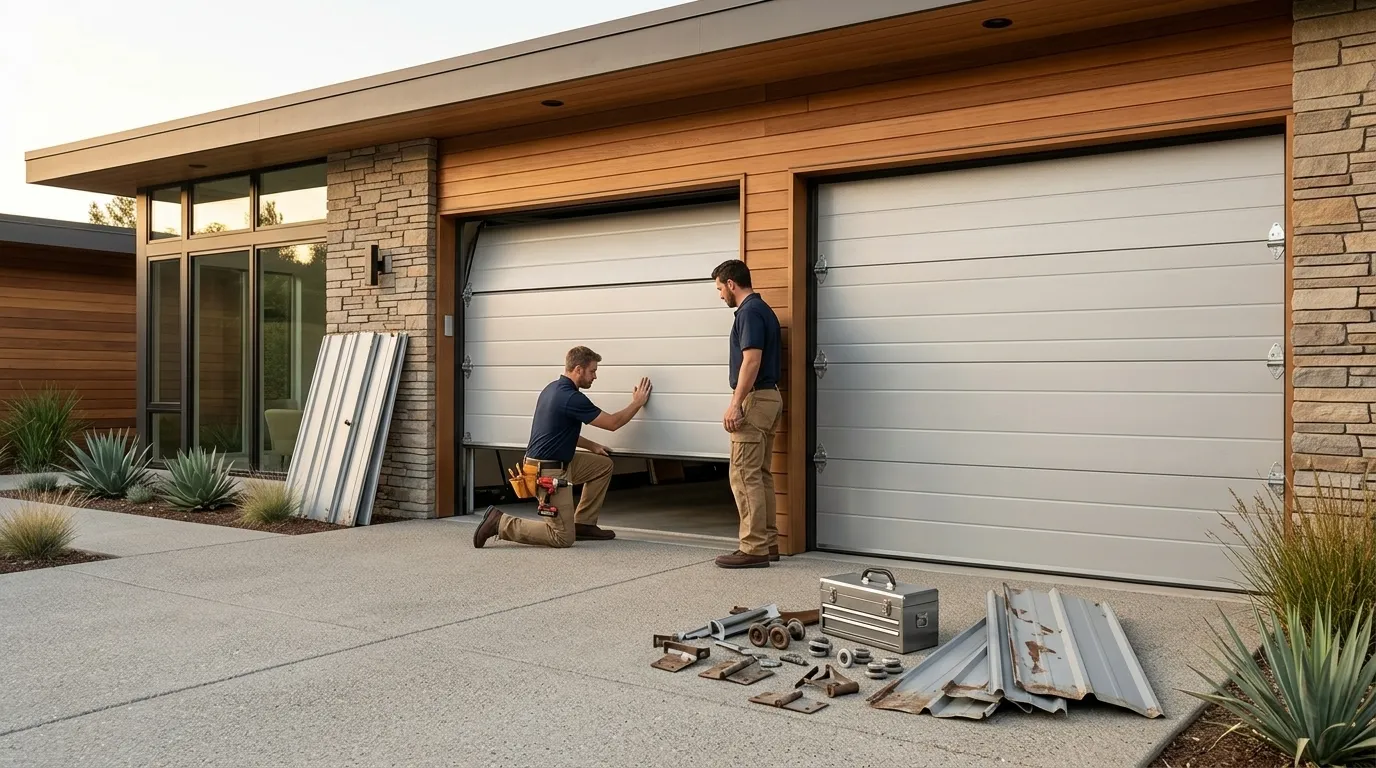
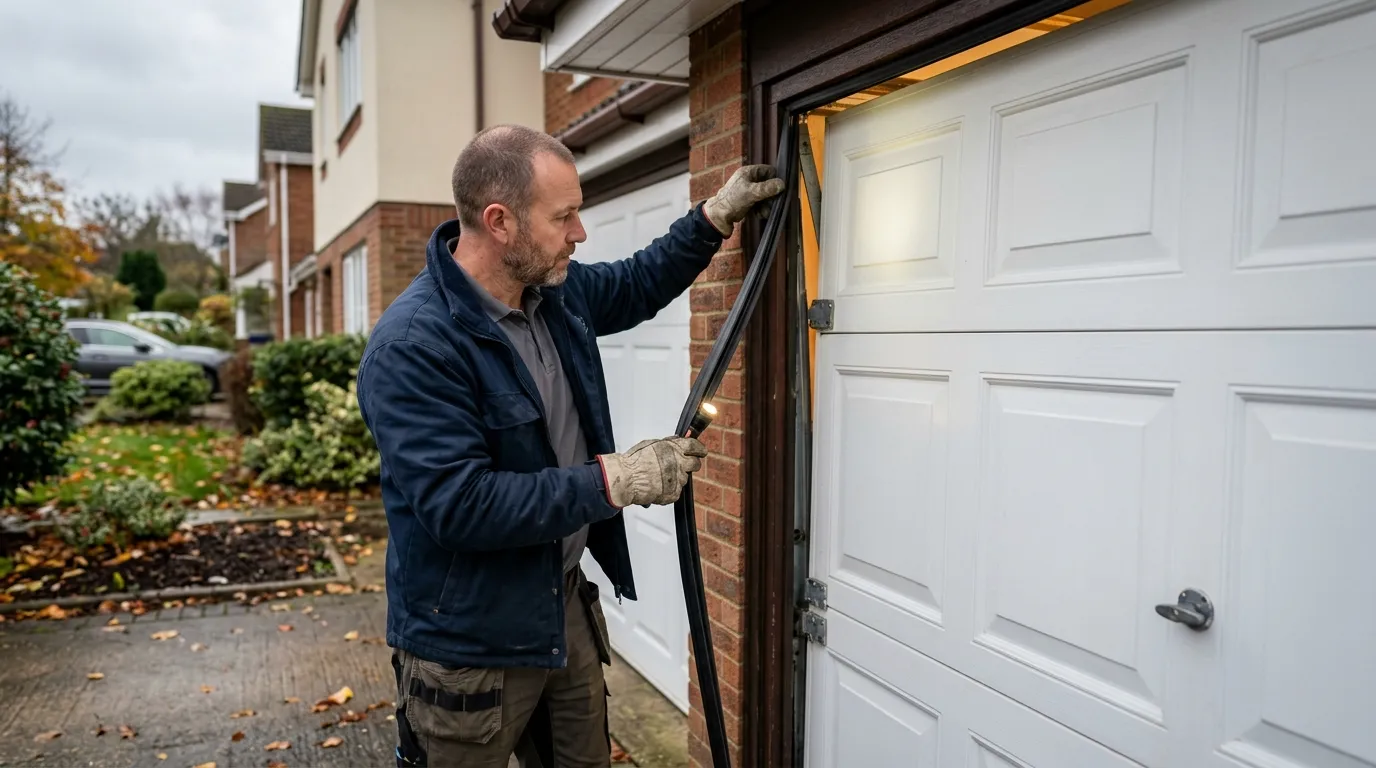
The usual cause of a door jumping track in a house this age is a bent horizontal rail, a roller that's worn oval instead of round, or a bracket where the lag bolts have worked loose in aging jamb wood. On mild-climate coastal stock like this, rust isn't usually the driver - it's fatigue and loosening, not corrosion. A cable that's frayed or come off a drum will also pull a door sideways off its rollers, especially on older single-piece doors that some of these houses still have.
We also see it after a DIY opener swap where the new unit yanked a door that was already tracking marginally out of alignment. The opener didn't cause it, but it exposed a problem that had been building for years.
What You Are Seeing
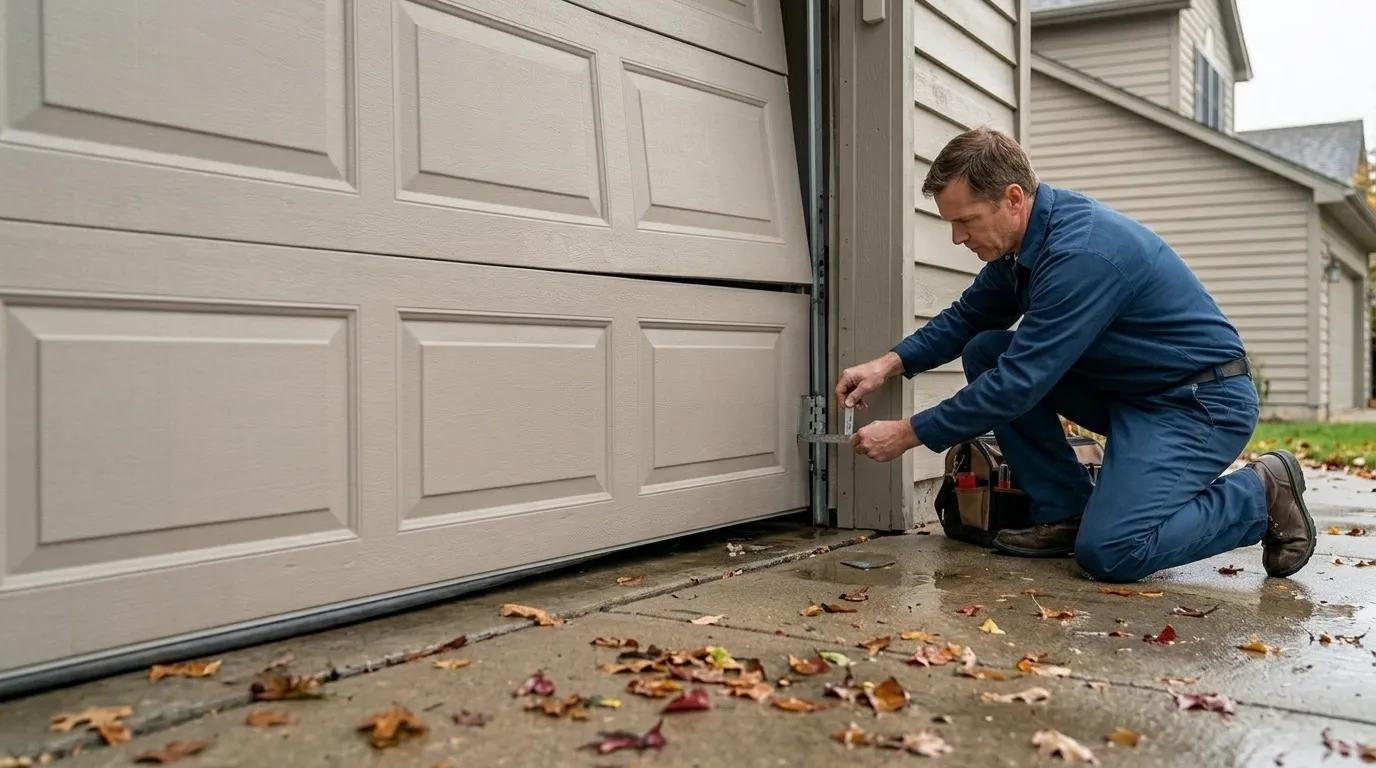
If the door is off track, one side usually rides higher than the other, or a bottom corner sits proud of the frame instead of sealing flush. You'll often hear a bang or a grinding scrape right before it happens, then the door stops moving partway up or down. Sometimes a panel visibly bows outward on one side where the roller has left the track entirely.
On the 1980-era stock common here, the giveaway is usually at the bend where the horizontal track angles up toward the ceiling - that's the highest-stress point on an aging rail, and it's where we find most of the bent metal. If your door is one of the original single-piece slab doors instead of a sectional, off-track failure tends to be more dramatic: the whole door can rack sideways in the frame instead of just one panel lifting free.
What the Fix Involves
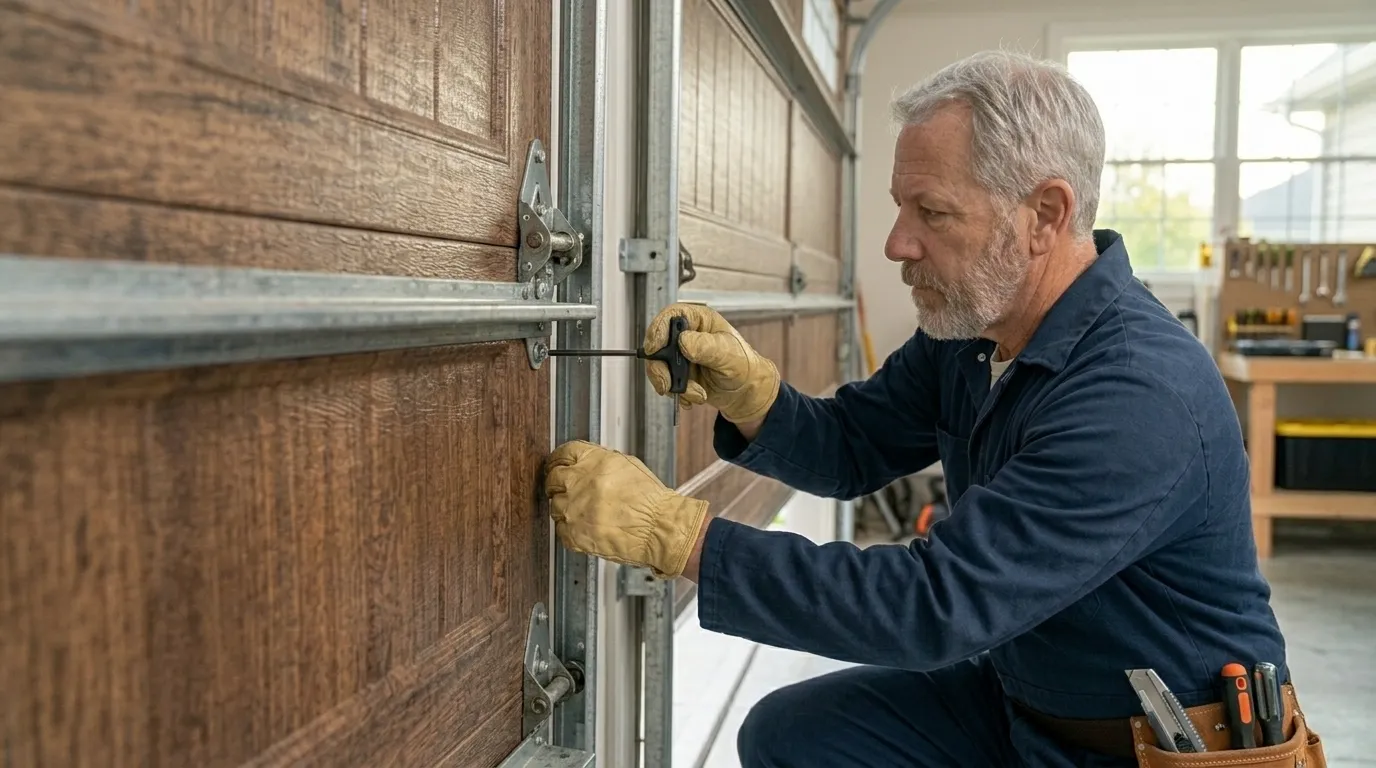
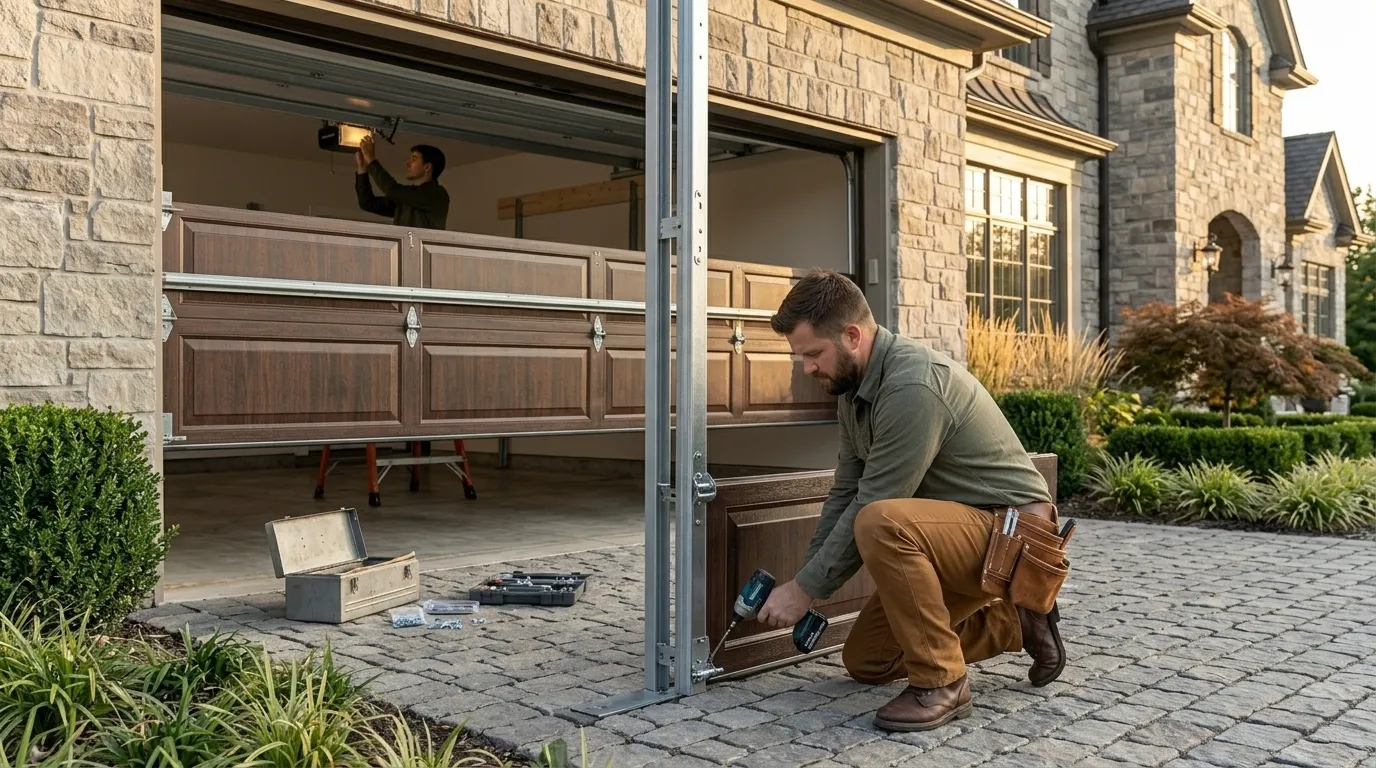
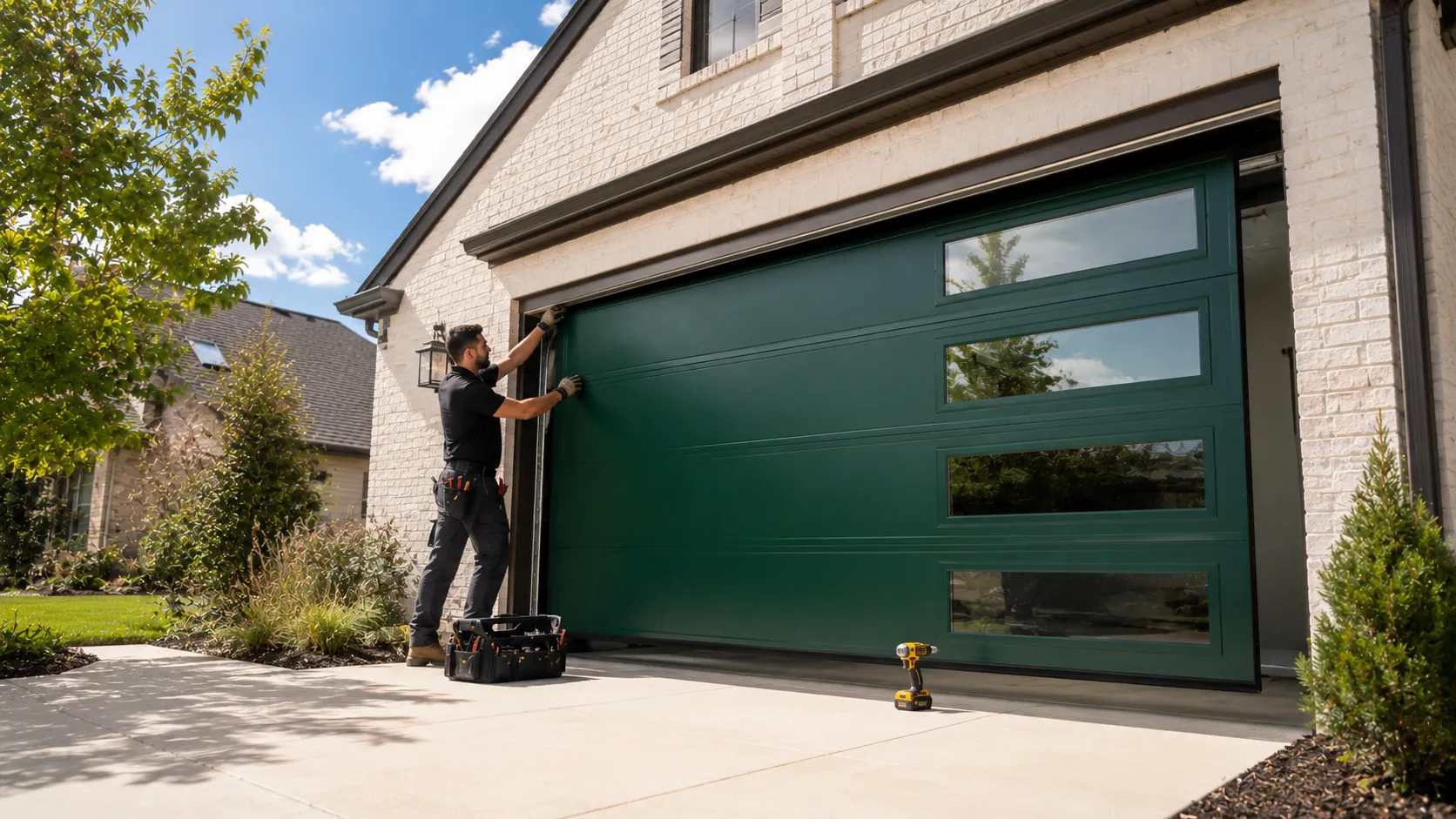
We come from Dana Point, about 8 miles out, so we're not sitting on a Laguna Hills side street waiting for the call - expect us to quote a travel window rather than a same-hour promise. Once we're on site, the fix depends on what's actually bent versus what's just worn. A knocked-loose bracket is a re-mount and a roller swap. A bent track section usually gets replaced outright rather than hammered straight, because a rail that's been bent once tends to bend again at the same spot.
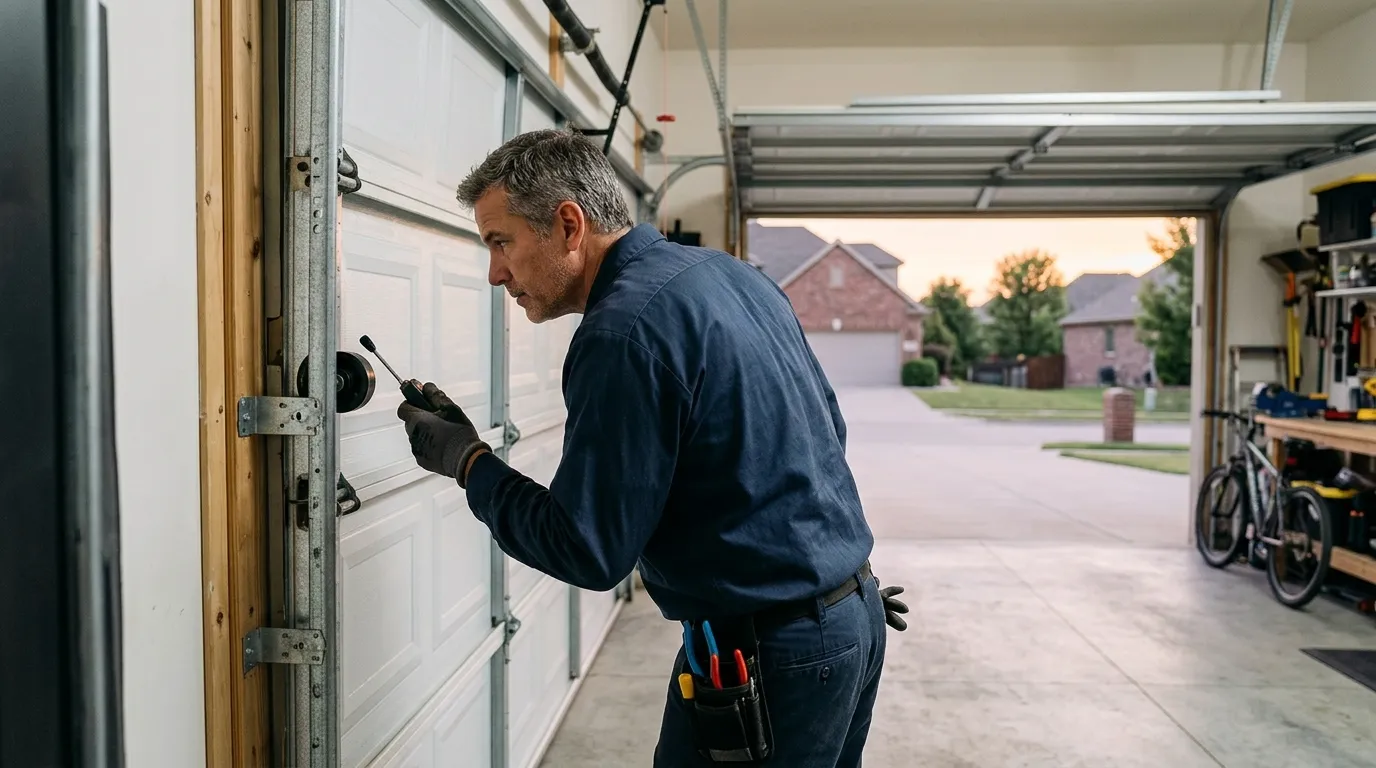
On houses built around 1980, we're also checking the cable drums and the spring anchor points while we're in there, since hardware from that build era is often original and due for a full inspection anyway, not just a spot fix on the one thing that jumped. If the opener was involved in pulling the door off track, we check the travel limits and force settings before handing it back, since a door reset without that check will likely repeat the problem within weeks.
We won't push a full door replacement on an off-track call unless the track or rollers are damaged beyond a straight repair - most of these are fixable without swapping the door itself.