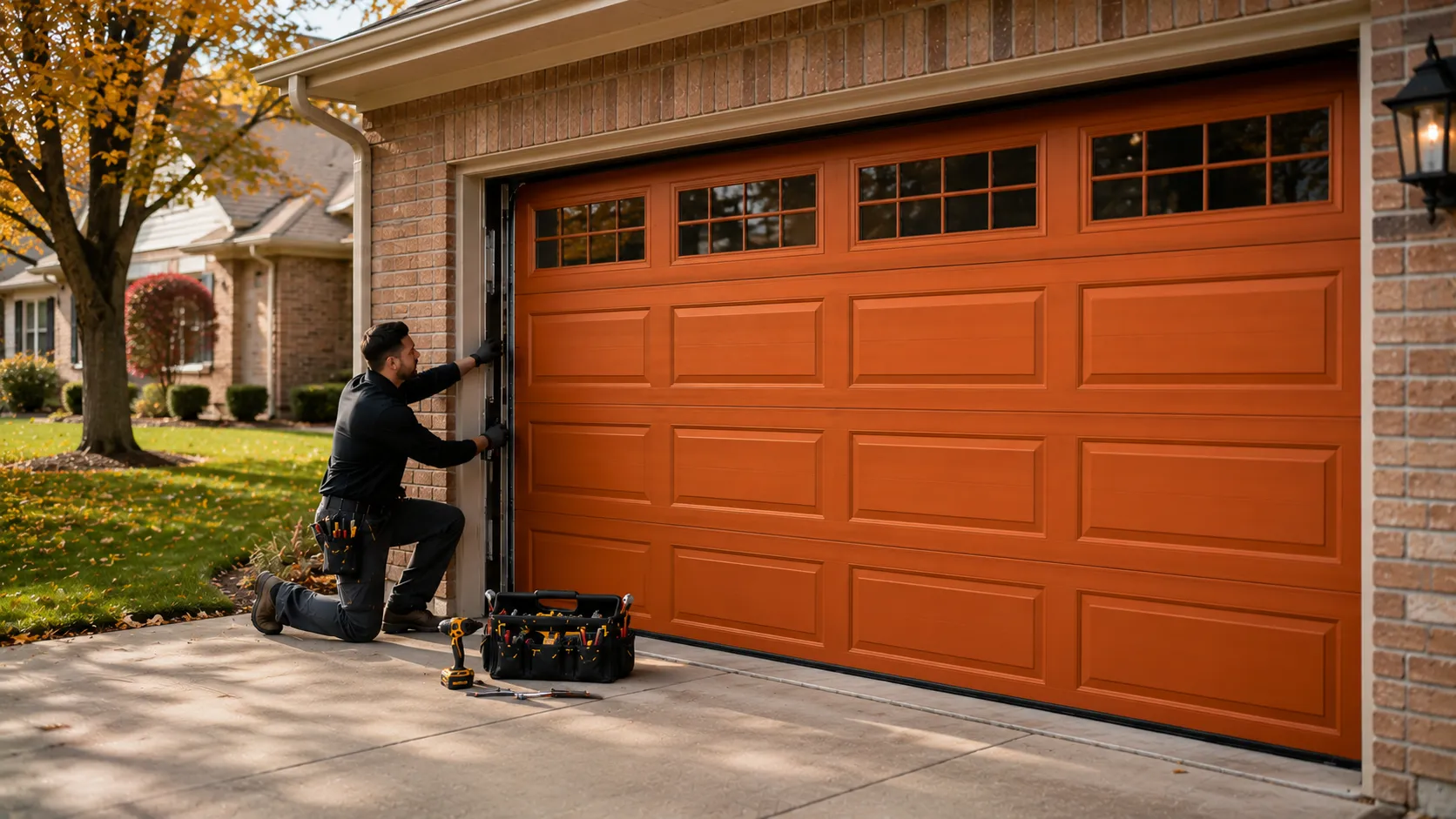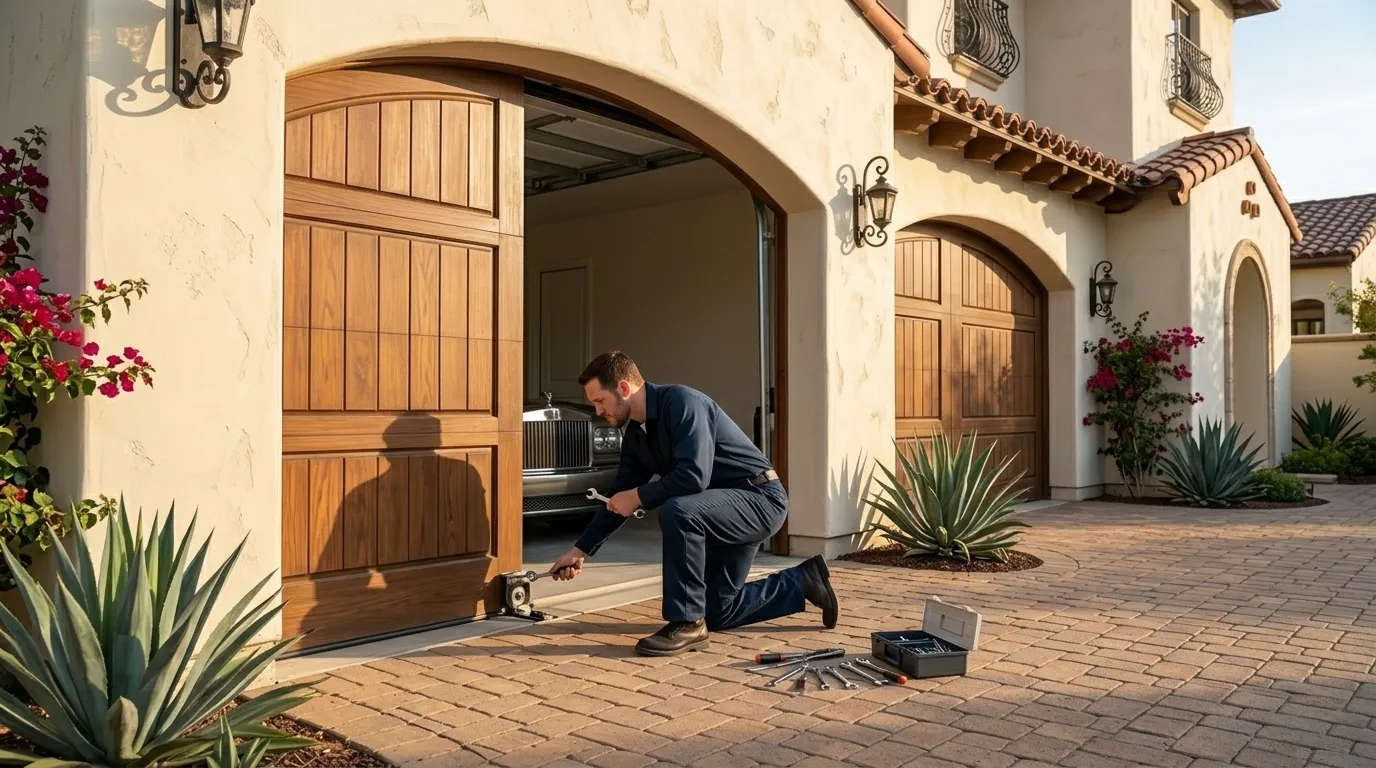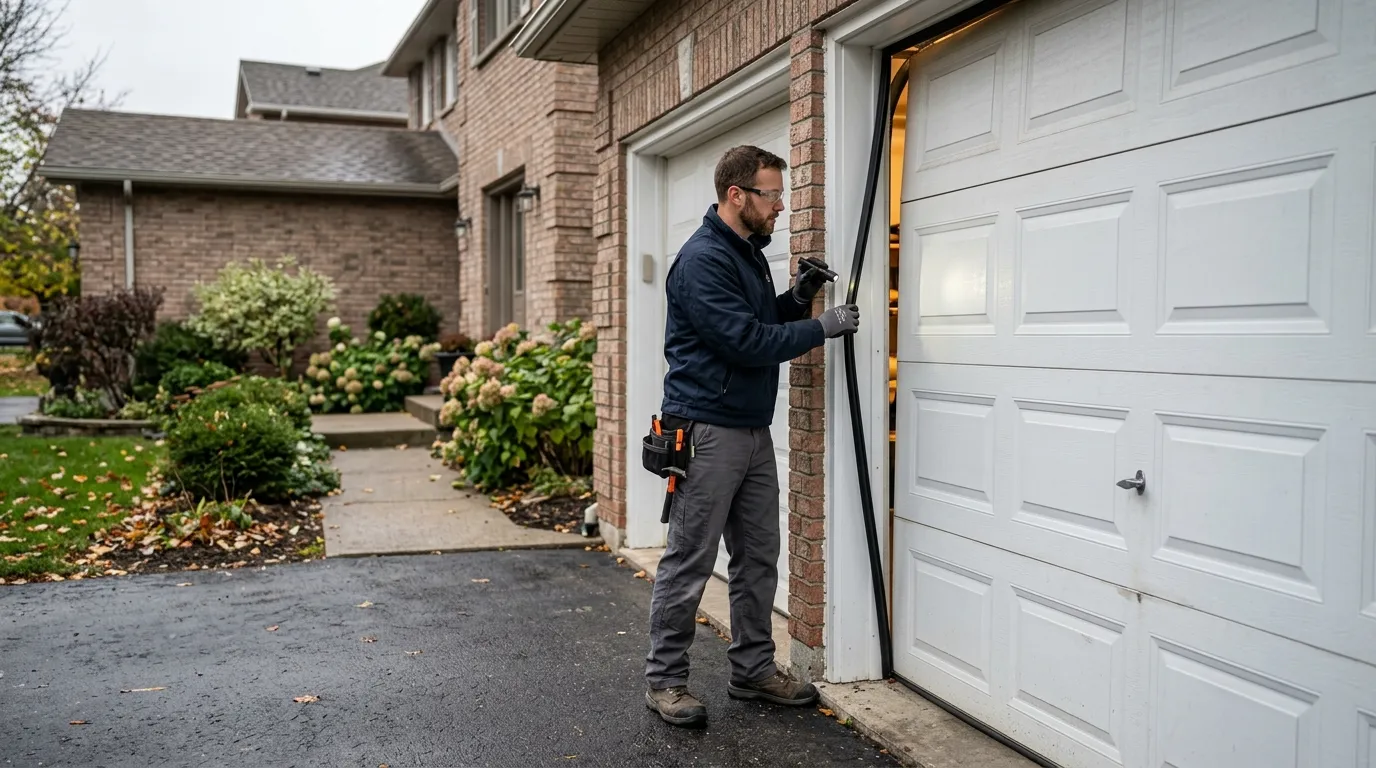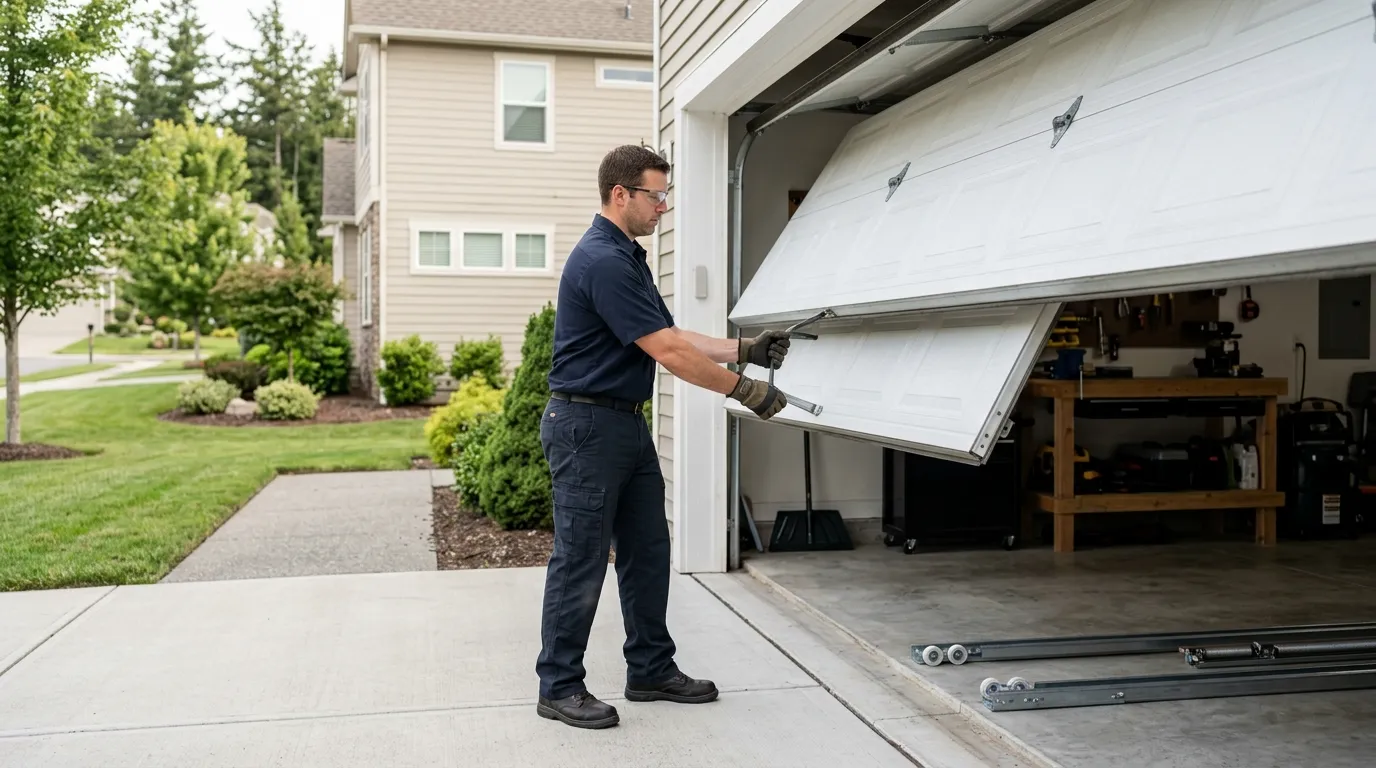
What Can Go Wrong
Most houses in Laguna Hills went up around 1980, and across the wider service area that's part of a run of 1980s-90s construction that never got fully swapped out for anything newer. That matters because a door installed the year the house was built is now over four decades old, and the torsion spring on it was never rated to last that long. If nobody's touched the spring, the cable, or the rollers since the original install, you're not looking at a maintenance issue anymore - you're looking at hardware that's simply worn past its service life.
The usual failure on a house this age is a torsion spring snapping clean, sometimes taking a cable with it. Second most common: rollers that have gone from steel to nylon-and-grease-gone-dry, grinding in the track until the opener can't pull the door up anymore. On the original steel doors from that era, we also see panels that have rusted or dented at the bottom section, where irrigation runoff or a bump from a car has worked on the same spot for thirty-plus years.
The MILD temperate climate here means the failures aren't weather-driven the way they'd be somewhere with hard freezes or heavy salt air. It's age and cycle count wearing the metal down, not corrosion from storms.
What You Are Seeing
If the door is original to a 1980-built house, you'll usually notice the signs before it fails outright. A door that used to lift smooth now hesitates a few inches up, or the opener strains and reverses partway through the cycle - that's the spring losing tension, not the motor going bad. A loud bang from the garage, followed by the door refusing to move at all, is a spring that's already broken; don't try to force it up.
Rollers past their life show up as a scraping or grinding sound as the door travels, worse at the top and bottom of the track where the curve puts more load on them. If the door drifts to one side as it closes, or one corner drops faster than the other, that's usually uneven cable wear or a bent track section, both common once hardware's run this long without replacement.
A door that's heavy to lift by hand, even with the opener disconnected, tells you the spring is doing far less work than it should. That's the clearest sign the original spring has weakened past a safe point, whether or not it's actually snapped yet.
What the Fix Involves
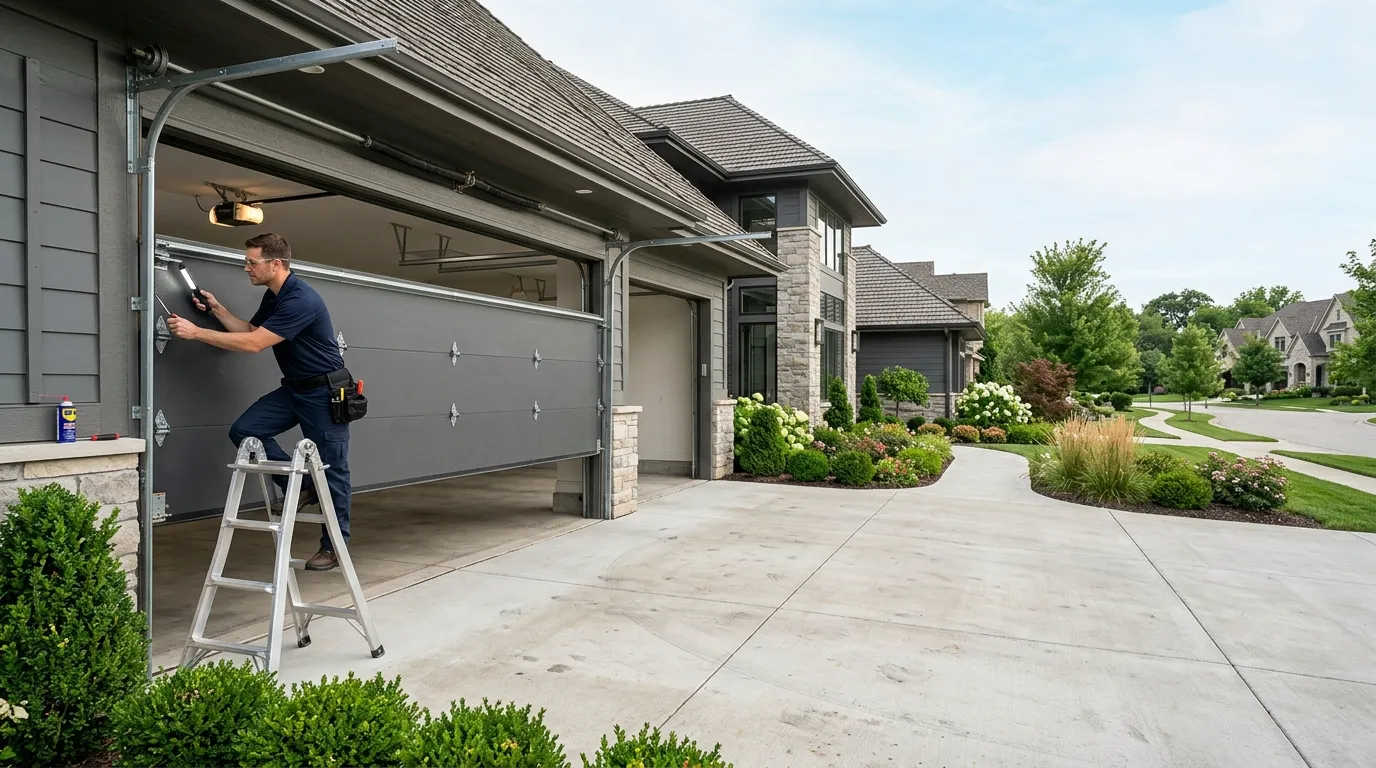
We come out from Dana Point, about 8 miles down to Laguna Hills, so we're not doing same-day walk-ins - plan on a scheduled visit rather than someone showing up within the hour. On a house from the 1980-1982 build era, the fix is usually a full spring replacement matched to the door's actual weight, not a generic size, since original doors from that period vary more in panel material and weight than newer stock.
Roller and cable swaps typically go alongside the spring work, since if one's worn out at that age the others usually aren't far behind - replacing them together saves a second trip. For steel doors with rust or dents at the bottom section, sometimes it's cheaper to replace just that panel rather than the whole door, but once corrosion's gotten into the seams on both sides, a single panel swap isn't worth doing and full replacement is the honest answer.
We don't stock every spring size on the truck for every era of door, so if your hardware is an unusual original size, there can be a short wait on parts. We'll tell you that up front rather than guess at a same-day fix we can't deliver.