What You Pay
We can't quote a number here without knowing what's actually hanging on your ceiling, and that's the honest answer. What we can tell you is what drives the bill in this area. Housing here runs from 1938 up through 2015, with the median build year sitting at 1982, and that spread matters more than people think. A 1982 chain-drive opener with no battery backup is a different job than a unit installed in the 2010s that already meets current safety and backup standards. If your opener predates battery backup, adding it later is usually cheaper than a full swap - but if the motor, gears, or logic board are original to the house, we're often looking at replacement rather than repair, because parts for openers that old simply aren't manufactured anymore. That's the limitation we're upfront about: we won't chase parts for a 40-year-old unit when a new opener costs less than the labor to hunt one down.
Across the 65,901 households and 27,960 owner-occupied houses in this service area, the mix of build years means no two jobs price the same. What you can plan for is that the older your home's original opener, the more likely the fix is a replacement, not a patch.
What Most People Get Wrong
When the power goes out and the garage door won't budge, most people assume the door itself is broken. It isn't - it's the opener. A standard opener needs household power to run the motor, and if your unit was installed before battery backup was common, an outage just stops it cold. The fix in the moment is the manual release cord, the red handle hanging from the trolley rail, which disengages the opener so you can lift the door by hand.
The second thing people get wrong is thinking this is a new problem tied to newer, more complicated openers. It's actually more common in this area's older stock. With median construction landing around 1982 and a lot of the surrounding communities built out through the 80s and 90s, plenty of garages here still run the original chain-drive opener that came with the house - units with no backup battery and no rolling-code security, both of which became standard much later. If your opener is that old, an outage doesn't just inconvenience you, it locks the door until power's back, unless you know where that release cord is.
How Local Conditions Play In
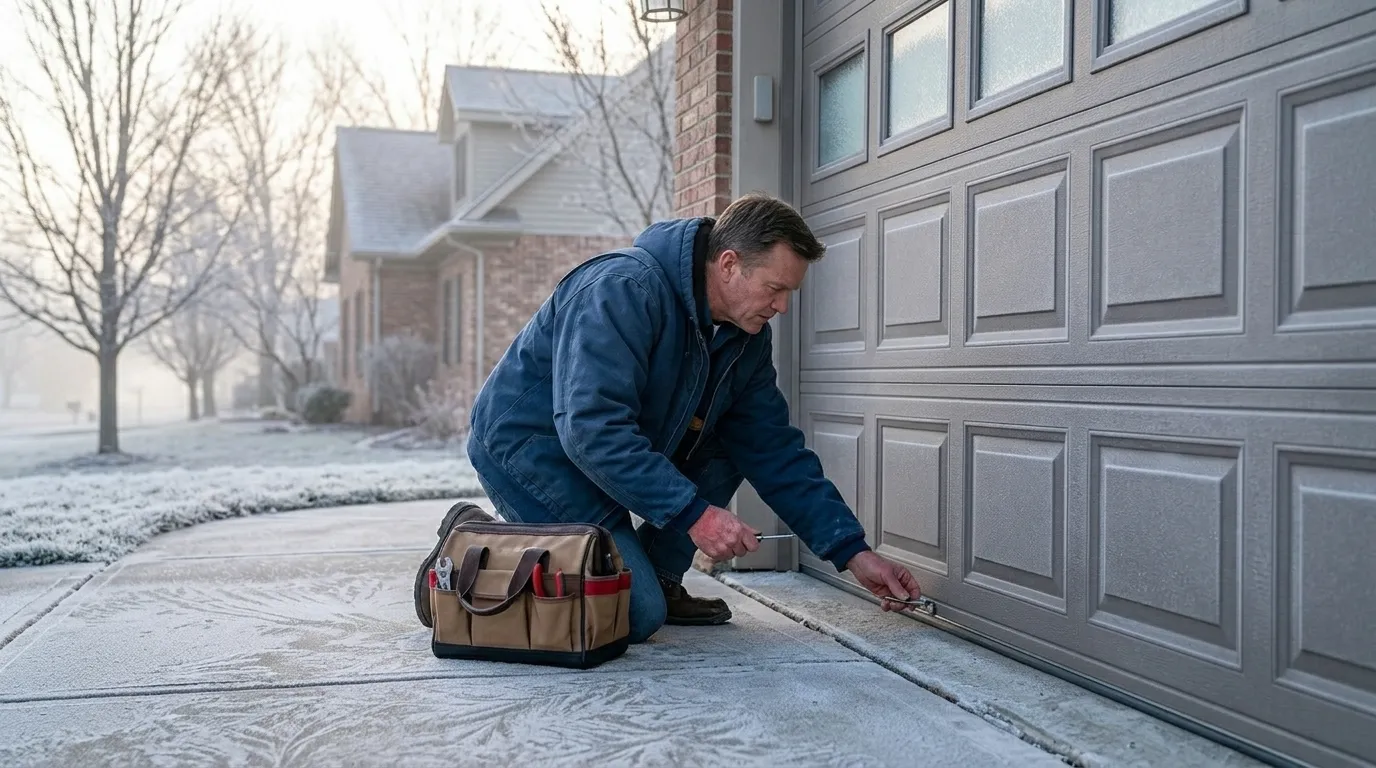
The climate here sits in the mild temperate band, which cuts both ways for openers. On one hand, you're not dealing with the frost-cracked gears or ice-jammed tracks that show up in colder inland regions - the mechanical wear we see isn't weather-driven the way it is elsewhere. On the other hand, that mild climate means power cuts here tend to come from the grid, not from a storm knocking a tree onto a line, so there's less warning and less reason for a homeowner to have already checked whether their opener has backup power before it matters.
Combine that with the age of the stock - a median build year of 1982 - and you get a specific, local failure pattern: an outage hits, an opener with no battery backup goes dead, and the homeowner assumes the door is broken rather than the power supply to the motor. It's not a design flaw in the door. It's a mismatch between an opener built for a different era and a grid that still occasionally drops out. Knowing that difference is most of what you need before you call anyone.