Older vs Newer Streets
Ladera Ranch is a different animal from most of the towns we drive to. Across our wider coverage area, the median home was built in 1982, and a lot of it is 1980s-90s stock. Ladera Ranch skews much newer than that, with a median build year around 2005. That's a twenty-year gap, and it matters more than people expect when it comes to garage doors.
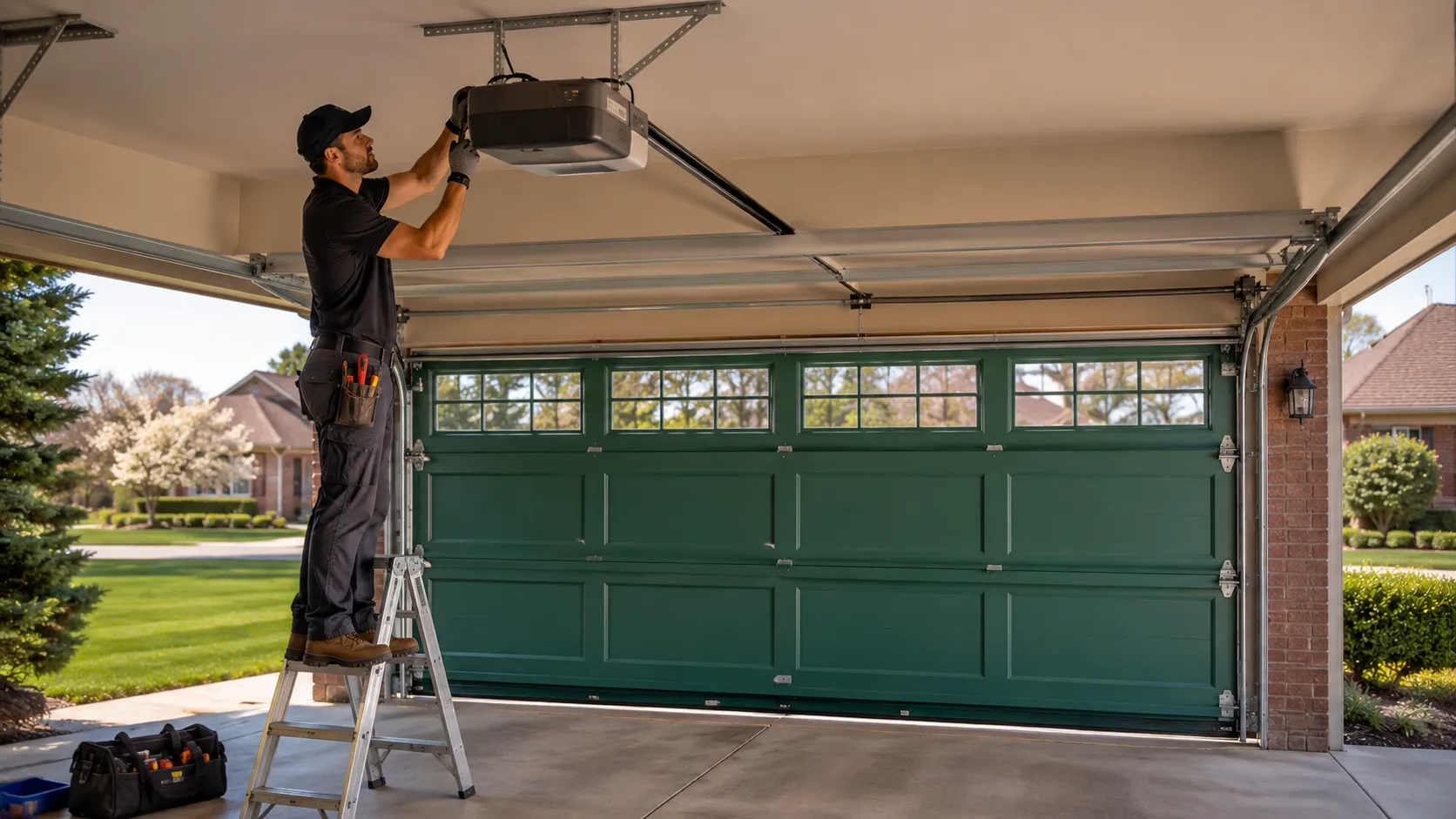
A neighborhood built in the early 2000s came with different code requirements, different opener models, and different spring setups than a house from the 80s. The builders here were installing steel sectional doors with factory-set torsion springs and chain or belt-drive openers as standard, not the older extension-spring, side-mounted setups we still find on the older streets elsewhere in the area. When we get a call from Ladera Ranch, we're usually not dealing with the same worn-out original hardware we see on 1980s tract homes. We're dealing with a door that's fifteen to twenty years into its service life, right around when torsion springs and opener drive components start to fail on their own timeline, regardless of how the house looks.
How That Shows Up in the Door
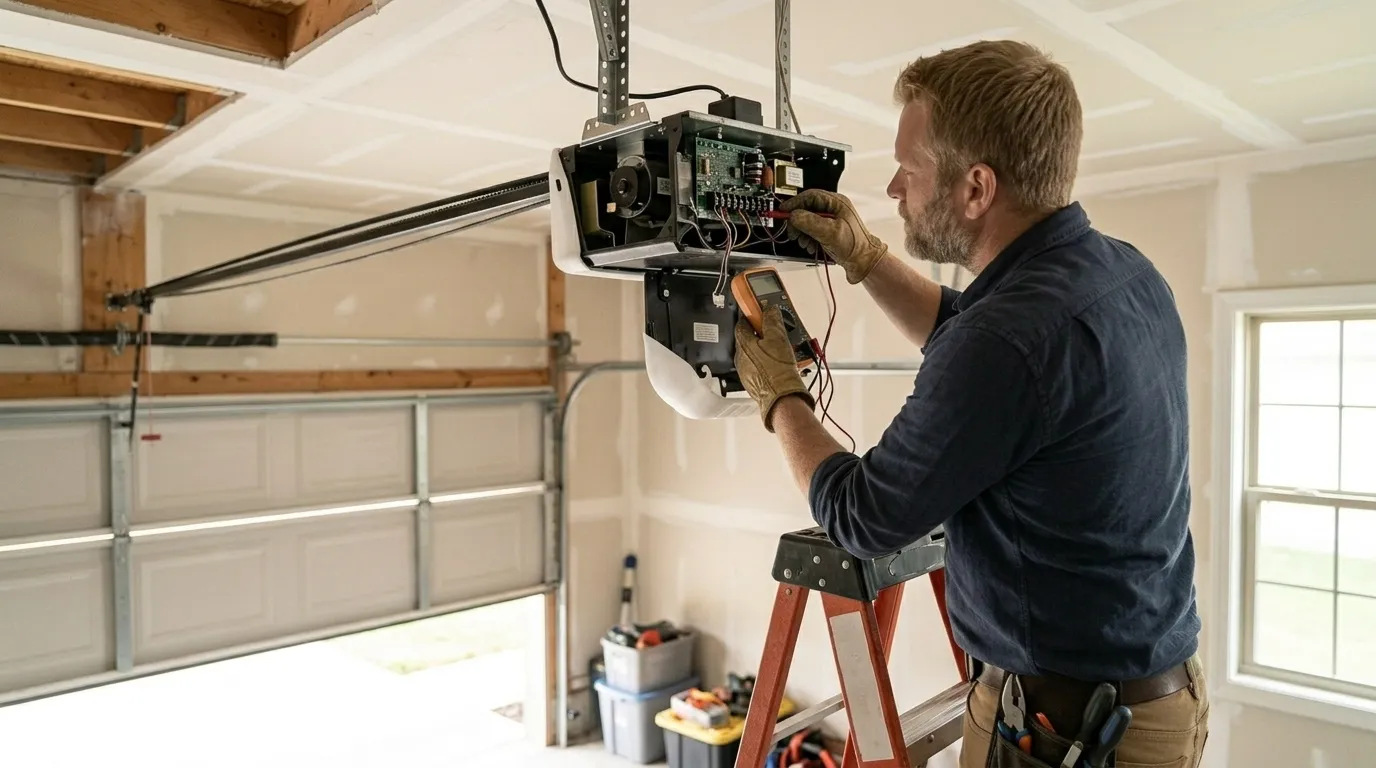
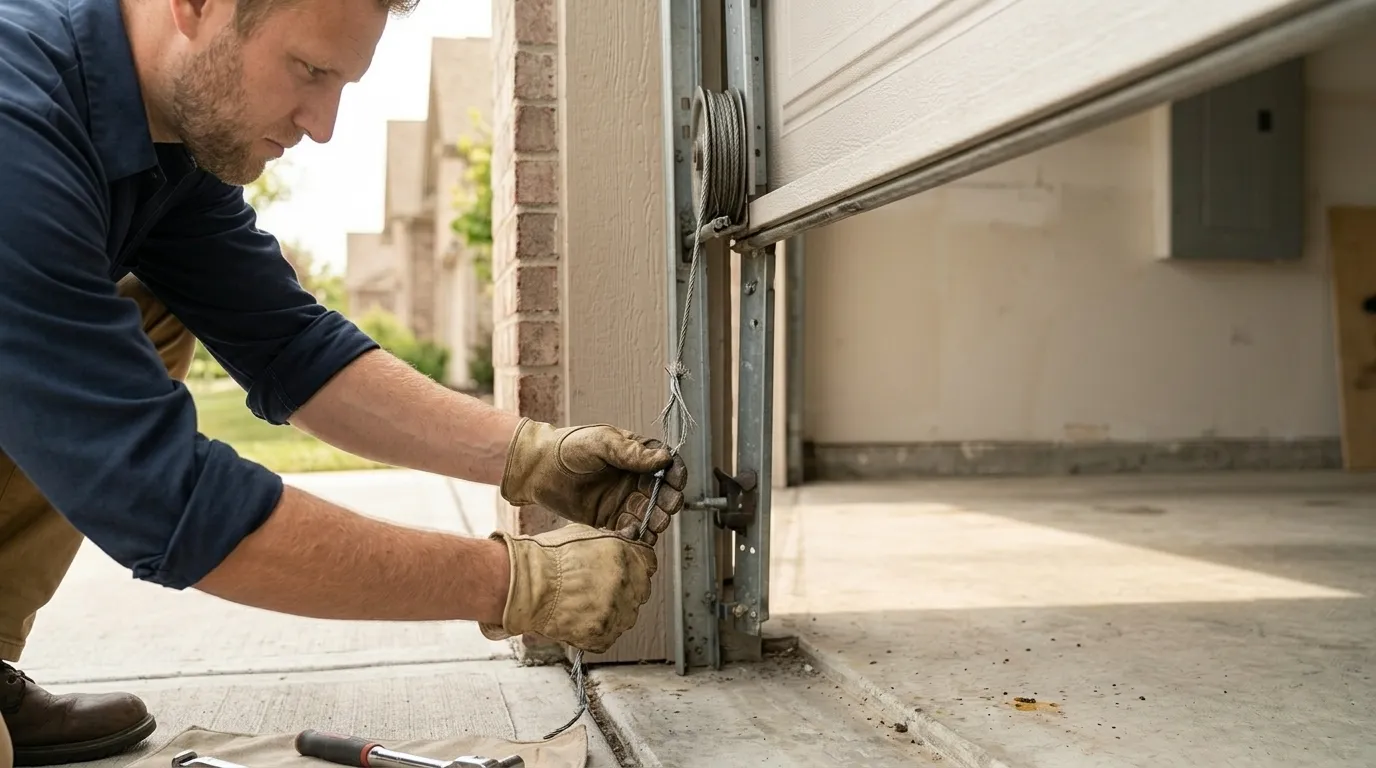
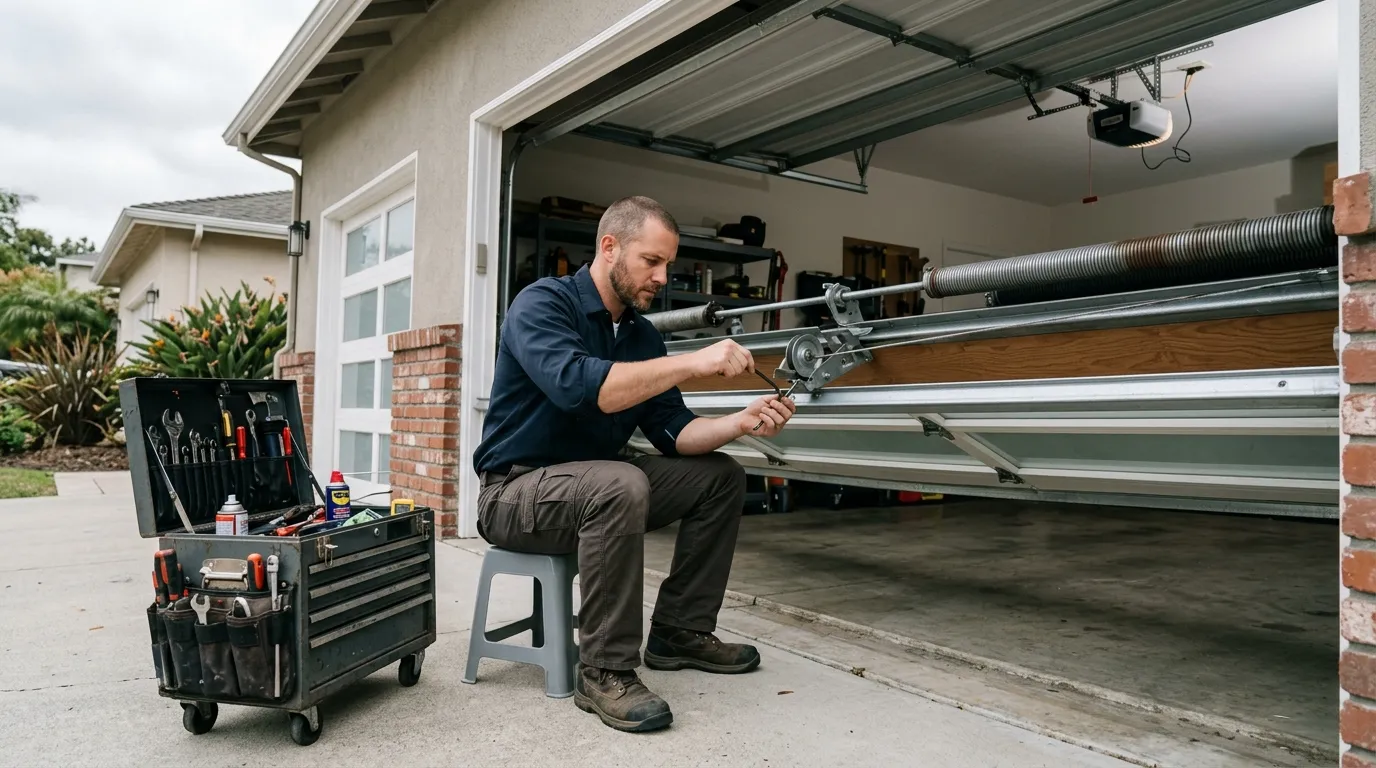
Because Ladera Ranch homes are newer, the failures we see tend to be wear failures, not decades-of-neglect failures. A torsion spring rated for around 10,000 cycles, installed in the early 2000s, is due to give out right about now if the household uses the garage door daily. Opener logic boards and drive gears from that era are also reaching the point where they fail rather than just get noisy.
We don't see much of the ancient two-piece wood door problem here, and we rarely find the original off-brand openers that show up on older streets nearby. What we do find is a lot of builder-grade openers that were fine for their first ten or twelve years and are now dropping signal, slipping the chain, or grinding through worn gears. Rollers on these doors are usually still the stock nylon rollers, and by year fifteen to twenty they're the first thing to go noisy and stiff. If your door in Ladera Ranch is suddenly loud, slow, or hanging up mid-cycle, age of the hardware, not age of the house, is almost always the reason.
What We Do Not Do
We don't try to repair a torsion spring system that's fatigued past a safe point just to save a customer a few dollars. Once a spring is at the end of its rated cycle life, we replace it, we don't patch it, because a spring that lets go under tension can do real damage to a door or a hand. We also don't stock every discontinued builder-grade opener board from the early 2000s. If your original opener uses a control board that's no longer made, we'll tell you straight that replacement is the honest answer rather than hunting for a part that may not exist anymore. We're not the crew to call for a full remodel or a custom door design; that's outside what we do. What we're good at is diagnosing why a door of Ladera Ranch's typical age and hardware is failing and fixing that specific problem without upselling you on work the door doesn't need.