What You Pay
We don't post a flat price list because two doors on the same street can need completely different work. A house built in 1982 (the median build year across this area) is a lot more likely to still be running its original torsion spring and a hardwired opener than a house finished in 2015 with a belt-drive unit and rolling steel rollers. The parts cost different money, and the labor to get to them differs too - an older jamb-mounted bracket takes more time than a newer setup built to current spacing.
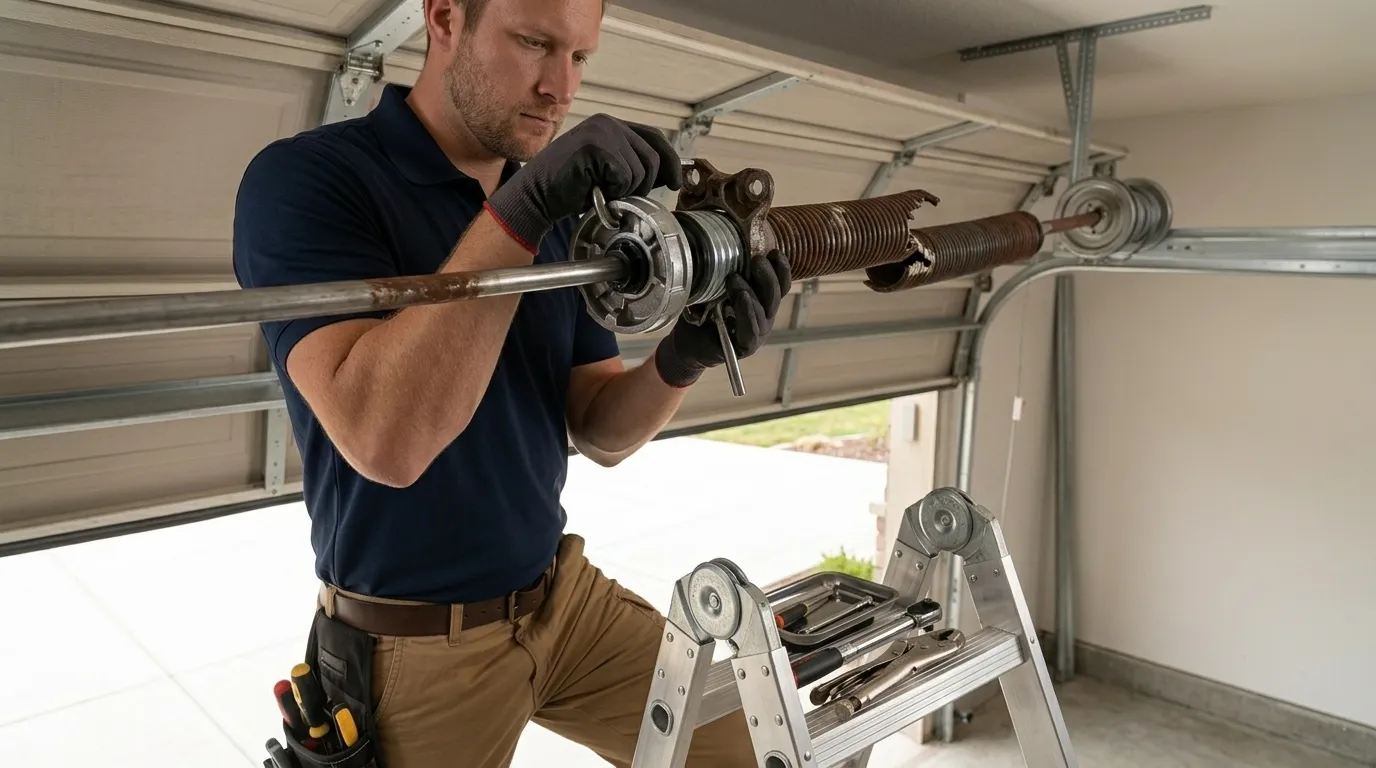
What we can tell you honestly: the biggest swing factor isn't the brand of door, it's the age bracket your house falls into. If your home is part of the 1980s-90s wave that makes up most of the stock across the ten named areas we work in, budget for spring and cable wear before opener trouble - those parts are usually original. If your house is newer, the opener logic board or sensor alignment is more often the actual failure point. One honest limit: we don't carry every legacy spring size on the truck, so a rare older wind can mean a return trip.
What Most People Get Wrong
The most common mistake we see is someone hearing a bang or grind and assuming it's the opener, when the house dates from the 1980s-90s build wave that dominates this area and the actual part giving out is the torsion spring or the galvanized cable it's wound around. The opener motor usually outlives the spring by a wide margin in houses from that era, because the motor gets replaced once while the spring keeps working the same cycle count year after year until it doesn't.
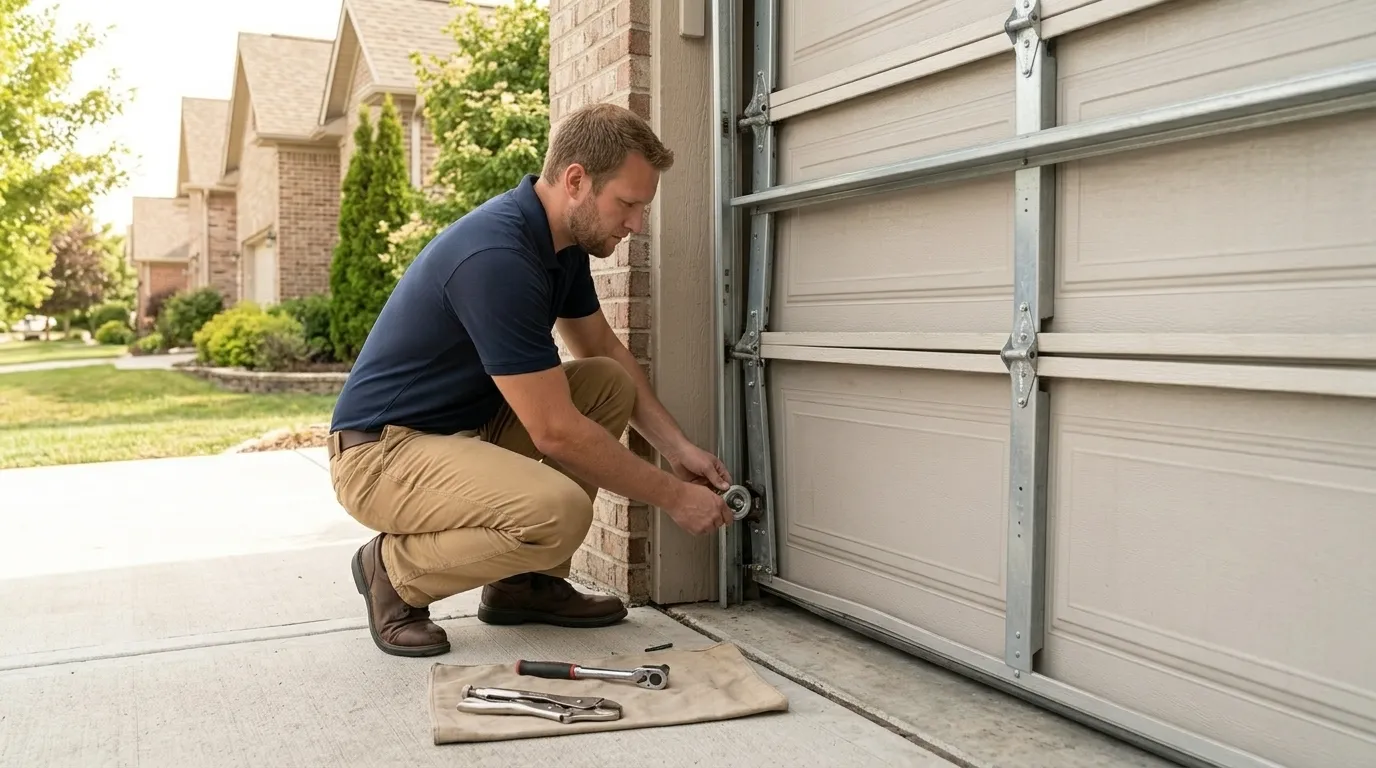
The second mistake is treating every door problem as an opener software issue - reprogramming a remote, resetting a sensor - when a door built in the earlier part of our 1938-2015 range often has physical wear that no reset fixes: a bent track, a roller worn oval, or a cable starting to fray at the drum. If your house sits toward the older end of that build range, physical inspection matters more than diagnostics.
How Local Conditions Play In
Dana Point sits in a mild temperate band, and that actually works in your favor compared to places with real winter. Springs here aren't fighting hard freeze-thaw cycles, so the kind of sudden mid-winter snap that takes out a spring overnight in a colder climate is rare. What we do see is steady, slow wear - a spring built in 1985 has had thirty-plus years of mild-weather cycling rather than being stressed and relieved by big temperature swings, so it tends to fail from cycle count rather than from cold-snap shock.
That mild band also means the wood and hardware on older doors, especially ones from the earlier end of the 1938-2015 range, degrade more from UV and coastal air than from moisture freezing in the joints. If your door is original to a house near the coast - closer to Capistrano Beach or Laguna Beach than further inland toward Trabuco Canyon or Silverado - expect finish wear before you'd expect structural cold-weather failure. It's a different failure pattern than a colder climate, and it changes what we check first on a service call.